Trump Tariffs Sink Asia Oil Demand Outlook
The global energy market finds itself navigating treacherous waters this week, as an aggressive escalation in U.S. trade policy sends tremors across international financial systems. President Donald Trump’s unwavering commitment to his tariff strategy, which he controversially described as necessary “medicine” for perceived trade imbalances, has triggered a severe downturn in key Asian equity markets. This instability casts a long shadow over the worldwide economic forecast, directly impacting crude oil valuations and dimming future energy consumption projections, particularly for the demand-hungry Asian continent. For astute oil and gas investors, understanding the ripple effects of this geopolitical maneuver is paramount.
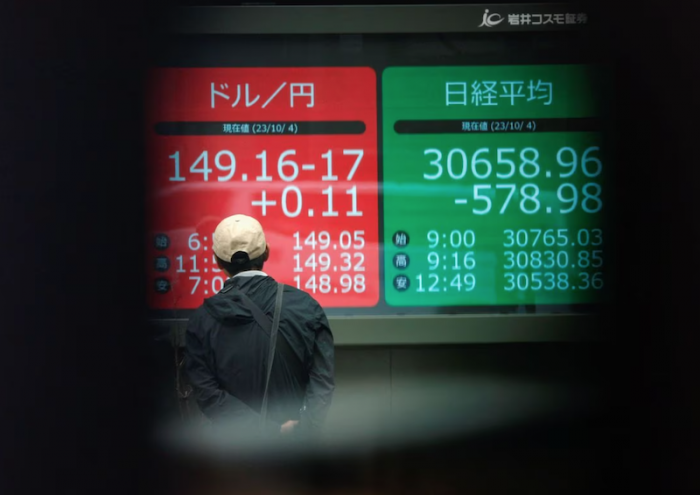
Investors witnessed a dramatic sell-off, with Hong Kong’s benchmark Hang Seng Index bearing the brunt. It plummeted by over 13%, marking its most significant single-day decline since the profound global financial crisis of 2008. Japan’s Nikkei 225 index also registered substantial losses, shrinking by 7.8% to levels not observed since late 2023. Taiwan’s equities were not spared, experiencing a nearly 10% fall—a record one-day drop for the island nation. As mainland Chinese and Hong Kong stocks experienced widespread capitulation, reports surfaced of China’s sovereign fund intervening in a clear attempt to inject stability into the spiraling markets. This pervasive gloom surrounding international trade relations, compounded by mounting fears of a global recession, directly translated into a roughly 7% drop in crude oil prices, reflecting immediate concerns over industrial activity and consumer demand, critical drivers for the energy sector.
Trump’s “Medicine” Met with Retaliation and Investor Jitters
President Trump’s steadfast position, articulated aboard Air Force One, underscored his expectation for investors to weather the current market pain. He emphatically stated that no trade accord with China would materialize until the substantial U.S. trade deficit was adequately addressed. This firm stance directly contradicted Beijing’s earlier assertions that market reactions would influence its retaliatory measures. Despite literally trillions of dollars in value evaporating from global stock markets, the U.S. President remained unperturbed, reiterating his “medicine” analogy for what he perceives as a crucial economic rebalancing. This creates an environment of profound uncertainty for global trade flows, with direct implications for the logistics and pricing of energy commodities, making long-term investment planning significantly more complex.
The most recent wave of U.S. tariffs, unveiled just last week, elicited widespread condemnation and bewilderment from international leaders and industry stakeholders alike. China, the world’s second-largest economy and an indispensable engine of global energy consumption, swiftly implemented its own retaliatory levies, intensifying the tit-for-tat trade conflict. This escalating trade friction introduces a profound and unsettling layer of uncertainty for oil and gas investors. They now confront heightened volatility primarily driven by unpredictable geopolitical tensions rather than the more familiar, fundamental supply-demand dynamics that typically govern energy markets. For those allocating capital in the energy sector, assessing risk now demands a keener eye on political rhetoric and international relations than ever before, fundamentally reshaping investment strategies.
Global Leaders Seek Reprieve Amidst Economic Uncertainty
In a concerted effort to avert the full impact of these impending tariff implementations, leaders from both Europe and Asia engaged in urgent discussions with President Trump over the weekend. Their objective was to persuade him to scale back duties that could potentially soar as high as 50%. However, Trump made it unequivocally clear that any negotiations would be contingent upon other nations agreeing to substantial annual payments to the U.S., effectively turning trade concessions into a revenue-generating mechanism. The far-reaching international ramifications of these trade policies were further highlighted by the scheduled meeting between Israeli Prime Minister Benjamin Netanyahu and the U.S. President, reportedly to seek a reprieve from the impending duties. This global scramble for exemptions underscores the widespread disruption and economic anxiety provoked by Washington’s current trade posture, creating headwinds for global economic stability and energy demand.
The investment community, particularly those with significant exposure to the energy sector, now grapples with a significantly altered risk landscape. The immediate concern revolves around the potential for these tariffs to trigger a slowdown in global economic growth, directly impacting industrial output, transportation, and ultimately, crude oil and natural gas demand. Asia, as the primary growth engine for global energy consumption, is particularly vulnerable. A protracted trade war could dampen manufacturing activity across the region, curtail consumer spending, and disrupt supply chains, all of which translate into reduced demand for fuels and petrochemical feedstocks. Oil and gas companies, therefore, face pressure on their top lines and profitability forecasts. The volatility driven by these geopolitical machinations means investors must meticulously scrutinize macroeconomic indicators, monitor trade negotiations closely, and consider hedging strategies to navigate an increasingly unpredictable market environment where “medicine” for some may prove toxic for others, redefining the landscape for oil and gas investments.