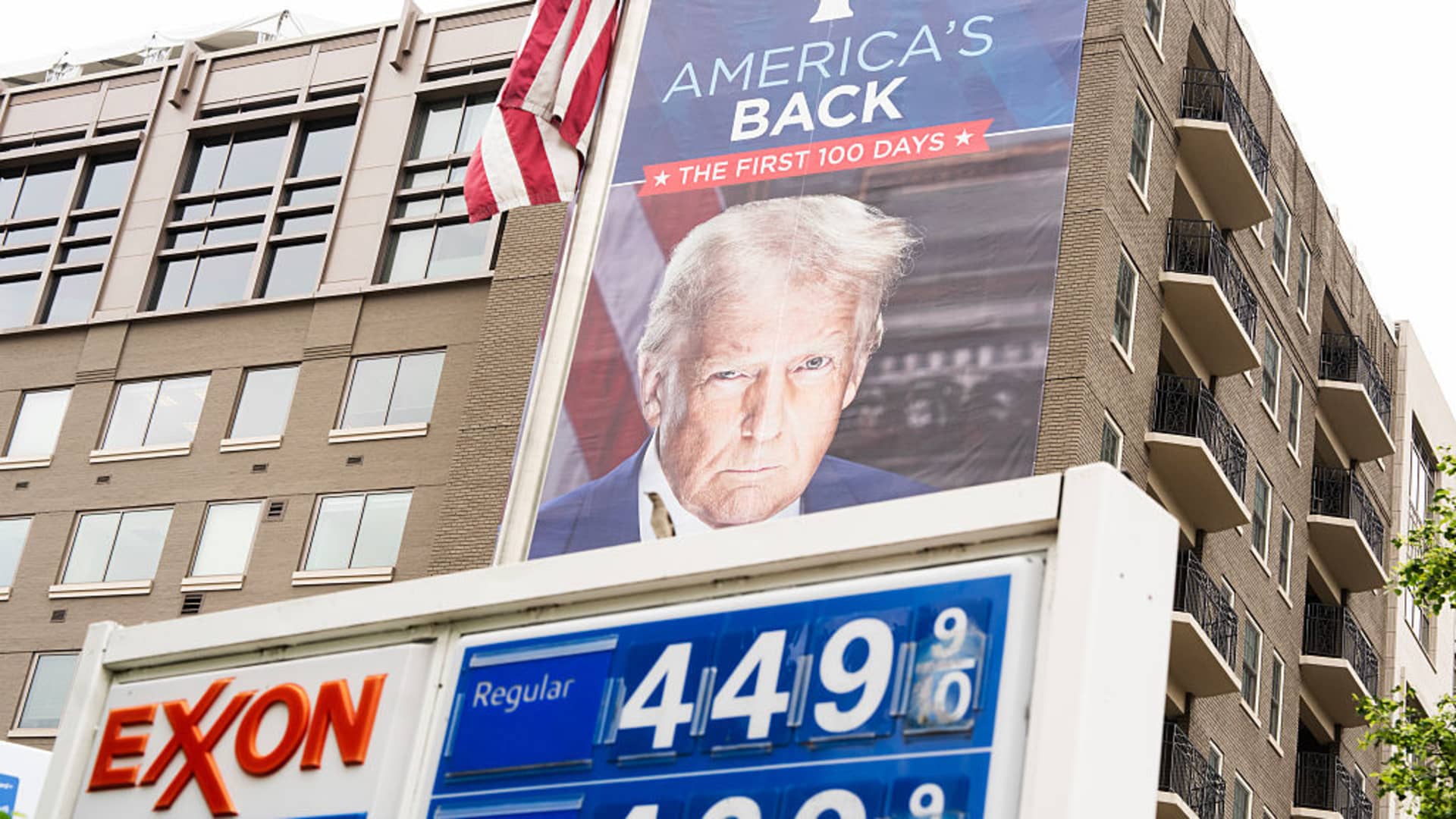
In the volatile world of energy markets, political signals can often be as impactful as fundamental supply and demand dynamics. A recent in-depth analysis of former President Donald Trump’s extensive social media history reveals a consistent, albeit indirect, preference for crude oil prices that could significantly reshape the investment landscape for U.S. shale producers. This deep dive, conducted by analysts at Goldman Sachs, suggests a target range of $40-$50 per barrel for West Texas Intermediate (WTI), a level that raises critical questions about the future profitability and growth trajectory of domestic oil output.
Since joining Twitter in 2009, and across his subsequent social media platforms, President Trump has commented on oil prices more than 200 times. Goldman Sachs meticulously cataloged these pronouncements, uncovering a clear pattern: a staggering 213 calls for lower oil prices against only 15 instances advocating for higher prices. This disproportionate emphasis on reducing crude costs paints a vivid picture of his economic priorities.
Decoding the Presidential Price Preference
The core finding from Goldman’s research, led by head of oil research Daan Struyven, points to a specific sweet spot for crude. Analysts observed that President Trump’s social media activity concerning oil prices significantly diminishes when U.S. crude trades within the $40 to $50 per barrel range. This lull in commentary, according to Struyven and his team, strongly suggests that this band represents his preferred equilibrium for the market. Conversely, when WTI climbs above $50 per barrel, his calls for lower prices intensify. On the flip side, during periods when U.S. crude plummets below $30 per barrel – often in times of market distress – his posts frequently advocate for higher prices, typically framed within the context of boosting domestic production and energy independence.
This inferred preference aligns with statements from his former trade advisor, Peter Navarro, who publicly articulated a “drill, baby, drill” agenda aimed at pushing oil prices down to $50 a barrel as a strategic tool to combat inflation. Such a policy stance, if enacted, would undoubtedly exert downward pressure on crude benchmarks, impacting everything from exploration and production (E&P) budgets to the valuation of energy equities.
Further insights from the Goldman analysis indicate that President Trump tends to post less about international sanctions when WTI prices are comfortably situated in the $60s to $70s. Additionally, his engagement with oil price discussions generally escalates as U.S. elections draw nearer, suggesting a strategic correlation between energy costs and voter sentiment.
The Breakeven Challenge for U.S. Shale
For investors focused on the U.S. shale sector, President Trump’s implied $40-$50 price preference is a significant red flag. Goldman Sachs estimates that U.S. shale producers require a minimum WTI price of $51 per barrel just to cover their operational costs and achieve breakeven. A sustained period with prices below this threshold would render a substantial portion of the industry unprofitable, jeopardizing capital expenditures, drilling activity, and ultimately, production volumes.
The impact of lower prices on U.S. supply growth is already well-documented. Historical data shows a clear deceleration in U.S. crude oil supply expansion whenever WTI prices dip into the $60s and begin to approach producers’ critical breakeven points. This sensitivity means that a deliberate policy aiming for $50 oil would almost certainly lead to a contraction in domestic output, contrary to the “drill, baby, drill” rhetoric often associated with increasing production.
Past Precedents and Industry Sentiment
The market has already witnessed the adverse effects of lower prices combined with policy uncertainties. On May 5, WTI crude oil closed at a four-year low of $57.13 per barrel. This downturn was exacerbated by fears of a global recession, largely sparked by escalating tariffs at the time, which threatened to depress demand, even as OPEC+ nations rapidly boosted supply to the market. Such episodes underscore the vulnerability of the U.S. shale industry to both macroeconomic headwinds and geopolitical maneuvering.
Concerns within the industry are palpable. Travis Stice, CEO of Diamondback Energy, a prominent Permian Basin producer, issued a stark warning recently, suggesting that U.S. shale production has likely reached its zenith and is poised for decline if current price trends persist. This sentiment is echoed across the sector. An anonymous survey conducted by the Federal Reserve Bank of Dallas in March revealed widespread criticism from shale producers regarding the previous administration’s tariff and broader energy policies, highlighting the industry’s discomfort with interventions that disrupt market fundamentals.
Current Market Rebound and Future Outlook
Despite these underlying concerns, the market has shown some resilience. WTI prices rebounded to trade above $63 per barrel recently, following an agreement between the U.S. and China to significantly reduce tariffs. This development has injected a renewed sense of optimism into global economic growth prospects, which in turn supports oil demand forecasts.
However, Goldman Sachs maintains a cautious outlook on U.S. supply. The investment bank anticipates a decline in crude oil supply from the lower 48 states both this year and next, irrespective of short-term price fluctuations. Goldman projects U.S. crude will average $56 per barrel this year and $52 per barrel in 2026. This forecast, combined with the inferred presidential preference for lower prices, creates a complex environment for energy investors. While immediate market sentiment might be buoyed by tariff reductions, the longer-term structural implications of a potential policy-driven push towards lower oil prices cannot be ignored.
Investors should carefully consider how a sustained $40-$50 WTI environment would impact the balance sheets, capital programs, and shareholder returns of U.S. E&P companies. The divergence between political preference and the economic realities of shale production poses a significant strategic challenge for the energy sector, demanding astute risk management and a clear understanding of potential policy shifts.