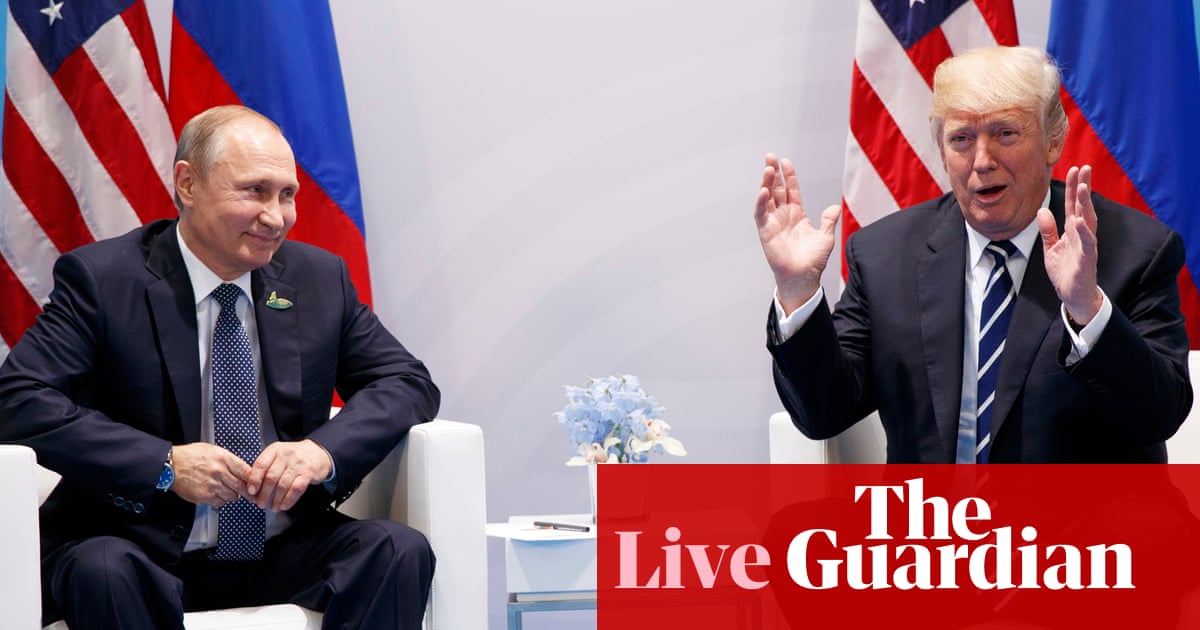
Trump-Putin Summit: A Critical Juncture for Energy Markets
As global energy markets navigate a landscape fraught with geopolitical tension and economic uncertainty, the upcoming summit between former President Trump and President Putin in Alaska looms large. Scheduled to commence at 11:30 AM local time in Anchorage, this high-stakes meeting, featuring both one-on-one discussions and a wider engagement with delegations, is far more than a diplomatic formality. For oil and gas investors, it represents a pivotal event with the potential to re-calibrate supply dynamics, reshape trade relations, and significantly influence crude price trajectories. The Kremlin’s foreign policy adviser, Yuri Ushakov, has already indicated that Ukraine will be a central topic, alongside broader discussions on trade and economic cooperation. Such dialogues, particularly involving key energy-producing nations, invariably send ripples through the global commodity complex, demanding close scrutiny from anyone with exposure to the energy sector.
Geopolitical Tensions Drive Extreme Market Volatility
The anticipation surrounding the Trump-Putin summit is directly reflected in the acute volatility observed across crude markets. As of today, Brent Crude trades at $90.38, marking a significant 9.07% decline within the day, having swung wildly between $86.08 and $98.97. Similarly, WTI Crude has seen its price drop to $82.59, down 9.41%, with its daily range spanning $78.97 to $90.34. This dramatic intraday movement underscores profound market uncertainty, amplified by the overarching geopolitical landscape that has seen Brent shed $20.91, or 18.5%, from $112.78 just 14 days ago. Investors are clearly reacting to the potential for either de-escalation or heightened tensions, particularly concerning Ukraine, which could directly impact Russian oil flows and global supply perceptions. A positive outcome from the Alaska talks could ease fears of supply disruptions, potentially further pressuring prices, while a stalemate or escalation could swiftly reverse the current downward trend. The significant daily ranges are a testament to the market’s hypersensitivity, indicating that even minor headlines emerging from the summit could trigger substantial price swings.
Investor Focus Shifts to Long-Term Stability and Strategic Positioning
Our proprietary reader intent data reveals a clear focus among investors on both immediate and long-term market stability. Questions such as “What do you predict the price of oil per barrel will be by end of 2026?” highlight the desire for clarity beyond the current volatility. This summit could be a foundational event for that long-term outlook. If the discussions lead to any tangible progress on geopolitical fronts, particularly regarding Ukraine and trade, it could pave the way for a more predictable supply environment, allowing for more confident long-term price projections. Conversely, a lack of resolution would maintain the high-risk premium currently embedded in prices. Furthermore, investors are asking “How well do you think Repsol will end in April 2026?”, signaling a broader concern about the performance of individual oil and gas majors in this turbulent climate. Companies like Repsol, with significant international operations and exposure to European energy security concerns, are particularly vulnerable to geopolitical shifts. The outcome of these high-level talks could influence strategic decisions on investments, sanctions, and trade routes, directly impacting the operational environment and profitability of such entities. Understanding OPEC+’s current production quotas is also a recurring theme, as any shifts in Russian policy post-summit could necessitate an immediate re-evaluation of global supply management strategies by the cartel.
Upcoming Calendar Events: A Cascade of Influences Post-Summit
The implications of the Trump-Putin meeting extend far beyond the immediate news cycle, directly influencing a series of critical energy events scheduled for the coming weeks. Hot on the heels of the summit, the OPEC+ Joint Ministerial Monitoring Committee (JMMC) meets on April 18th, followed by the full OPEC+ Ministerial Meeting on April 19th. These meetings will be crucial. Any signals from the Alaska discussions regarding Russia’s geopolitical standing or its future oil production policy could directly inform OPEC+’s decisions on output quotas. A more stable geopolitical outlook might prompt OPEC+ to consider supply adjustments, while continued uncertainty could reinforce their cautious approach. Beyond these policy-level decisions, weekly data releases will provide granular insights into market fundamentals. The API Weekly Crude Inventory reports on April 21st and 28th, along with the EIA Weekly Petroleum Status Reports on April 22nd and 29th, will offer vital clues on U.S. supply and demand. Furthermore, the Baker Hughes Rig Count on April 24th and May 1st will indicate the health of drilling activity. Each of these data points, while fundamental, will be interpreted through the lens of the geopolitical climate shaped by the Trump-Putin summit, making the upcoming two weeks particularly dynamic for energy investors.
Investment Implications Across Potential Scenarios
For investors, analyzing the potential outcomes of the Trump-Putin summit is paramount for strategic positioning. A positive scenario, characterized by de-escalation in Ukraine and renewed momentum for trade and economic cooperation, could lead to an easing of geopolitical risk premiums. This might translate to sustained downward pressure on crude prices as supply certainty improves, potentially benefiting energy consumers and industries reliant on lower input costs. Conversely, a neutral outcome with no significant breakthroughs would likely perpetuate the current state of market anxiety, maintaining elevated volatility and keeping prices sensitive to any further geopolitical developments. The most concerning scenario involves an escalation of tensions or a clear impasse, which could reignite fears of supply disruptions, potentially driving crude prices significantly higher as investors price in increased risk. Smart investors will monitor the joint press conference carefully for any nuanced language or concrete agreements. Diversification, hedging strategies, and a focus on companies with strong balance sheets and operational resilience will be key. Understanding the interplay between high-level political dialogue and the fundamental drivers of supply and demand remains critical for navigating these complex energy markets.


