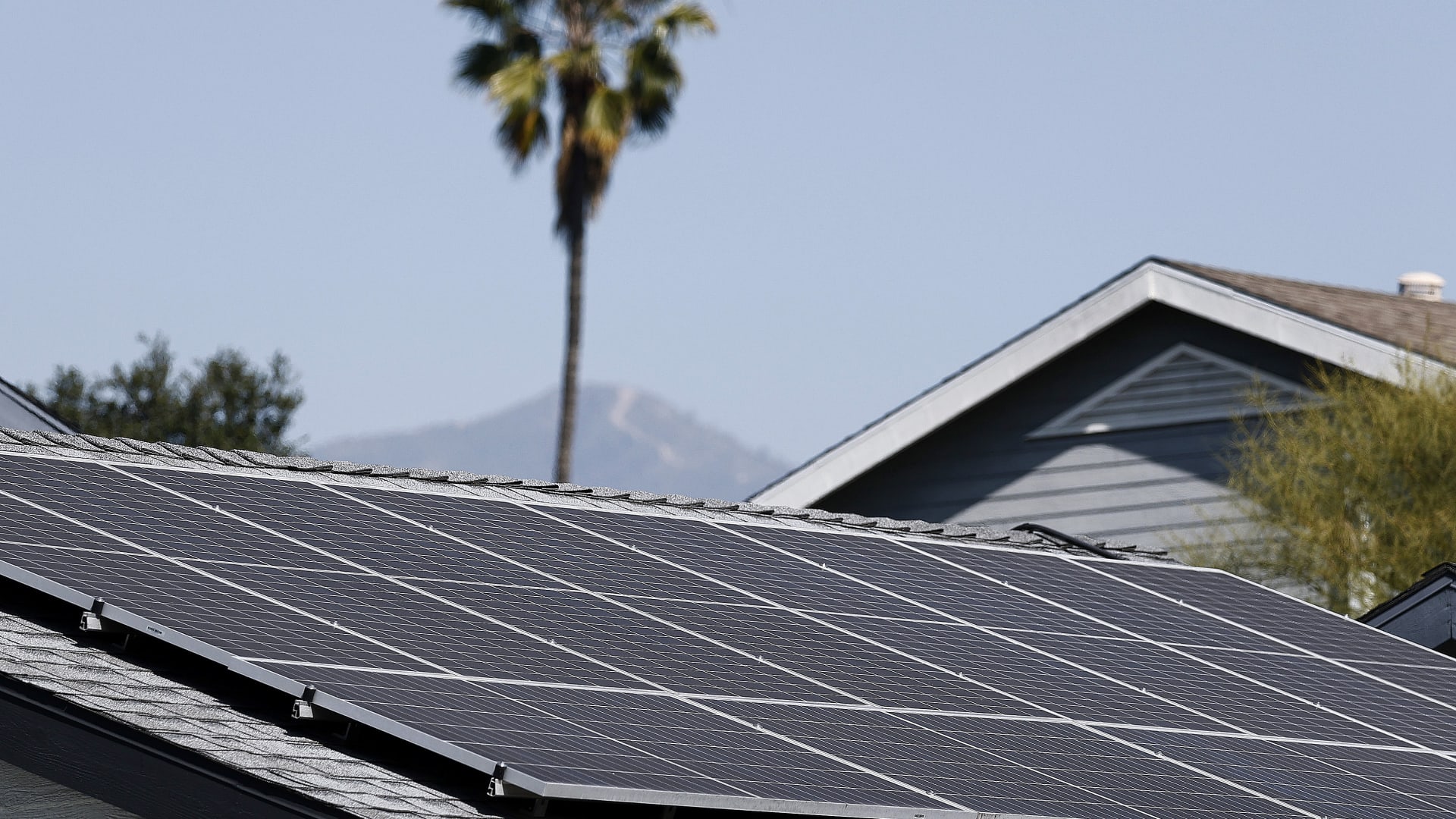
The landscape for renewable energy investment faces a profound shift as recent legislative action in the House of Representatives casts a long shadow over the sector’s robust expansion. Industry leaders, who had strategically channeled substantial capital into congressional districts represented by Republicans, appear to have misjudged the political currents. A newly passed tax bill presents a significantly bleaker outlook for solar power, a development analysts at the investment bank Jefferies conveyed to their clients, characterizing the situation as exceeding the most pessimistic expectations for the industry.
This legislative package directly targets and eliminates crucial tax credits that have underpinned the explosive growth of clean energy. The immediate market response was a broad sell-off of solar equities following the bill’s passage. While the legislation still requires Senate approval, where some observers, including Jefferies, anticipate that the most unworkable provisions may be amended or removed, its current form fundamentally challenges the foundational policies of the Inflation Reduction Act (IRA).
Industry voices have not minced words. Abigail Ross Hopper, CEO of the Solar Energy Industries Association, condemned the bill, asserting that it would reverse an economic surge across the nation, jeopardizing an unprecedented renaissance in American manufacturing. She further warned that such measures demonstrated a willful ignorance regarding the critical role solar power and battery storage play in fulfilling the escalating electricity demands of U.S. consumers and businesses. Hopper cautioned that this policy direction risked ceding the artificial intelligence race to China and could lead to widespread power outages across the country.
Echoing these concerns, Sunrun CEO Mary Powell, in a recent interview, projected potential job losses of up to 250,000 and an increase in electricity costs for consumers should the bill become law. The rooftop solar installer experienced one of its most challenging trading days, with shares plummeting by 37%. Meanwhile, former President Donald Trump publicly urged the Senate to promptly approve the comprehensive legislative package, emphasizing the urgency of its passage via his social media platform.
Renewable Momentum Faces Headwinds
The clean energy sector, particularly solar and battery storage, has attracted remarkable investment since the passage of the Inflation Reduction Act in 2022. Data from the Massachusetts Institute of Technology and the Rhodium Group indicates that over $161 billion has flowed into large-scale solar and battery storage projects during this period. These technologies represent the fastest-growing source of energy in the United States, with the Energy Information Administration projecting that solar and battery storage will account for an impressive 81% of anticipated new power additions to the national grid in 2025.
However, the proposed tax legislation directly threatens this trajectory. It aims to discontinue two pivotal tax credits that have been instrumental in driving the expansion of solar power. Specifically, it terminates the investment and electricity production credits for clean energy facilities that commence construction 60 days after the bill’s enactment or enter service after 2028. This impactful change also extends to wind power, another renewable source, albeit one experiencing a slower growth rate in the U.S.
Experts are already quantifying the potential fallout. Ben Smith, an associate director within Rhodium Group’s energy and climate practice, predicted a substantial deceleration in the integration of clean energy onto the grid. According to Rhodium’s analysis, the deployment of clean energy capacity could see a decline ranging from 57% to 72% over the next decade, a stark reversal of current growth trends. Furthermore, clean energy projects would no longer qualify for other significant tax incentives, compounding the financial challenges faced by developers and investors.
Investor Implications for the Energy Sector
For investors focused on the broader energy sector, including traditional oil and gas, these developments signal a period of heightened uncertainty and potential re-evaluation of portfolios. The policy shifts could dramatically alter the competitive landscape between conventional and renewable energy sources. While a slowdown in renewable deployment might initially seem beneficial for fossil fuels, the overall impact on energy security, grid stability, and long-term economic growth could present new risks and opportunities. The oil and gas industry, while not directly impacted by these specific renewable energy tax credits, operates within an interconnected energy ecosystem where policy changes in one segment inevitably ripple across others.
Monitoring the legislative process in the Senate will be paramount for discerning the ultimate direction of U.S. energy policy. The outcome of this debate will dictate whether the nation continues its aggressive push towards clean energy independence or pivots back towards a more traditional energy development path. Investors must remain vigilant, analyzing how these potential policy headwinds could reshape capital flows, project viability, and the overall trajectory of the energy transition. The stakes are high, not just for renewable energy companies, but for the entire investment community navigating the complex dynamics of the global energy market.