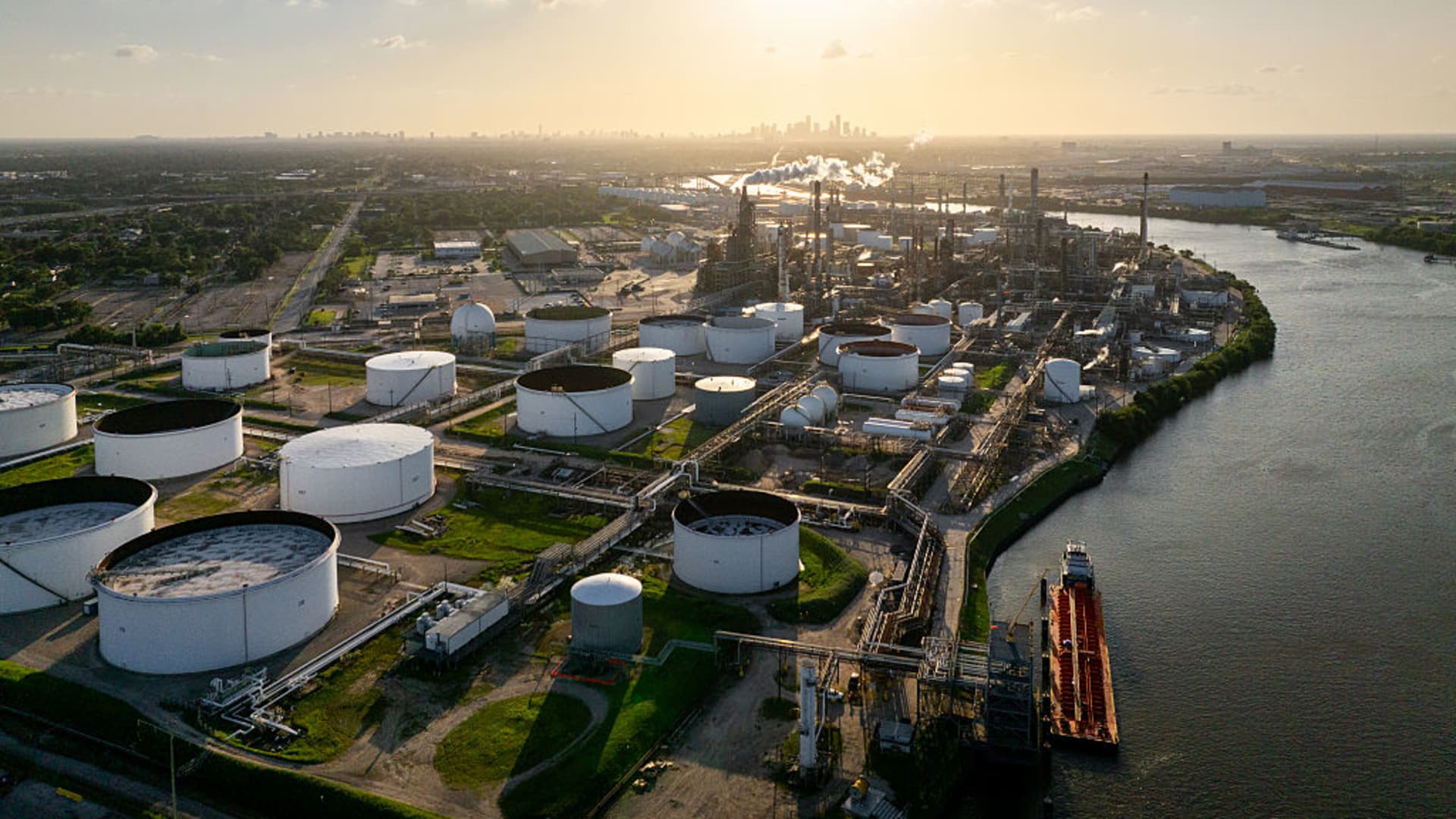
A New Dawn for Fossil Fuels: Trump’s Energy Bill Reshapes U.S. Landscape
The U.S. energy sector is poised for a significant transformation following the recent passage of the “One Big Beautiful Bill Act,” a landmark legislative package championed by President Donald Trump. This sweeping measure, which cleared the House of Representatives on Thursday after a narrow Senate approval earlier in the week, fundamentally reorients federal energy policy, aggressively promoting oil, natural gas, and coal production while curtailing support for solar and wind power initiatives. For investors tracking the energy markets, this bill signals a decisive shift, promising an invigorated environment for traditional fuel sources.
President Trump has consistently articulated a clear vision for American energy independence, emphasizing reliance on conventional fuels. In a recent interview on June 29, the President underscored his commitment to oil, gas, coal, and nuclear energy to meet the nation’s expanding power demands, expressing strong reservations about renewable energy projects. “I don’t want windmills destroying our place,” Trump stated, also critiquing solar installations as “ugly as hell” for their extensive land use. This philosophical stance now underpins the nation’s domestic energy strategy, fulfilling many long-standing priorities for the fossil fuel industry.
Oil and Gas Sector Poised for Unprecedented Access and Incentives
The new law represents a monumental victory for the oil and gas industry, reversing previous administrative curbs and unlocking vast federal resources. It mandates a minimum of 30 lease sales in the Gulf of Mexico over the next 15 years, alongside more than 30 annual lease sales on federal lands across nine states. Crucially, the legislation also reopens access to Alaska, an area rich in hydrocarbon potential, providing significant new opportunities for exploration and production companies. This expansion of accessible acreage is expected to drive substantial upstream investment and output growth.
Beyond opening up new territories, the bill introduces compelling financial incentives for producers. It significantly reduces the royalties companies must pay the government for extracting oil and gas from federal lands, directly encouraging higher production volumes. Mike Sommers, president of the American Petroleum Institute (API), lauded the legislation, telling CNBC that “This bill will be the most transformational legislation that we’ve seen in decades in terms of access to both federal lands and federal waters.” He further emphasized, “It includes almost all of our priorities,” underscoring the industry’s profound satisfaction with the policy changes.
The legislation also creatively leverages existing tax credits to bolster crude oil production. Notably, a carbon capture tax credit, initially designed to support nascent technologies for sequestering carbon emissions underground, has been re-engineered. Under the new framework, producers will receive enhanced tax benefits for injecting captured emissions into wells to facilitate enhanced oil recovery (EOR), effectively using environmental technology to boost fossil fuel output. This dual-purpose incentive presents a unique investment opportunity at the intersection of production efficiency and emissions management.
While the focus is largely on traditional fuels, the bill also addresses hydrogen fuel development, albeit with some adjustments. The hydrogen tax credit, which supports projects by major players like Chevron and Exxon, is now slated to expire in 2028. This extension, later than initial proposals, was welcomed by the industry. Sommers commented on this, noting, “I have a number of members who plan on investing significantly in hydrogen and so the extension to the end of 2028 was a welcome priority that was fulfilled.” This provides some continued, though time-limited, stability for hydrogen investment.
Coal Industry Sees Resurgence with New Land and Fiscal Advantages
The coal sector also emerges as a significant beneficiary of the “One Big Beautiful Bill Act.” The law mandates the availability of at least 4 million additional acres of federal land for mining operations, a substantial expansion that could revitalize domestic coal production. Furthermore, similar to oil and gas, coal companies will see a reduction in the royalties paid to the government for mining on federal land, directly improving their operational economics. The legislation also extends the use of an advanced manufacturing tax credit to cover the mining of metallurgical coal, a critical component in steel production, thereby supporting a key industrial supply chain.
Renewable Energy Faces Headwinds as Federal Support Wanes
In stark contrast to the robust support for fossil fuels, the bill systematically phases out crucial federal backing for renewable energy. The clean electricity investment and production tax credits, which have been instrumental in driving the growth of wind and solar power, are slated for termination. This withdrawal of federal incentives is expected to create significant headwinds for renewable energy developers and investors, shifting the competitive landscape and potentially slowing the expansion of green energy projects across the nation. This policy pivot underscores the administration’s strategic decision to prioritize conventional energy sources for national energy security and economic growth.
For investors, the implications are clear: the legislative environment has become significantly more favorable for companies engaged in oil, natural gas, and coal production, exploration, and associated services. The reduced regulatory burden, expanded access to federal resources, and direct financial incentives are designed to stimulate output and profitability in the fossil fuel sector. Conversely, companies heavily reliant on federal renewable energy subsidies will need to reassess their strategies in a landscape where government support is diminishing. This comprehensive energy policy overhaul marks a pivotal moment for the U.S. energy market, steering capital and innovation towards traditional energy foundations.