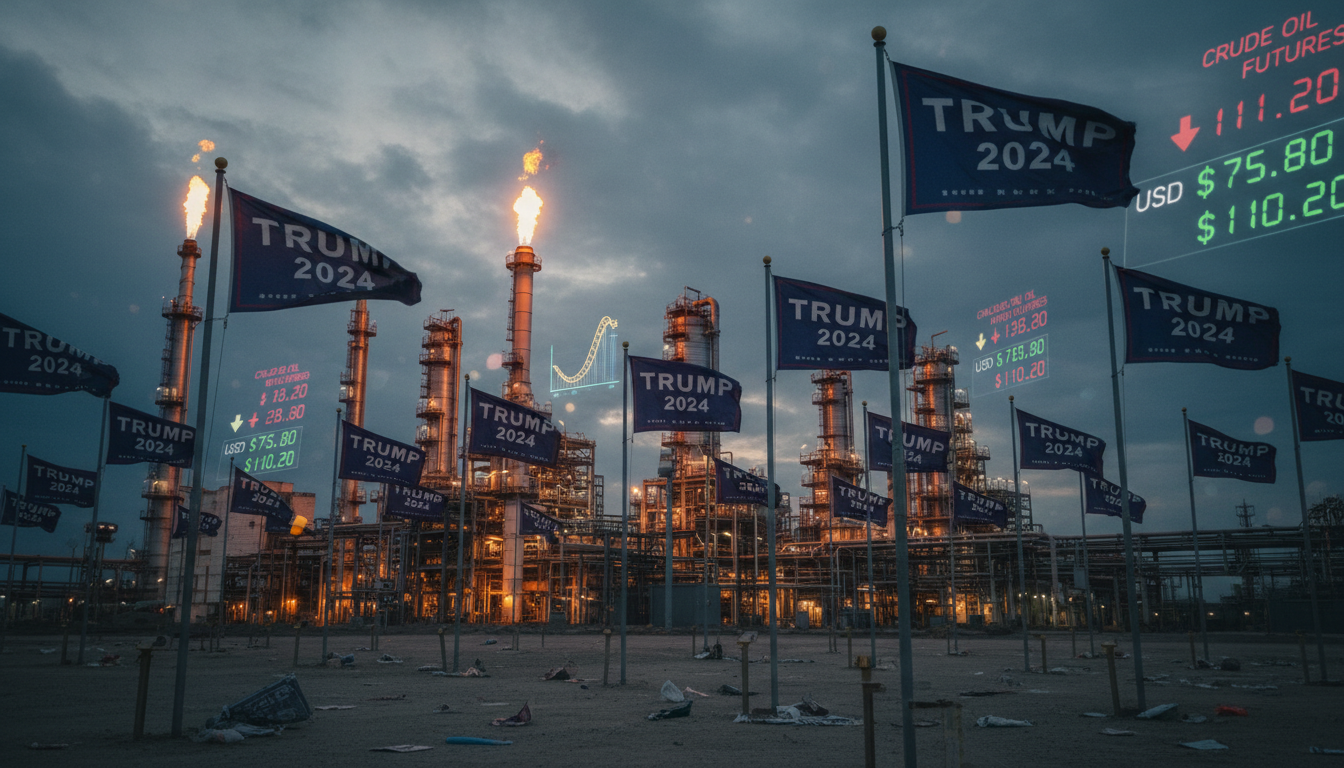
Veteran observers of global energy markets frequently grapple with a landscape defined by inherent volatility and complex interplay of geopolitical forces, economic indicators, and supply-demand fundamentals. Adding another layer of unpredictability, former President Donald Trump recently articulated his perspective on the trajectory of oil and natural gas prices, asserting that they could experience movement in either direction leading up to the upcoming U.S. midterm elections. This statement, shared on Truth Social, underscores the persistent uncertainty permeating the energy sector, a critical consideration for investors navigating these dynamic markets.
Specifically, Trump conveyed, "The price of oil and gas could be lower before the midterm elections, or maybe a little higher." This observation, while not delving into granular policy mechanisms or specific market drivers, nonetheless highlights the significant political dimension often associated with energy costs. For commodity investors, such high-profile commentary, even in its ambiguity, can contribute to the broader sentiment influencing trading decisions and strategic positioning within energy portfolios.
Navigating Persistent Market Volatility
The former President’s remarks resonate deeply within an energy market that has witnessed considerable flux. Crude oil and natural gas prices remain exceptionally sensitive to a confluence of factors, ranging from geopolitical flashpoints to evolving global demand patterns and potential supply disruptions. This sensitivity translates into heightened risk and reward profiles for investments across the exploration and production (E&P), midstream, and downstream segments of the oil and gas industry.
Key transit routes, such as the Strait of Hormuz or critical pipeline networks, continue to present inherent vulnerabilities. Any perceived threat or actual disruption in these arteries can send immediate ripples through global supply chains, affecting benchmark prices like WTI and Brent crude. Similarly, political instability or armed conflicts in major producing regions introduce a "geopolitical risk premium" into commodity prices, reflecting the market’s expectation of potential supply curtailments.
The Influence of Geopolitics and Supply Dynamics
Beyond the immediate headlines, the structural underpinnings of supply and demand are constantly shifting. Decisions made by major oil-producing blocs, notably OPEC+, regarding production quotas have profound implications for global supply balances. Investors closely monitor these announcements, anticipating how changes in output will impact the delicate equilibrium of the market. Non-OPEC supply, particularly from prolific shale basins, also plays a crucial role, with technological advancements and capital expenditure decisions dictating future production trajectories.
Moreover, unexpected events like natural disasters impacting energy infrastructure, or even planned maintenance, can temporarily tighten supply, prompting upward price revisions. These factors collectively create an environment where a prudent investor must remain acutely aware of a wide spectrum of potential catalysts that could swiftly alter market conditions and investment valuations.
Demand Trends and Economic Indicators
On the demand side, global economic growth serves as the primary engine for energy consumption. Periods of robust economic expansion typically correlate with increased industrial activity, transportation, and overall energy usage, driving up demand for oil and gas. Conversely, economic slowdowns or recessionary fears can significantly dampen demand, exerting downward pressure on prices.
Emerging markets, with their burgeoning populations and developing industrial bases, are particularly influential in shaping long-term demand trends. Any shifts in their growth trajectories or energy policies warrant careful consideration by investors. Additionally, seasonal variations, such as increased heating demand during winter months or higher fuel consumption during summer travel seasons, introduce predictable but still impactful fluctuations into the demand landscape.
Political Rhetoric and Investor Sentiment
The intersection of politics and energy markets is undeniable. Energy prices, particularly at the consumer level, often become a significant focal point in political discourse, especially during election cycles. High gasoline prices can inflame public sentiment and pressure policymakers to address energy costs, sometimes leading to discussions about strategic petroleum reserve releases, regulatory changes, or international diplomatic efforts to influence supply.
While Trump’s recent statement offered no specific policy prescriptions, it nonetheless adds to the narrative of market uncertainty. For investors, political rhetoric, even without immediate policy changes, can influence sentiment, trigger speculative trading, or encourage a "wait and see" approach. In a sector as politically sensitive as energy, understanding the potential implications of electoral outcomes on future policy and market conditions is a critical component of informed investment strategy.
Investment Strategy Amidst Uncertainty
For investors focused on the oil and gas sector, navigating such an environment of stated uncertainty necessitates a robust and adaptive approach. Diversification within energy portfolios, including investments across different sub-sectors (upstream, midstream, downstream, and even renewables), can help mitigate specific commodity price risks. Furthermore, understanding the financial health and operational efficiencies of individual companies becomes paramount.
Companies with strong balance sheets, disciplined capital allocation strategies, and robust hedging programs are often better positioned to weather price volatility. Investors should also closely monitor company guidance on production, capital expenditures, and shareholder returns, as these indicators reflect management’s outlook and strategy in a fluctuating market. Given the April 13, 2026, timestamp of this commentary, the proximity to a significant election cycle further amplifies the need for vigilance.
Looking Ahead: The Midterm Elections and Beyond
The U.S. midterm elections carry potential implications that extend beyond domestic politics, indirectly influencing global energy markets through various channels. The composition of Congress and the presidential administration can dictate future energy policies, including those related to drilling permits, environmental regulations, infrastructure projects, and international trade agreements. These policy shifts, in turn, can affect domestic production, export capabilities, and the overall investment climate for the energy sector.
Ultimately, Mr. Trump’s observation serves as a timely reminder that the factors driving oil and gas prices are multifaceted and perpetually in motion. From the battlegrounds of geopolitics to the boardrooms of energy companies and the polling booths of electoral districts, every element contributes to the complex mosaic of the global energy market. Savvy investors must remain agile, well-informed, and prepared for continuous shifts, recognizing that uncertainty is an inherent characteristic of this vital economic sector.