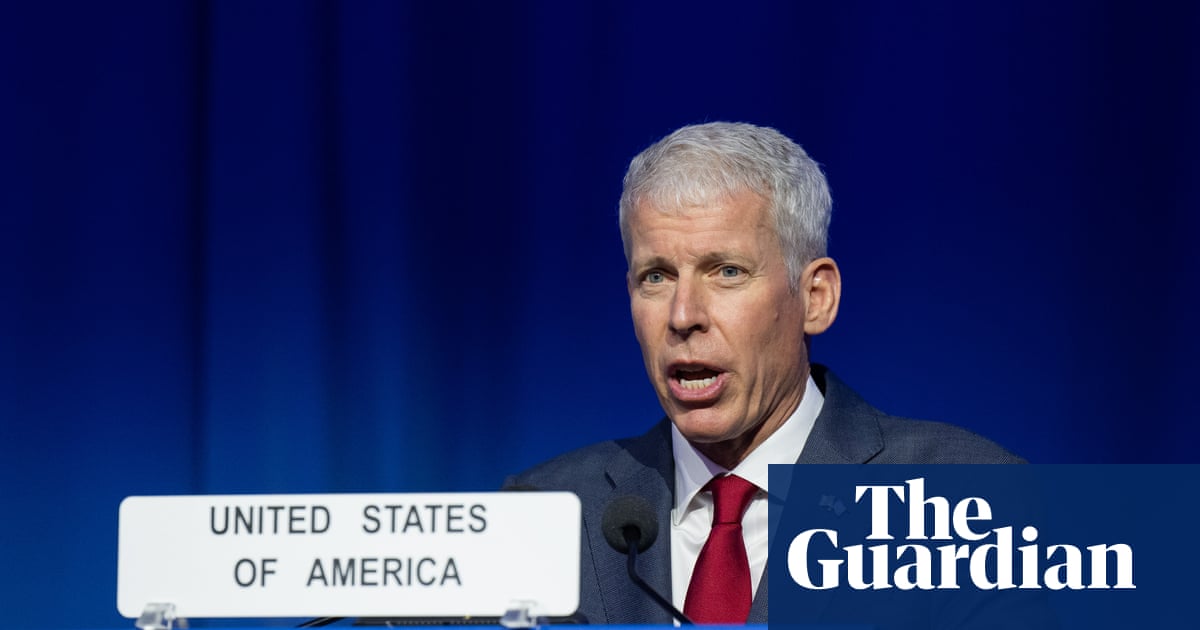
The U.S. energy landscape is bracing for a significant shift as the administration signals a decisive pivot away from green initiatives, prioritizing affordability and grid reliability through traditional energy sources. This week, Energy Secretary Chris Wright announced the department’s intent to return $13 billion in funding previously allocated for green projects, a move that starkly redefines the nation’s energy investment priorities. This decision, framed as a response to what the Secretary described as the “wasteful Green New Scam agenda” of the prior administration, carries substantial implications for investors navigating both the traditional oil and gas sector and the evolving renewable energy space. The rhetoric accompanying this action suggests a broader policy recalibration, challenging the efficacy and economic viability of current climate action while asserting a more assertive stance on project permitting and energy independence.
The $13 Billion Reallocation and its Sectoral Impact
Secretary Wright’s announcement to reallocate $13 billion away from green projects is a powerful declarative statement. This capital, originally earmarked for initiatives advancing the previous administration’s climate agenda, will now be returned to the Treasury. For investors, this move directly impacts the funding pipeline for renewable energy and sustainable technology ventures that have come to rely on federal support and incentives. Companies operating in solar, wind, battery storage, and other nascent green sectors may face increased pressure to demonstrate self-sufficiency and profitability without this governmental backing. Conversely, this re-prioritization could signal a more favorable environment for traditional oil and gas exploration, production, and infrastructure development. The administration’s stance is clear: the focus is on reducing energy costs and bolstering grid resilience, objectives it believes are better served by conventional energy sources. This shift demands that investors reassess their exposure to various energy sub-sectors, recalibrating expectations for growth trajectories and potential regulatory headwinds.
Re-evaluating Climate Policy Amidst Market Volatility
The administration’s critique of climate policy extends beyond funding, directly questioning its effectiveness in reducing emissions and its impact on energy costs. Secretary Wright contended that increased climate action has led to more expensive energy, subsequently lowering living standards. This perspective provides the philosophical underpinning for the policy changes now being implemented. Against this backdrop of significant policy shifts, the broader energy market continues to exhibit volatility. As of today, Brent crude trades at $98.34, reflecting a 1.06% daily dip, while WTI sits at $89.63, down 1.69%. This daily decline extends a more significant 14-day trend, which saw Brent fall from $112.57 on March 27th to $98.57 on April 16th, representing a substantial 12.4% contraction over that period. This recent price weakness, coupled with the administration’s vocal focus on affordability, creates a complex backdrop for energy investment decisions. Investors are keenly observing how this domestic policy stance might influence global energy supply and demand dynamics, especially as the U.S. potentially moves to maximize domestic fossil fuel production to counter price pressures and enhance energy security.
Shifting Sands for Project Permitting and Development
A critical aspect of the administration’s new energy posture involves a more assertive approach to project permitting and existing project approvals. Secretary Wright defended efforts to halt wind farm construction, even for already permitted projects, citing investigations into their environmental impacts. He also asserted the administration’s right to revoke permits for projects, drawing a parallel to a previous administration’s cancellation of the Keystone XL pipeline permit. This stance introduces a new layer of regulatory uncertainty across the entire energy sector. While ostensibly targeting renewables, the precedent set – that even permitted projects are subject to review and potential cancellation based on shifting political priorities – creates a heightened risk environment for all long-term energy infrastructure investments, whether in fossil fuels or renewables. Investors must now factor in a greater degree of political and regulatory risk, scrutinizing the legal and financial robustness of project approvals. The ability to navigate potential challenges to permits and secure stable regulatory environments will become paramount for companies seeking to deploy capital in U.S. energy projects.
Navigating Upcoming Catalysts and Investor Queries
With investors actively tracking market signals and frequently asking about current Brent crude prices and OPEC+ production quotas, the upcoming calendar of energy events gains heightened significance in light of these U.S. policy shifts. The OPEC+ Joint Ministerial Monitoring Committee (JMMC) meeting tomorrow, April 17th, followed by the Full Ministerial meeting on April 18th, will be crucial. Will the U.S. administration’s pivot towards potentially increasing domestic production influence OPEC+’s decisions on supply cuts? Any signals from these meetings regarding production adjustments could significantly impact crude prices and global supply balances. Furthermore, the weekly API and EIA crude inventory reports on April 21st/22nd and April 28th/29th, alongside the Baker Hughes Rig Count on April 24th and May 1st, will offer real-time insights into domestic supply and drilling activity. These data points will be particularly telling as the market assesses the immediate impact of the new administration’s pro-fossil fuel rhetoric. The Secretary’s decision to forgo attending COP30 in November further underscores the administration’s disengagement from international climate policy, a signal that may embolden traditional energy producers and dampen investor enthusiasm for globally-aligned green initiatives.
Investor Outlook and Strategic Positioning
The return of $13 billion in green project funding, coupled with a vocal critique of climate policy and a more aggressive stance on project permitting, marks a pivotal moment for energy investors. This administration is clearly signaling a re-emphasis on energy affordability and grid reliability through conventional means. For oil and gas investors, this could translate into a more supportive regulatory environment for exploration, production, and infrastructure, potentially unlocking new opportunities. However, the regulatory uncertainty introduced by the willingness to challenge even permitted projects demands careful due diligence. For investors in renewable energy, the landscape becomes more challenging, requiring a focus on projects with strong economic fundamentals that can thrive without direct government subsidies. Strategic positioning now requires a deep understanding of these policy currents, assessing companies’ exposure to regulatory risk, their resilience to shifting funding priorities, and their alignment with the administration’s core objectives of cost reduction and energy security. Diversification and adaptability will be key for navigating this evolving and potentially volatile energy investment climate.


