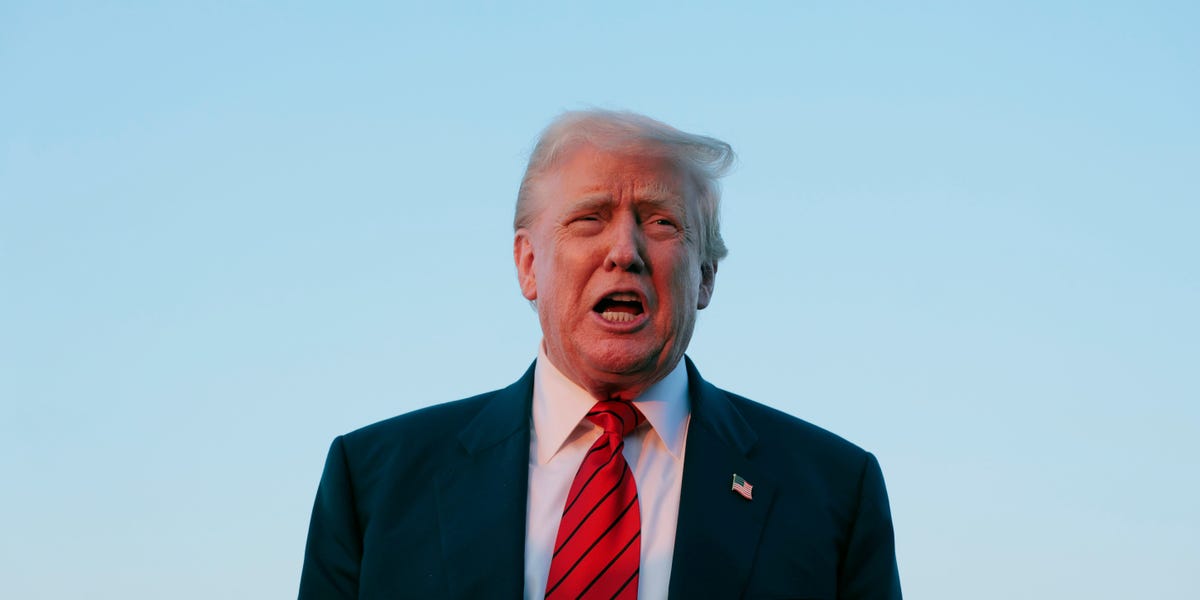
The global energy landscape is currently navigating a confluence of powerful forces, making astute investment analysis more critical than ever. While headlines might focus on the burgeoning European tech sector, spurred by the specter of a second Trump administration and its protectionist policies, the ripple effects for oil and gas markets are profound and deserve closer scrutiny. The narrative of “Make Europe’s tech ecosystem great again” might seem distant from crude oil futures, but the underlying shifts in geopolitical alliances, trade policies, and energy security priorities directly impact global demand, supply dynamics, and investment flows within our sector. Investors must look beyond superficial trends and understand how these macro shifts, from defense tech to AI sovereignty, will reshape the fundamentals of oil and gas.
Geopolitical Crosscurrents and Crude Market Volatility
The anticipation of a potential Trump 2.0 administration, characterized by sweeping tariffs and a more protectionist stance, introduces a significant layer of uncertainty into global trade and economic growth projections. These shifts inevitably translate into volatility for energy markets. As of today, Brent crude trades at $90.38 per barrel, marking a sharp decline of over 9% within the day, with a range spanning from $86.08 to $98.97. Similarly, WTI crude has seen a significant drop to $82.59, down over 9% from its opening. This sharp daily correction builds on a broader trend, with Brent having fallen from $112.78 just two weeks ago on March 30th to $91.87 yesterday, representing an 18.5% decline. Such rapid depreciation underscores investor anxiety about global demand prospects amidst potential trade wars and economic deceleration, even as geopolitical tensions remain elevated.
The perceived unreliability of traditional alliances and the push for “tech sovereignty” in Europe, particularly in defense and critical technologies, signal a world bracing for greater fragmentation. While increased defense spending often correlates with heightened geopolitical risk, which typically provides a floor or even a premium for crude prices due to potential supply disruptions, the current market action suggests that fears of an economic slowdown are presently outweighing these supply concerns. Oil and gas investors must therefore weigh these conflicting signals carefully: the long-term inflationary potential of geopolitical instability versus the immediate deflationary pressure of a contracting global economy under a protectionist regime.
Europe’s Energy Autonomy Drive and Its Long-Term Implications
The European pivot towards strengthening its “critical technologies” in areas like AI and climate, and its notable increase in defense tech investment—with European defense startups raising $2.11 billion this year after a banner $2.4 billion last year—is not merely a tech story. It’s a strategic move towards greater European autonomy, with profound implications for energy. A reduction in US funding for clean energy projects under a protectionist administration could paradoxically galvanize European efforts to accelerate their own energy transition, reducing reliance on external energy sources over time. This push for “tech sovereignty” includes significant investment in climate technologies, which could foster innovation in renewables, energy storage, and efficiency solutions that directly compete with or complement traditional fossil fuels.
For oil and gas investors, this means closely monitoring European energy policy and investment trends. Companies with strong European exposure, or those actively diversifying into lower-carbon solutions, may find themselves better positioned. The accelerated development of European-centric clean energy technologies could lead to a long-term structural shift in demand patterns, even if the immediate impact of global protectionism is a dampened overall energy demand. This evolving landscape requires a nuanced view of the energy transition, recognizing that geopolitical forces can accelerate or alter its trajectory in unexpected ways.
Navigating the Upcoming Calendar: Key Price Catalysts
In this environment of heightened uncertainty, upcoming market events will serve as crucial indicators for short to medium-term price direction. Investors are keenly focused on the immediate future, with many asking about the trajectory of oil prices and the stability of specific companies. The OPEC+ Joint Ministerial Monitoring Committee (JMMC) meeting on April 18th, followed by the Full Ministerial meeting on April 19th, will be paramount. With crude prices experiencing a significant downtrend over the past two weeks and substantial daily drops, the market will be looking for signals regarding production quotas. Many investors are currently asking, “What are OPEC+ current production quotas?” and more broadly, “What do you predict the price of oil per barrel will be by end of 2026?” The cartel’s response to current market weakness, and any indications of continued production cuts or a shift in strategy, will heavily influence investor sentiment and price forecasts for the remainder of 2026.
Beyond OPEC+, the weekly inventory reports from the API (April 21st, April 28th) and EIA (April 22nd, April 29th) will provide critical data points on demand and supply in the world’s largest consumer market. Any signs of inventory builds due to weaker demand, potentially exacerbated by global economic slowdowns from protectionist policies, could further pressure prices. Conversely, unexpected drawdowns could signal underlying resilience. The Baker Hughes Rig Count on April 24th and May 1st will offer insights into future supply trends from North America, completing the immediate picture of market fundamentals.
Investor Strategy: Resilience Amidst Shifting Sands
Given the complex interplay of geopolitical risk, economic uncertainty, and evolving energy policies, oil and gas investors must prioritize resilience and strategic positioning. The question of “How well do you think Repsol will end in April 2026?” reflects a broader investor concern about individual company performance in a volatile market. Companies like Repsol, with significant exposure to both traditional upstream and downstream operations, as well as a growing portfolio in renewables, embody the transition challenges and opportunities. Their performance will hinge on their ability to manage commodity price fluctuations, adapt to European energy policies, and capitalize on strategic investments in new energy vectors.
For the broader oil and gas sector, this means favoring companies with robust balance sheets, efficient operations, and a clear strategy for navigating both short-term market turbulence and long-term energy transition. Investment in technologies that enhance efficiency, reduce emissions, or offer diversification into adjacent energy sectors will likely outperform. While the immediate outlook is clouded by the potential for protectionist trade policies and their dampening effect on global demand, the underlying geopolitical tensions could reintroduce a risk premium to crude prices at any moment. Investors should thus maintain a diversified portfolio, emphasizing companies with strong free cash flow generation and prudent capital allocation, capable of weathering both the economic headwind of protectionism and the strategic shifts in global energy supply.


