The global energy landscape finds itself at a critical juncture, increasingly vulnerable to the shifting tides of international trade policy. A recent comprehensive analysis underscores how escalating global trade tensions could trigger significant volatility across energy markets, with potential ramifications for investors worldwide. Experts project a staggering variance in oil demand, up to 6.9 million barrels per day (b/d) by 2030, a direct consequence of the severity of tariffs and geopolitical friction. This extensive report dissects three distinct future scenarios—dubbed ‘Trade Truce,’ ‘Trade Tensions,’ and ‘Trade War’—to illuminate the potential trajectories for global GDP, commodity prices, metals demand, and critical power sector investments. For astute investors navigating the complexities of the oil and gas sector, understanding these divergent paths is paramount.
Crude Oil: A Spectrum of Demand and Price Outcomes
The trajectory for crude oil demand and pricing hinges precariously on the evolving trade environment. In a ‘Trade Truce’ scenario, characterized by reduced trade barriers and a more stable global economic outlook, oil demand is forecast to reach a robust 108 million b/d by 2030. Under these favorable conditions, Brent crude is anticipated to average US$74 per barrel (bbl), reflecting a healthy market balance and sustained economic growth. This outlook provides a relatively optimistic baseline for upstream and midstream investment planning, signaling steady returns.
However, the ‘Trade War’ scenario paints a far more somber picture for oil investors. Should protectionist policies intensify and global supply chains fragment, oil demand would experience a sharp downturn, commencing a decline after 2026. This contraction would exert immense downward pressure on prices, with Brent crude plummeting to an average of US$50/bbl. Such a dramatic price erosion would fundamentally reshape investment horizons and profitability across the entire petroleum value chain.
The ripple effects of diminished oil demand would be particularly acute for the refining sector. Industry analysis indicates that a scenario of falling oil demand would cause the global composite gross refining margin to collapse to barely break-even levels. This severe compression of profitability would inevitably force the rationalization of weaker refinery assets, with Europe identified as a particularly vulnerable region for site closures. Investors with exposure to refining operations, especially those with older or less efficient plants, must prepare for significant operational and financial pressures under such a challenging market dynamic.
Natural Gas and LNG: Navigating Oversupply and Geopolitical Shifts
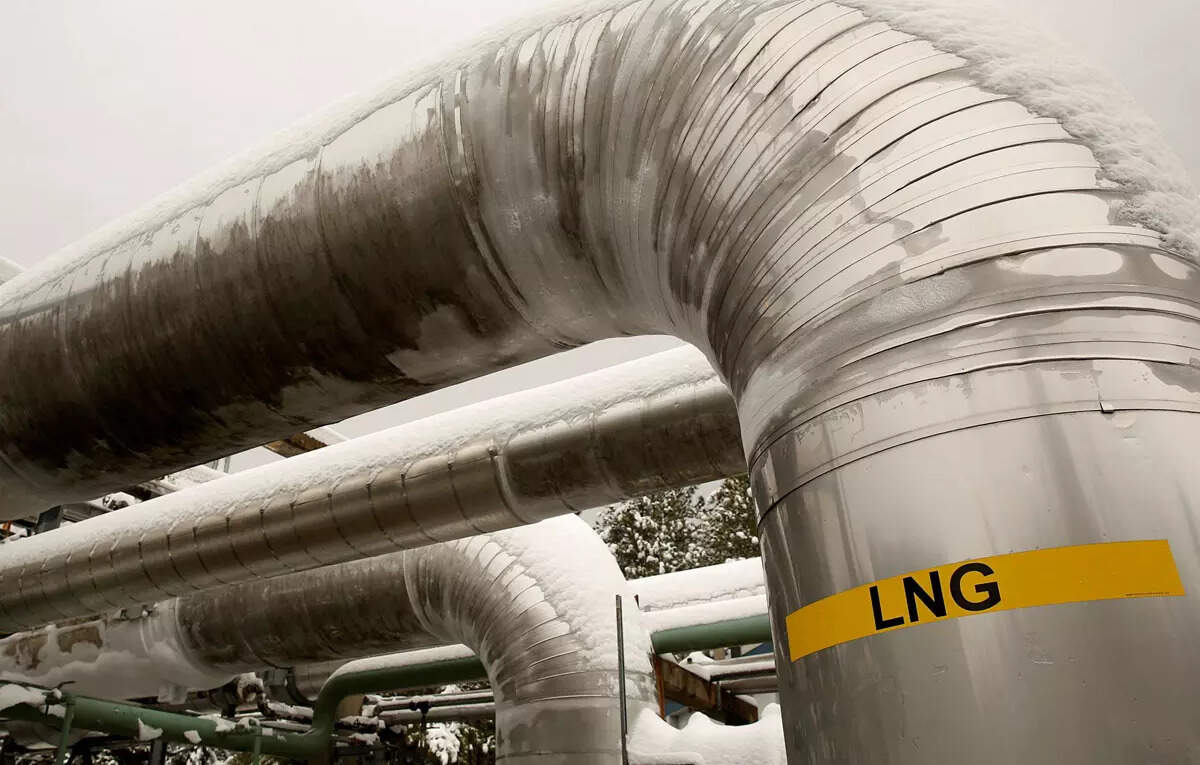
The global liquefied natural gas (LNG) market also stands on the cusp of profound shifts, with trade tensions exacerbating an already complex supply-demand balance. The ‘Trade War’ scenario threatens to intensify the projected oversupply in the LNG sector, creating a buyers’ market and putting significant downward pressure on prices. Under a ‘Trade Truce’ scenario, LNG prices are still projected to soften, moving from an average of US$11.2 per million British thermal units (mmbtu) in 2024 to US$7.2/mmbtu by 2030, reflecting new capacity coming online. However, a full-blown trade war would see prices fall even further, primarily driven by a substantial reduction in Chinese demand and the imposition of tariffs that could divert US LNG cargoes to less lucrative markets.
Despite these considerable downside risks, an intriguing paradox emerges for US LNG investments. While tariffs inherently pose challenges to global LNG supply chains and profitability, there remains a distinct possibility of increased investment in US LNG export facilities. This counter-intuitive outcome could stem from strategic diversification efforts by buyers seeking energy security outside of potentially volatile trade relationships, or from the sheer scale and competitive advantage of US gas production, making it attractive even with tariff hurdles. Investors closely monitoring the North American gas export complex should consider this nuanced dynamic, as the long-term strategic value of US LNG might outweigh short-term tariff-induced distortions.
Power Sector and Renewables: Disrupted Transitions
The power sector, particularly the burgeoning renewable energy and battery storage segments, faces significant headwinds from trade uncertainty. The ambitious transition towards decarbonization relies heavily on stable supply chains and predictable project costs, both of which are jeopardized by escalating tariffs and trade disputes. Unpredictable project costs are already disrupting long-term investment strategies, especially within the critical battery storage industry. China’s undeniable dominance in the global battery supply chain makes this sector particularly vulnerable to any trade restrictions or tariff impositions. For investors keen on the clean energy transition, the stability of these supply chains and the potential for cost inflation due to trade barriers present material risks that demand careful evaluation. The promise of green energy must contend with the realities of global manufacturing and trade policy.
Metals and Mining: Demand Destruction Looms
Beyond the direct energy markets, the foundational metals and mining sector also faces substantial threats from a deteriorating trade environment. Industrial demand for key commodities, which are essential for manufacturing, infrastructure, and renewable energy technologies, would suffer significantly. Under the ‘Trade War’ scenario, projections indicate a severe decline in demand for critical metals. Aluminium demand could contract by nearly 4 million tonnes by 2026, while copper demand is expected to fall by 1.2 million tonnes during the same period. These are not merely slowdowns but outright contractions in demand for metals that are cornerstones of global economic activity.
Even in the more optimistic ‘Trade Truce’ scenario, experts still foresee underlying supply issues challenging the metals sector. However, a full-blown tariff war would be catastrophic, effectively wiping out all projected growth for these crucial commodities through 2026. This stark reality means that investors in mining companies or related industrial sectors must brace for a period of zero growth, or even negative growth, driven directly by the chilling effect of trade protectionism on global industrial output and capital expenditure. The long-term investment thesis for many metals could be severely undermined by persistent trade friction.
Investor Vigilance: Navigating Persistent Trade Risks
While recent international trade agreements might offer temporary respites, the overarching message for energy investors is clear: significant risks persist on the horizon. The interconnectedness of global economies means that trade policy decisions reverberate far beyond tariff schedules, directly influencing energy demand, prices, and the very viability of investment projects. A future characterized by lower economic growth, an inevitable consequence of prolonged trade disputes, will invariably curb overall energy demand, depress commodity prices, and stifle investment across the entire spectrum of the energy industry.
Furthermore, the imposition of higher import prices, stemming from tariffs and disrupted supply chains, will elevate costs in diverse sectors, from the development of advanced battery storage solutions to the delivery of liquefied natural gas. For investors, this translates into potentially lower margins, increased project execution risks, and a heightened need for strategic agility. Prudent capital allocation in the coming years will demand a keen awareness of geopolitical developments and their direct implications for global trade flows, ensuring portfolios are robust enough to withstand the volatile currents of an increasingly protectionist world. The imperative for thorough due diligence and scenario planning has never been greater for those looking to secure value in the dynamic oil and gas markets.