The global oil and gas sector stands on the precipice of a profound technological transformation, a shift that promises to redefine operational efficiency, enhance sustainability, and unlock significant investor value through 2025 and beyond. As market dynamics evolve, driven by energy transition pressures and the relentless pursuit of operational excellence, companies embracing cutting-edge innovations are best positioned to deliver superior returns. For astute investors on OilMarketCap.com, identifying these technological frontrunners is paramount.
This analysis delves into the critical technologies poised to reshape the energy landscape, offering a roadmap for investors seeking to capitalize on the sector’s next growth phase. We explore how digitalization, advanced automation, and novel energy solutions are not merely buzzwords but actionable strategies driving tangible financial performance.
Digital Transformation: Powering Efficiency and Predictability
The bedrock of future profitability in oil and gas lies in comprehensive digital transformation. Companies that effectively integrate artificial intelligence (AI), machine learning (ML), and robust data analytics platforms are seeing unprecedented gains. For instance, AI-driven predictive maintenance systems are reducing equipment downtime by an estimated 20-30% across upstream and midstream operations, translating directly into millions of dollars in avoided costs annually for large operators. These systems analyze vast datasets from sensors, identifying potential failures before they occur, thereby optimizing maintenance schedules and extending asset lifespans.
Furthermore, advanced analytics are revolutionizing reservoir characterization and production optimization. ML algorithms can process seismic data and well logs far more efficiently than traditional methods, leading to more accurate subsurface models. This precision allows for optimized drilling locations and enhanced recovery strategies, potentially boosting recovery rates from existing fields by an additional 5-15%. For investors, this means identifying firms investing heavily in proprietary AI models and data infrastructure, as these capabilities will drive superior asset performance and capital allocation in the coming years.
The Internet of Things (IoT) and Edge Computing: Real-time Operational Intelligence
The proliferation of IoT devices across the O&G value chain is generating an avalanche of real-time data, from wellheads to refineries. This granular insight, processed at the “edge” – closer to the data source – empowers immediate decision-making and proactive problem-solving. Imagine smart sensors monitoring pipeline integrity, detecting micro-leaks or pressure anomalies instantaneously, preventing costly environmental incidents and regulatory fines. Such systems are demonstrating a capacity to reduce inspection costs by up to 40% while significantly improving safety profiles.
Edge computing complements IoT by enabling rapid analysis without the latency of cloud-based processing. This is particularly crucial for remote, data-intensive operations, ensuring that critical data insights are available precisely when needed. Companies that have successfully deployed scalable IoT architectures with integrated edge processing capabilities are reporting substantial improvements in operational visibility, asset utilization, and overall risk management. Investors should scrutinize companies’ strategies for integrating these technologies, as they are foundational to modern, efficient energy operations.
Advanced Robotics and Automation: Enhancing Safety and Productivity
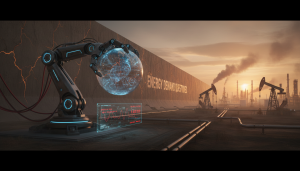
The deployment of advanced robotics and automation is fundamentally reshaping the physical aspects of oil and gas operations. Autonomous drilling rigs, for example, are not only increasing drilling speeds by up to 25% but also significantly reducing human exposure to hazardous environments, leading to substantial improvements in safety records. Drones equipped with high-resolution cameras and thermal imaging are conducting rapid, cost-effective inspections of flare stacks, pipelines, and offshore platforms, reducing the need for manual inspections by over 50% and minimizing downtime.
In downstream facilities, automated processing units and robotic arms are streamlining complex tasks, improving consistency, and reducing labor costs. The drive towards ‘lights-out’ operations in certain segments is gaining momentum, promising higher throughput and lower operational expenditures. Investors should look for companies making strategic investments in robotic solutions, as these initiatives signal a commitment to operational excellence and a competitive advantage in a labor-intensive industry.
Carbon Capture, Utilization, and Storage (CCUS): Future-Proofing Assets and Driving New Value
As environmental, social, and governance (ESG) considerations increasingly influence investment decisions, CCUS technologies are becoming indispensable for the long-term viability of oil and gas assets. Companies actively investing in and deploying CCUS solutions are not just mitigating emissions but also positioning themselves for new revenue streams, such as the sale of carbon credits or the utilization of captured CO2 in enhanced oil recovery (EOR). Projections suggest that the global CCUS market could reach hundreds of billions of dollars by the next decade, with significant growth expected through 2025.
For investors, identifying companies with robust CCUS development pipelines and strategic partnerships is crucial. These firms are effectively future-proofing their operations against stricter carbon regulations and appealing to a broader investor base focused on sustainable investing. The ability to commercialize captured carbon through innovative utilization pathways, such as converting it into valuable products, further enhances the investment thesis.
Enhanced Oil Recovery (EOR) and Subsurface Optimization: Maximizing Existing Assets
While new discoveries are vital, maximizing output from mature fields through advanced EOR techniques remains a powerful lever for profitability. Innovations in chemical EOR, miscible gas injection, and even microbial EOR, coupled with advanced subsurface analytics, are extending the economic life of fields by decades. These technologies are enabling operators to unlock an additional 10-20% of the original oil in place, significantly boosting reserves and production without the high capital expenditure associated with frontier exploration.
Precision geosteering, enabled by real-time data from downhole sensors and AI-driven models, ensures wells stay within the most productive zones, maximizing contact with the reservoir. This level of subsurface optimization is leading to higher initial production rates and shallower decline curves. Companies that demonstrate a strong track record of applying these advanced EOR and subsurface optimization techniques are effectively increasing the value of their existing asset base, a critical factor for sustained returns.
Investment Outlook: Prioritizing Technological Acumen
The oil and gas sector in 2025 will be characterized by a growing chasm between technologically advanced operators and those lagging in adoption. For investors seeking to navigate this evolving landscape, a keen focus on companies demonstrating clear, measurable progress in digital transformation, automation, CCUS, and EOR is non-negotiable. These are the firms that will lead in operational efficiency, environmental stewardship, and ultimately, financial performance.
Evaluating management teams’ commitment to innovation, assessing capital allocation towards R&D and technology deployment, and scrutinizing partnerships with tech providers will be key differentiators. The companies poised for the strongest returns in 2025 are not just producing energy; they are intelligently leveraging technology to redefine how that energy is found, extracted, processed, and delivered to the world.