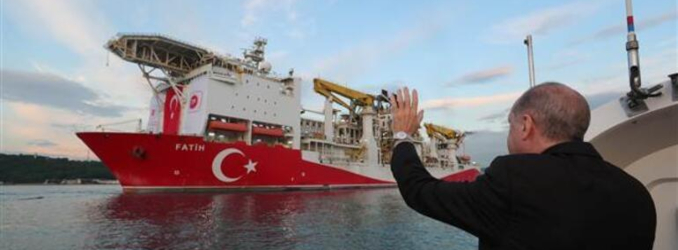
Turkey’s state energy company, Turkiye Petrolleri AO (TPAO), is poised for a significant leap forward, announcing plans to raise up to $4 billion through its inaugural international sukuk issuance. This ambitious debt offering, targeting a five-year term by year-end, signals a strategic drive to dramatically escalate oil and gas production both domestically and across its growing international portfolio. For investors keenly watching the global energy landscape, TPAO’s move presents a compelling case study in balancing national energy independence with the complex realities of volatile commodity markets and evolving geopolitical dynamics. Our analysis dives into the details of this offering, its implications for TPAO’s growth trajectory, and how it aligns with broader market trends and investor concerns.
TPAO’s Ambitious Expansion: A Strategic Play for Energy Independence
TPAO’s planned $4 billion sukuk is not merely a fundraising exercise; it’s the financial engine behind a bold national strategy to bolster Turkey’s energy security and reduce reliance on imports. The primary beneficiaries of this capital infusion are key domestic projects, notably the Gabar oil field in southeast Turkey and the Sakarya natural gas field in the Black Sea. The company has set aggressive targets, aiming to boost gas output from Sakarya to 45 million cubic meters per day (MMcm/d) by 2028, a substantial increase from its current 9.5 MMcm/d. Furthermore, TPAO is actively pursuing the development of unconventional reserves in the southeast through strategic partnerships with U.S.-based Continental Resources, Inc. and TransAtlantic Petroleum Ltd.
This domestic focus is complemented by a robust international footprint. TPAO is expanding its exploration endeavors in regions like Libya, Oman, and Pakistan, building upon existing production assets in Azerbaijan, Iraq, and Russia. Last year, TPAO’s domestic operations yielded 33.7 million barrels (MMbbl) of oil and 2.2 billion cubic meters (Bcm) of gas, alongside 39.4 million barrels of oil equivalent (MMboe) from its international ventures. This dual-pronged strategy underscores TPAO’s commitment to becoming a more significant player in the global energy market, leveraging both proven and frontier resources to meet future demand.
Navigating Volatile Waters: Market Dynamics and Investor Sentiment
TPAO’s move comes at a fascinating juncture for crude oil markets. As of today, Brent crude trades at $90.17, marking a significant daily decline of 9.28%, with the day range fluctuating between $86.08 and $98.97. Similarly, WTI crude sits at $82.21, down 9.83% for the day. This immediate volatility follows a broader trend, with Brent having fallen by $14, or 12.4%, from $112.57 on March 27th to $98.57 just yesterday. Such pronounced short-term price movements inevitably raise questions among investors, many of whom, according to our proprietary reader intent data, are keenly asking: “What do you predict the price of oil per barrel will be by end of 2026?”
TPAO’s decision to pursue a large-scale debt offering amidst this backdrop suggests a long-term conviction in the fundamental strength of oil and gas demand, or a strategic imperative driven by national energy security goals that transcend immediate price fluctuations. The appeal of this sukuk is further enhanced by Turkey’s improving macroeconomic environment, characterized by easing political tensions, a commitment to orthodox economic policies, and a more favorable sentiment towards emerging markets. This has led to declining borrowing costs for Turkish entities and a notable expansion of lending from Gulf banks, creating a more conducive environment for TPAO’s debut international issuance despite the broader commodity market volatility. This strategic timing, leveraging domestic financial tailwinds against global commodity headwinds, will be a key factor in attracting investors.
The Upcoming Calendar: Catalysts and Risks for Oil & Gas Investments
The timing of TPAO’s sukuk preparation coincides with a series of critical upcoming energy events that could significantly shape market sentiment and, by extension, investor appetite. The immediate focus is on the OPEC+ Joint Ministerial Monitoring Committee (JMMC) meeting tomorrow, April 17th, followed by the full OPEC+ Ministerial Meeting on April 18th. These gatherings are pivotal, as investors are actively seeking answers to questions like “What are OPEC+ current production quotas?” The outcomes of these meetings will directly impact global supply policy and crude oil prices, potentially creating either tailwinds or headwinds for TPAO’s offering.
Beyond OPEC+, weekly data releases, such as the API Weekly Crude Inventory (April 21st, April 28th) and the EIA Weekly Petroleum Status Report (April 22nd, April 29th), will provide crucial insights into short-term supply-demand balances. These reports, alongside the Baker Hughes Rig Count (April 24th, May 1st) which indicates upstream activity levels, will paint a clearer picture of the industry’s health and future trajectory. TPAO’s strategy to expand production through this debt issuance implies a belief in robust long-term demand, a perspective that will be continuously tested by these recurring market catalysts. Investors will be evaluating whether TPAO’s ambitious growth targets align with the evolving macro supply-demand narrative shaped by these imminent events.
Unpacking TPAO’s Financials and Investor Appeal
TPAO’s financial performance provides a foundation for its ambitious expansion. The company reported a profit of 15.4 billion liras last year, equivalent to approximately $390 million at the time of the comments. While this profit figure offers a snapshot of past performance, the $4 billion debt offering represents a substantial capital injection relative to recent earnings, signaling a significant leveraging of the balance sheet for future growth. The non-deal roadshow meetings held in London, Abu Dhabi, and Dubai were crucial for briefing potential international investors on TPAO’s financial outlook and its extensive project pipeline, including the high-potential Black Sea gas and Gabar oil fields.
The establishment of TPAO Varlik Kiralama earlier this month specifically to manage the sukuk issuance underscores a professional and structured approach to this debut international debt offering. The choice of Islamic debt (sukuk) is strategic, tapping into a growing pool of liquidity from Sharia-compliant investors, particularly in the Gulf region where banks are actively expanding their lending into Turkey. This financial instrument offers diversification for TPAO while potentially attracting a distinct investor base. For investors, the appeal lies in TPAO’s sovereign backing, its critical role in Turkey’s energy security, and the clear growth trajectory outlined for its domestic and international assets, offering exposure to an emerging market energy powerhouse poised for significant output increases.


