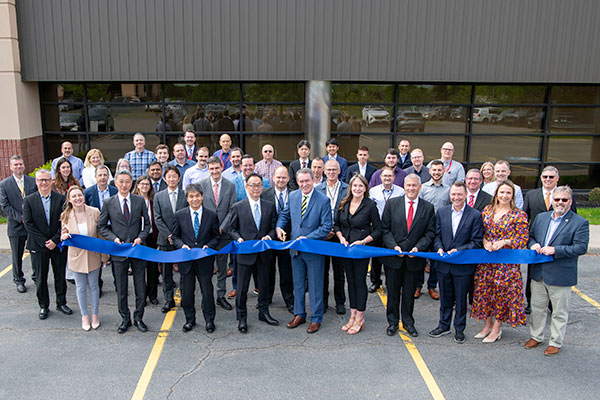
In a strategic move signaling the accelerating shift towards diversified energy solutions, industrial giants Raymond Corporation and Toyota Material Handling are significantly boosting their commitment to advanced power systems with a new, cutting-edge test center in upstate New York. This substantial investment is poised to accelerate the development and deployment of battery and fuel cell technologies, directly impacting the future energy landscape and offering critical insights for investors tracking the evolution of industrial electrification and the broader energy transition.
The new facility, strategically located in Honeoye Falls, New York, will serve as a hub for intensive research and rigorous testing of next-generation energy systems specifically designed for Raymond and Toyota’s extensive fleet of lift trucks. While seemingly a niche market, the materials handling sector is a bellwether for broader industrial energy consumption trends, where the displacement of traditional fossil fuels by alternative power sources is gaining undeniable momentum. For oil and gas investors, this development underscores the pervasive nature of decarbonization efforts, even in historically fuel-intensive operational environments.
Industrial Electrification: A Growing Market for Investors
Raymond Corporation, a pivotal employer in New York with over 2,500 workers, anticipates the new test center will immediately generate up to 40 new high-quality jobs. This initial employment boost highlights not only the companies’ commitment to regional economic development but also the growing demand for specialized talent in the burgeoning clean energy sector. Michael G. Field, Chief Operations Officer of Toyota Material Handling North America (TMHNA), emphasized the dual benefit, stating that the initiative reflects a shared dedication to job creation and the advancement of next-generation energy technologies. This strategic alignment with state and local economic development bodies, including strong support from Empire State Development, is critical for understanding the systemic push behind these energy shifts.
The commitment extends beyond a single facility. Raymond is also slated to lease additional space on Carriage Street in Honeoye Falls, earmarking it specifically for advanced fuel cell testing. This dedicated fuel cell facility, projected to commence operations in late 2027, is a significant marker for the hydrogen economy’s expansion. The project is further bolstered by state support, including up to $400,000 in state tax credits, a clear signal of public policy’s role in incentivizing private sector investment in clean energy infrastructure. This second phase of expansion is expected to create an additional 20 jobs, bringing the total new employment opportunities in Monroe County to 60. For investors, these state-backed incentives represent a de-risking factor and an accelerant for the adoption of these technologies.
Fuel Cells and Batteries: The Dual Thrust of Industrial Decarbonization
The dual focus on battery and fuel cell technology is particularly noteworthy. Battery electric solutions have already made significant inroads in lighter-duty materials handling equipment, offering zero-emission operation and reduced noise. However, for heavier-duty applications, longer shifts, and environments requiring rapid refueling, hydrogen fuel cells present a compelling alternative. Fuel cells offer extended run times and quick hydrogen replenishment, mimicking the operational efficiency of internal combustion engines without the associated emissions.
For oil and gas investors, the increasing adoption of fuel cells in industrial applications has direct implications for the future demand for hydrogen. While currently a nascent market, the scaling of hydrogen production, whether through natural gas reforming (blue hydrogen) or renewable electrolysis (green hydrogen), represents both an opportunity and a challenge for traditional energy companies. Investments like Toyota and Raymond’s test center will drive down costs, improve efficiency, and accelerate the commercial viability of hydrogen solutions, potentially creating new market dynamics for gas producers and infrastructure providers.
Strategic Capital Allocation in a Transforming Energy Market
Jennifer Lupo, Vice President of Technology Solutions at TMHNA, underscored the strategic vision behind these investments, expressing enthusiasm for the growth in New York and the collaborative effort toward an innovative and energy-efficient future. This sentiment echoes a broader corporate imperative across industries: to align operational strategies with sustainability goals and to future-proof businesses against evolving energy paradigms and regulatory pressures.
The capital being deployed by these leading industrial equipment manufacturers into advanced energy testing facilities serves as a tangible indicator of where smart money is flowing. While the immediate impact on global crude oil or natural gas demand might appear marginal, the cumulative effect of such investments across various industrial sectors is substantial. As more companies electrify their fleets and adopt hydrogen solutions, the demand for conventional liquid fuels and even grid electricity will be reshaped. Oil and gas investors must closely monitor these granular shifts, as they collectively contribute to the larger narrative of energy transition and demand destruction for traditional hydrocarbons in specific segments.
Investor Takeaways: Navigating the Evolving Energy Landscape
For savvy investors in the oil and gas sector, these developments offer several key takeaways. Firstly, the industrial segment is a critical battleground in the energy transition. Companies like Toyota and Raymond are making significant long-term bets on alternative fuels, driven by economic efficiencies, environmental mandates, and technological advancements. Secondly, government support, exemplified by state tax credits, plays a crucial role in accelerating the adoption and maturation of these technologies. Investors should factor in regulatory environments and incentives when assessing the growth trajectory of new energy ventures.
Finally, the growing sophistication of battery and fuel cell technologies, especially as demonstrated in demanding industrial applications, signals a robust future for these energy vectors. Oil and gas companies that are actively diversifying into hydrogen production, carbon capture, or renewable energy infrastructure may find strategic alignment with these emerging industrial demands. Conversely, those solely focused on traditional hydrocarbon extraction must continuously evaluate the long-term demand elasticity as sectors like materials handling progressively shift away from internal combustion power. The New York investment by Raymond and Toyota is more than just a facility; it’s a testament to the inexorable march towards a more diversified and electrified energy future.