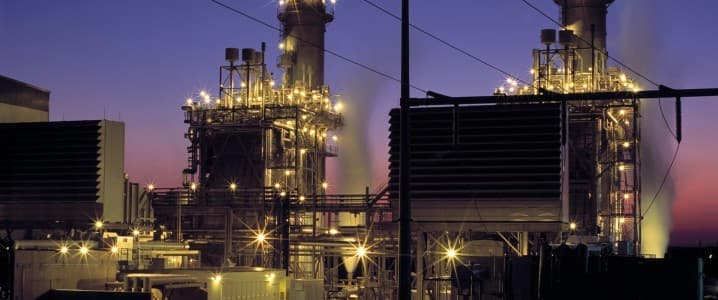
TotalEnergies has announced a significant expansion of its European power business, cementing its commitment to an integrated energy strategy. The French supermajor is set to acquire 50% of EPH’s flexible power generation assets in Western Europe through a substantial all-stock transaction valued at $5.9 billion (5.1 billion euros). This strategic move, encompassing gas-fired and biomass power plants, alongside batteries, across key markets like Italy, the United Kingdom, Ireland, the Netherlands, and France, positions TotalEnergies to significantly bolster its footprint in the evolving European electricity landscape. With the total enterprise value of these assets pegged at $12.3 billion (10.6 billion euros), representing a multiple of 7.6 times the expected 2026 EBITDA, this deal is a clear signal of TotalEnergies’ intent to accelerate its energy transition.
TotalEnergies’ Strategic Gamble: Diversifying Beyond the Barrel
The acquisition, structured as an all-stock deal, will see EPH receive 95.4 million TotalEnergies shares, making it one of the supermajor’s largest shareholders with approximately 4.1% of the company’s capital. This structure not only aligns interests but also underscores a shared vision for the future of European power generation. A 50/50 joint venture will be established to manage the assets industrially and drive business development, while both TotalEnergies and EPH will market their respective shares of production under a tolling arrangement. This setup is perfectly aligned with TotalEnergies’ Integrated Power strategy, aiming to enhance the crucial complementary relationship between intermittent renewable power generation and flexible, on-demand sources like gas-fired plants and battery storage. CEO Patrick Pouyanné emphasized that this transaction allows TotalEnergies to fully capitalize on gas-to-power integration, creating significant added value for its extensive LNG chain, importantly, “independently of oil cycles.” This is a stark contrast to some European peers who have scaled back on renewable investments, highlighting TotalEnergies’ distinct path toward a 12% profitability target for its Integrated Power business.
Navigating Volatility: A Hedge Against Oil Price Swings
The timing and strategic rationale behind TotalEnergies’ aggressive pivot into flexible power generation are particularly resonant in the current market environment. As of today, April 17th, Brent crude trades at $89.81, experiencing a significant daily downturn of 9.64%. WTI crude is not far behind, standing at $82.08, a steep 9.97% drop within the day’s trading range. This abrupt market correction follows a broader trend over the past two weeks, where Brent crude has shed over $14 per barrel, declining from $112.57 on March 27th to $98.57 just yesterday. This stark volatility underscores the very challenge TotalEnergies aims to mitigate. While many investors are keenly asking about the trajectory of oil prices by the end of 2026, this deal positions TotalEnergies to build a more resilient revenue stream, less susceptible to the unpredictable swings of the crude market. By integrating flexible power assets, the company hedges against commodity price fluctuations, leveraging its gas supply capabilities to fuel power generation and capture value across the entire energy chain.
Upcoming Events and the Broader Energy Landscape
The broader energy market is bracing for a series of critical events in the coming weeks, whose outcomes will undoubtedly influence investor sentiment across the sector. Tomorrow, April 18th, the full OPEC+ Ministerial Meeting is scheduled, following today’s Joint Ministerial Monitoring Committee (JMMC) discussions. These gatherings are closely watched for any shifts in production quotas, a frequent point of inquiry among our readership, and will inevitably shape the short-term supply dynamics of the global oil market. Further insights into market fundamentals will come from the API Weekly Crude Inventory report on April 21st, followed by the EIA Weekly Petroleum Status Report on April 22nd, and the Baker Hughes Rig Count on April 24th. While these events primarily impact the crude oil segment, their ripple effects are felt throughout the energy complex. TotalEnergies’ strategic expansion into flexible power generation, however, places it in a strong position to navigate potential market turbulence stemming from these oil-centric decisions. The company’s diversified portfolio aims to derive growth from the increasing demand for electricity, a trend less directly tethered to the geopolitical and supply-side factors that dictate crude prices, offering a more stable long-term growth trajectory.
Investor Sentiment and Long-Term Value Creation
Our proprietary reader intent data highlights a clear focus among investors on the performance of European energy majors and the long-term outlook for commodity prices. Beyond specific inquiries about the potential performance of companies like Repsol or precise oil price predictions for year-end 2026, there’s a strong underlying desire for clarity on how these industry titans are strategically positioning themselves for the energy transition. TotalEnergies’ $5.9 billion all-stock acquisition directly addresses these concerns by demonstrating a tangible commitment to future-proofing its business model. The EPH deal is not merely an asset swap; it’s a strategic alliance that brings a significant new shareholder into TotalEnergies’ fold, signaling mutual confidence in the long-term vision. The focus on flexible generation assets—gas, biomass, and batteries—underpins a strategy that provides stability and responsiveness to the grid, essential for supporting the intermittent nature of renewables. This integrated approach, targeting a robust 12% profitability for its Integrated Power segment, aims to create a more resilient, diversified revenue base, appealing to a broader spectrum of investors seeking both growth and stability in the evolving global energy sector.


