TotalEnergies Ignites Central Asian Energy Transition with $1.2 Billion Kazakh Wind and Storage Project
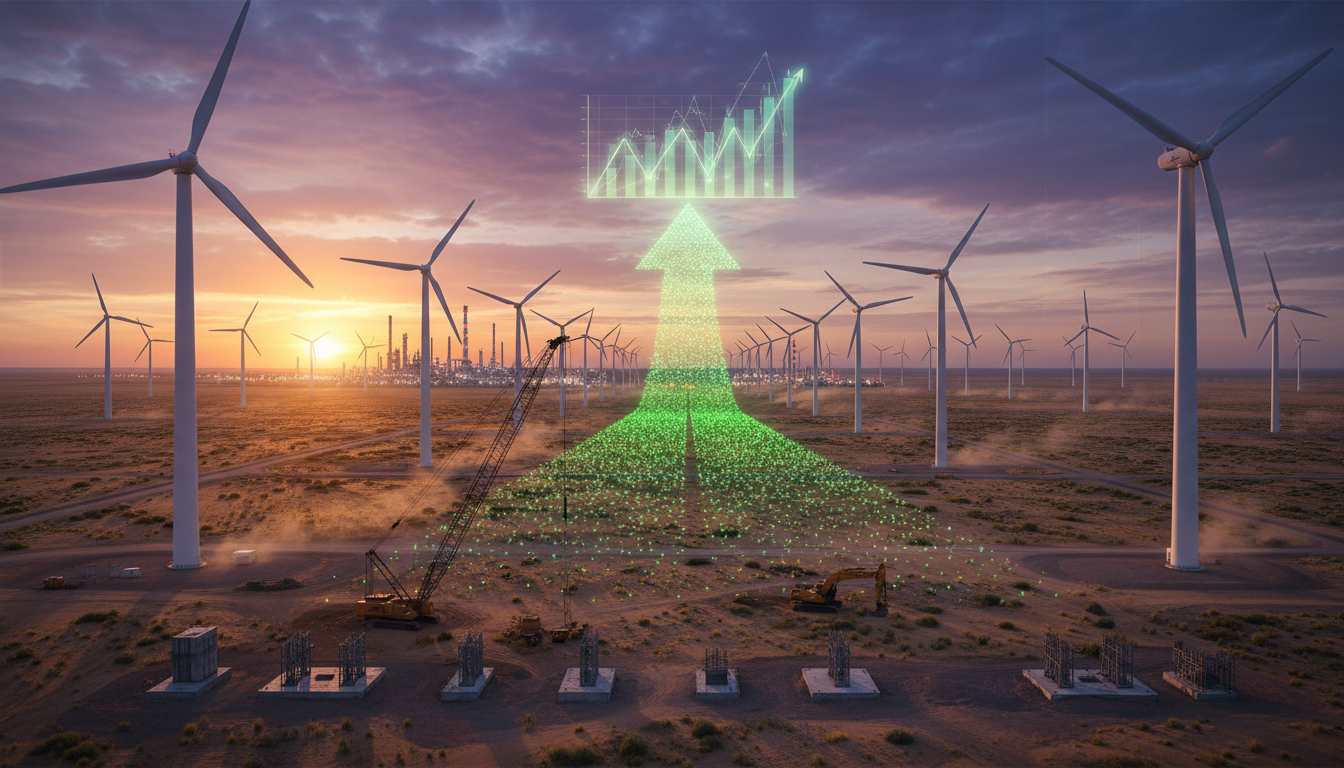
Global energy powerhouse TotalEnergies has made a decisive strategic move into Central Asia’s evolving energy landscape, greenlighting a landmark $1.2 billion investment in southeast Kazakhstan. This ambitious Mirny development will integrate a massive 1 gigawatt (GW) onshore wind farm with a substantial 600 megawatt-hour (MWh) battery storage system, poised to fundamentally reshape the nation’s power generation mix and significantly bolster grid resilience.
For investors keenly observing the global energy transition, this project represents a compelling blueprint for large-scale renewable energy deployment in emerging markets. It marries vast generation capacity with crucial grid-stabilizing technology, underpinned by a robust financial framework designed to attract long-term capital. The initiative directly supports Kazakhstan’s stated goal of achieving 15% renewable electricity by 2030 and its commitment to net-zero emissions by 2060, making it a pivotal component of the nation’s energy future.
Strategic Investment De-risked by Government Offtake Agreement
The Mirny project is structured with a clear focus on revenue certainty and investment security. TotalEnergies holds a majority stake in the venture, alongside key state-linked partners Samruk Energy and KazMunayGas. Crucially, the electricity generated by the 150 wind turbines and stored within the battery system will be sold under a comprehensive 25-year agreement with the Kazakh government. This long-term, sovereign-backed power purchase agreement (PPA) is a cornerstone of the project’s financial viability, providing predictable cash flows that mitigate revenue volatility – a critical factor for attracting significant capital into large-scale infrastructure projects within emerging economies.
Such de-risking mechanisms are increasingly common and essential in regions undergoing rapid energy transitions. They provide the necessary confidence for institutional investors to commit funds to projects that might otherwise face higher risk premiums, thereby unlocking vital capital for sustainable development. The wind farm itself is expected to generate enough clean electricity to supply approximately one million people over its operational lifespan, underscoring its profound societal and environmental impact.
Battery Storage: The linchpin of Grid Stability and Renewable Integration
A distinguishing feature of the Mirny development is the integral role of its 600 MWh battery energy storage system. This sophisticated component is not merely an add-on; it is central to the project’s operational value and its ability to effectively integrate into Kazakhstan’s existing power infrastructure. The nation’s power system historically relies heavily on coal, exhibiting limited flexibility to accommodate the intermittent nature of renewable energy sources like wind.
By coupling the powerful wind farm with advanced battery storage, the project effectively addresses key challenges of grid stability. The storage system will smooth the variable output of the wind turbines, ensuring a more consistent and reliable power supply. This capability becomes increasingly indispensable as countries worldwide accelerate their renewable energy deployment without fully modernizing their transmission and distribution networks. Furthermore, battery systems empower operators to shift energy supply to periods of peak demand, optimizing grid efficiency and reducing the reliance on older, often fossil fuel-fired peaking power plants. For policymakers and energy grid operators, this hybrid model offers a credible and scalable pathway to significantly expand renewable energy penetration without compromising system integrity or reliability, aligning with global trends where storage is becoming non-negotiable for large-scale variable renewable energy integration.
Multilateral Financing Underpins Confidence in Emerging Markets
The financing structure for the Mirny project further signals strong confidence in Kazakhstan’s regulatory environment and market conditions. Approximately 75% of the project’s total investment is structured as debt, secured through an influential international consortium. This consortium includes the European Bank for Reconstruction and Development (EBRD) alongside several other major financial institutions. The involvement of multilateral lenders like the EBRD is highly significant, as it not only helps to lower borrowing costs but also substantially enhances the project’s credibility and acts as a powerful signal of stability and attractiveness to other potential private investors.
Blended financing models, which strategically combine public and private capital, are increasingly critical for de-risking large-scale infrastructure investments in emerging markets. These structures facilitate the attraction of private capital while ensuring alignment with broader development and climate objectives. For institutional investors, the Mirny project stands as a prime example of how collaboration between public and private entities can effectively converge to deliver bankable, clean energy assets in regions that are still navigating the early stages of their comprehensive energy transition.
Aligning Corporate Ambition with National Climate Imperatives
The Mirny project strategically aligns with both Kazakhstan’s ambitious national climate targets and TotalEnergies’ expansive corporate decarbonization strategy. Kazakhstan’s commitment to achieving 15% renewable electricity by 2030 and reaching net-zero emissions by 2060 will heavily rely on the successful implementation of projects of this scale and nature. These developments are instrumental in reducing the nation’s historical dependence on coal and constructing the robust infrastructure required for a more flexible, diversified, and sustainable energy system.
For TotalEnergies, this investment powerfully reinforces its broader corporate strategy to significantly expand its low-carbon electricity capacity, particularly in high-growth emerging markets where energy demand is projected to be strongest. The company boasts a longstanding presence in Kazakhstan, operating since 1993 with a diversified portfolio spanning hydrocarbon production, solar assets, and stakes in major ventures such as the North Caspian development. Globally, TotalEnergies has cultivated a substantial gross renewable capacity exceeding 34 GW and is actively working towards dramatically scaling its electricity output by 2030. The Mirny project thus represents a significant addition to the company’s expanding pipeline of wind, solar, and storage assets, all geared towards balancing critical energy security needs with ambitious decarbonization goals.
Key Takeaways for Energy Executives and Investors
For C-suite executives navigating the complexities of the global energy sector and investors seeking strategic opportunities, the Mirny project illuminates three unmistakable trends shaping the ongoing energy transition.
Firstly, the era of standalone renewable generation is evolving; hybrid projects that seamlessly combine generation capacity with advanced storage solutions are rapidly becoming the industry standard for new developments, particularly in markets characterized by aging or underdeveloped grid infrastructure.
Secondly, the foundational importance of long-term, government-backed agreements remains paramount for unlocking capital at the scale required to transform energy systems in emerging economies. These agreements provide essential predictability and risk mitigation.
Thirdly, multilateral financing continues to play an indispensable role in de-risking substantial clean energy investments, acting as a powerful catalyst to crowd in private capital and accelerate the pace of the global energy transition.
As nations like Kazakhstan actively pursue the diversification of their energy mix, large-scale, integrated projects such as Mirny will undeniably define the credibility and speed of their transition. For major global energy companies, these investments offer a compelling pathway for sustainable growth that harmonizes ambitious climate targets with the fundamental long-term demand for secure and clean energy.