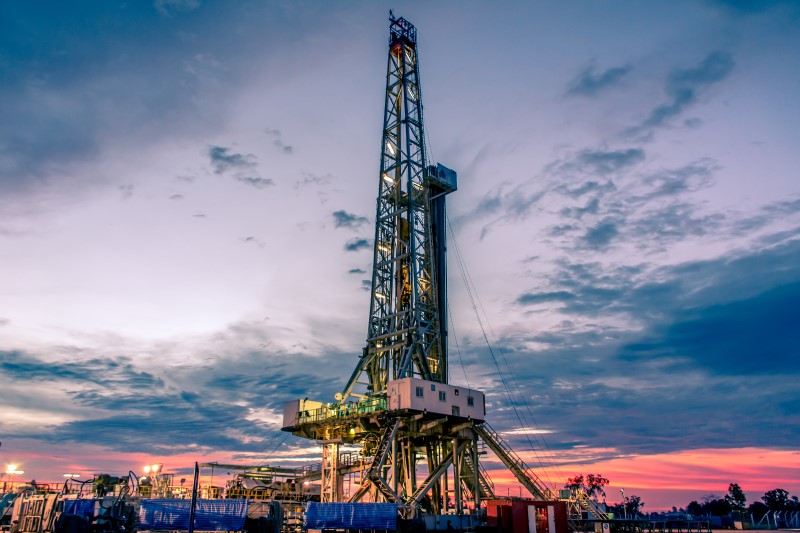
The global energy landscape is a complex tapestry of immediate market reactions and long-term strategic plays. Amidst a turbulent crude market, the recent award of the Ahara exploration license in Algeria to TotalEnergies and QatarEnergy stands out as a significant long-term commitment. This venture, with TotalEnergies as the operator holding a 24.5% effective interest alongside QatarEnergy’s identical share and SONATRACH’s majority 51%, represents a calculated bet on future hydrocarbon demand and the stability of Algeria’s evolving energy sector. For investors, this move signals a fascinating intersection of regional strategic partnerships, new regulatory frameworks, and a continued pursuit of resource security in a world grappling with energy transition narratives.
Strategic Deep Dive into the Ahara License
The Ahara license is not merely another exploration block; its strategic importance is underscored by its sheer scale and geological promise. Spanning approximately 14,900 km² and situated at the confluence of the prolific Berkine and Illizi Basins, this area holds considerable potential for new discoveries. TotalEnergies’ role as operator for the exploration and appraisal phases is a testament to its long-standing operational expertise in the region. The company’s existing footprint in Algeria, encompassing interests in the Tin Fouyé Tabankort and Timimoun gas fields, as well as the Berkine Basin oil fields (Blocks 404a and 208), provides a strong foundation. In 2023, TotalEnergies’ group share production from Algeria stood at 51 kboe/d, demonstrating a deep understanding of the local geology and operating environment. This new award enhances portfolio diversification for both TotalEnergies and QatarEnergy, leveraging a proven partnership model with SONATRACH and expanding their resource base in a hydrocarbon-rich jurisdiction.
Navigating the Volatile Crude Market: An Investment Reality Check
The decision to embark on a significant exploration project like Ahara comes at a fascinating time for the global oil market. As of today, Brent Crude trades at $90.38, marking a significant 9.07% decline within the day, with a range between $86.08 and $98.97. WTI Crude mirrors this trend, standing at $82.59, down 9.41% from its open, fluctuating between $78.97 and $90.34. This immediate downturn follows a broader trend over the past two weeks, where Brent has shed $20.91, dropping from $112.78 on March 30th to $91.87 yesterday, representing an 18.5% decrease. Such volatility naturally leads investors to question the long-term price trajectory, with a recurring question from our readers being, “What do you predict the price of oil per barrel will be by end of 2026?” The confidence displayed by TotalEnergies and QatarEnergy in committing to a long-cycle exploration project, despite these short-term price fluctuations, suggests a robust belief in sustained global demand and a favorable long-term price environment that supports the economics of new resource development.
Algeria’s Renewed Allure and Investor Confidence Signals
This award marks the first tender conducted under Algeria’s hydrocarbon law No.19-13, a critical piece of legislation designed to revitalize the nation’s energy sector and attract foreign investment. For investors keenly watching geopolitical stability and regulatory frameworks, this successful bid round sends a strong signal. The participation and commitment from international majors like TotalEnergies and national giants like QatarEnergy underscore a growing confidence in Algeria’s updated legal framework and its commitment to fostering a predictable investment climate. This is particularly relevant as our readers frequently inquire about the stability of production quotas and the reliability of supply from major producers, asking “What are OPEC+ current production quotas?” Algeria’s efforts to open up its exploration acreage, while maintaining SONATRACH’s majority interest, strike a balance between national resource control and the need for international capital and technical expertise. Such a balanced approach is vital for long-term production stability and contributes to the global supply picture, which directly impacts future price expectations.
Forward Outlook: Upcoming Events Shaping the Investment Landscape
The strategic commitment to the Ahara license, a multi-year endeavor, will be continuously assessed against ongoing market developments. Key upcoming events on the energy calendar will provide crucial signals for the short-to-medium term. Investors will be closely monitoring the OPEC+ Joint Ministerial Monitoring Committee (JMMC) meeting on April 18th, followed by the full OPEC+ Ministerial Meeting on April 19th. Any decisions regarding production levels from these gatherings will directly influence global supply dynamics and, consequently, crude oil prices, impacting the economic viability of future exploration phases. Furthermore, the weekly API and EIA crude inventory reports on April 21st/22nd and April 28th/29th, respectively, offer vital snapshots of demand and supply balances in the world’s largest consumer market. Complementing these, the Baker Hughes Rig Count on April 24th and May 1st will provide insights into drilling activity and future production trends. These data points, taken collectively, will shape the immediate market sentiment and feed into the long-term models used by TotalEnergies, QatarEnergy, and investors to evaluate the Ahara project’s potential returns amidst an evolving global energy matrix.


