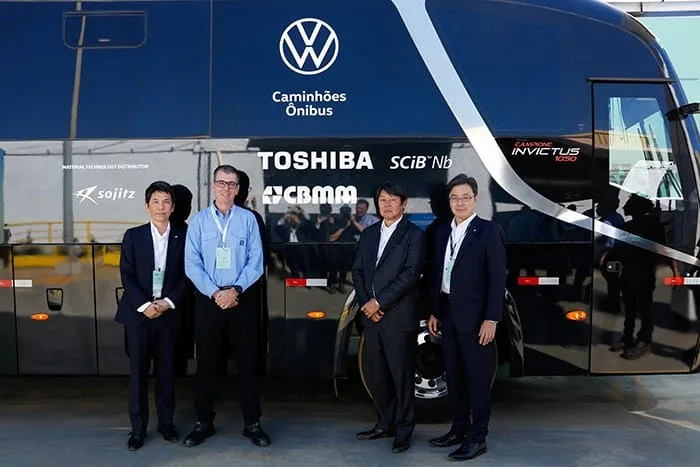
The energy landscape is constantly evolving, presenting both opportunities and formidable challenges for oil and gas investors. A prime example of an emerging long-term headwind comes from Toshiba, which has commenced delivering samples of its advanced lithium-ion battery featuring a niobium-titanium oxide (NTO) anode, dubbed ‘SCiB Nb’. While the immediate focus of oil markets often revolves around supply dynamics and geopolitical shifts, technological advancements like this signal a structural transformation in demand, particularly within the heavy commercial vehicle sector. This new battery technology boasts significant advantages in terms of rapid charging and extended service life, positioning it as a potent alternative to existing graphite-anode lithium-ion batteries and even LFP cells. For those invested in the future of energy, understanding the implications of such innovations is crucial, as they could reshape demand forecasts far beyond the typical quarterly outlook.
The Technical Superiority Targeting Commercial Transport
Toshiba’s SCiB Nb battery is not just another incremental improvement; it represents a strategic leap designed to address critical pain points in electric vehicle adoption, especially in demanding commercial applications. The core innovation lies in its niobium-titanium oxide anode, which, according to developers, offers volumetric energy density comparable to LFP batteries while fundamentally outperforming them in fast-charging capabilities and cycle life. Specifically, Toshiba claims an impressive 80% charge in just ten minutes, a feat attributed to its 5C charging capacity. This rapid charge rate is complemented by an estimated service life of 15,000 cycles, even under repeated fast partial charging, far exceeding typical battery longevity expectations. The cells themselves are 50 Ah, with a nominal voltage of 2.3 volts and an output power of 1 kW, delivering a volumetric energy density of 350 Wh/L and gravimetric energy density of 130 Wh/kg. Measuring 98 x 280 x 12 millimeters and weighing around 860 grams, these specifications are tailored for robust performance. This superiority stems from the NTO anode’s ability to prevent metallic lithium deposits during rapid charging, a common degradation mechanism in graphite-based cells that can lead to short circuits and reduced lifespan. Such characteristics are critical for commercial vehicles, where high utilization, minimal downtime, and lower total cost of ownership are paramount. Toshiba’s collaboration with Brazilian niobium giant CBMM and Japanese trading house Sojitz Corporation underscores a well-orchestrated strategy to ensure a stable supply chain for this critical material and accelerate market penetration.
Oil Market Volatility Meets Emerging Demand Destruction
The introduction of advanced battery technologies like Toshiba’s comes at a time when oil markets are exhibiting significant volatility, creating a complex backdrop for investors. As of today, Brent crude trades at $90.38 per barrel, reflecting a sharp 9.07% decline within the trading day, with prices fluctuating between $86.08 and $98.97. Similarly, WTI crude has seen an even steeper drop, settling at $82.59, down 9.41%, after ranging from $78.97 to $90.34. This recent market movement is part of a broader bearish trend; Brent, for instance, has shed over 18.5% in just two weeks, falling from $112.78 on March 30th to $91.87 yesterday. Gasoline prices have also dipped, now at $2.93, indicating a wider softening in energy demand or an increase in supply. While these daily and weekly price swings are often driven by immediate supply-demand imbalances, geopolitical events, or economic sentiment, the long-term threat posed by electrification, particularly in heavy transport, presents a more structural challenge to oil demand. The commercial vehicle sector is a significant consumer of diesel, and a widespread adoption of batteries that offer rapid charging and extended lifespans could gradually but inexorably erode this demand base. Investors must differentiate between cyclical market corrections and secular trends that could fundamentally alter the energy mix.
Upcoming Events and Long-Term Strategic Planning
For investors, the immediate future is filled with critical energy events that will shape short-term market dynamics, even as long-term technological shifts like Toshiba’s battery tech gather momentum. This weekend, the OPEC+ Joint Ministerial Monitoring Committee (JMMC) meets on April 18th, followed by the full Ministerial Meeting on April 19th. These gatherings will be pivotal in determining future production quotas and could provide a floor or further pressure to current oil prices. While these decisions address the supply side, the demand-side erosion from electrification remains a separate, enduring force. Further market insights will come from the API Weekly Crude Inventory reports on April 21st and 28th, and the EIA Weekly Petroleum Status Reports on April 22nd and 29th, which offer granular data on U.S. supply and demand. The Baker Hughes Rig Count, due on April 24th and May 1st, will signal upstream activity levels, potentially reflecting producer responses to softening prices. However, none of these events directly account for the gradual, yet powerful, impact of technologies like Toshiba’s NTO battery. Smart investors will monitor these short-term catalysts while simultaneously tracking the progress of electrification in key sectors. The increasing viability of electric commercial vehicles means that even if OPEC+ cuts production to support prices, the structural demand ceiling for crude oil could be lowering over the medium to long term, demanding a strategic re-evaluation of portfolios beyond immediate market reactions.
Addressing Investor Concerns: Beyond the Next Quarter
Our proprietary data reveals that investors are keenly focused on immediate market performance and future price predictions. Questions like “What do you predict the price of oil per barrel will be by end of 2026?” or “How well do you think Repsol will end in April 2026?” highlight a natural inclination towards short-to-medium term investment horizons. While these queries are vital for tactical trading and portfolio adjustments, they often overlook the profound, slower-moving shifts that technologies like Toshiba’s SCiB Nb represent. The ability to charge 80% in ten minutes and achieve 15,000 cycles directly translates into significantly lower total cost of ownership for commercial fleets, accelerating the transition away from fossil fuels in a sector traditionally considered difficult to electrify. Investors asking about current OPEC+ production quotas are rightly focused on supply management, but demand destruction driven by superior battery technology is an independent variable that needs equal consideration. Oil and gas companies, therefore, face a dual challenge: managing cyclical market volatility and adapting to secular demand erosion. Companies with robust balance sheets, diversified energy portfolios (e.g., into renewables, hydrogen, carbon capture), and a clear strategic vision for navigating the energy transition will be better positioned. The long-term health of oil investments will increasingly depend on assessing not just supply-side discipline, but also the pace and scale of technological adoption that directly targets traditional hydrocarbon demand.