Data Powerhouse: TGS and Oseberg Forge Alliance to Revolutionize E&P Decisions
Global energy data leader TGS recently unveiled a significant collaboration with Oseberg, a distinguished specialist in comprehensive lease and regulatory information crucial for the oil and gas industry. This alliance promises to reshape how exploration and production (E&P) firms approach critical investment decisions and operational planning, offering a formidable competitive advantage in the upstream sector.
A Strategic Partnership Unlocks Upstream Value
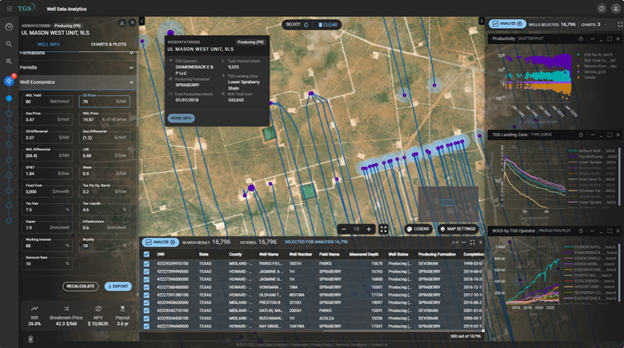
At the heart of this strategic integration lies the seamless incorporation of Oseberg’s detailed lease data attributes directly into TGS’s robust Well Data Analytics (WDA) platform. This move is designed to provide E&P companies with an unprecedented level of analytical depth, transforming raw data into actionable intelligence for superior capital deployment. For investors, this translates into greater transparency and a more reliable foundation for evaluating asset potential and operational efficiency.
The initial phase of this sophisticated integration already offers WDA subscribers streamlined access to vital lease ownership details across the prolific basins of Texas, New Mexico, and Oklahoma. This is combined with the extensive existing repository of subsurface well data, creating a unified information stream previously unavailable in such a cohesive format. This powerful confluence of datasets empowers E&P entities to meticulously plan drilling programs with unparalleled efficiency, directly influencing project timelines and costs.
Enhanced Analytics for Critical Investment Decisions
Investors should note the direct impact on risk mitigation: by precisely aligning drilling activities with complex land ownership and leasehold stipulations, companies can significantly reduce exposure to costly legal disputes and operational setbacks. Ultimately, this optimizes overall field development strategies, safeguarding capital and accelerating project timelines, which are critical factors for investor returns in the capital-intensive oil and gas sector.
The strategic applications for this integrated data are broad and impactful for the investment community. Foremost among them are enhanced merger and acquisition (M&A) analysis, where precise lease and well data can quickly identify accretive assets or hidden liabilities, allowing for more informed valuation and negotiation. Furthermore, it revolutionizes project site planning, enabling superior placement of infrastructure and drilling pads to maximize resource recovery while minimizing environmental and community impact. Crucially, it provides a more robust framework for investment evaluation and streamlines resource inventory management, offering a clearer picture of recoverable reserves and future production potential, vital for long-term strategic planning and capital allocation.
Mitigating Risk and Maximizing Returns
Carl Neuhaus, Vice President of Well Data Products at TGS, emphasized the transformative nature of this alliance. He highlighted how the collaboration establishes a “full-service” subsurface data solution, masterfully blending Oseberg’s top-tier lease information with TGS’s unparalleled geological and well database. This synergy is engineered to provide E&P firms with a decisive competitive edge, enabling them to make faster, more accurate decisions that directly impact their bottom line.
Neuhaus further elaborated on the practical benefits, noting that the integrated Oseberg lease ownership data dramatically reduces the time required to verify land rights — a process that historically consumed significant resources and introduced considerable uncertainty. This newfound efficiency, combined with TGS’s extensive well data, allows users to accurately quantify resource deliverability, thereby refining development planning accuracy and swiftly pinpointing the most economically viable drilling targets. For investors, this means capital is deployed more effectively into high-potential projects, improving overall portfolio performance.
He underscored TGS’s commitment to user-centric design, stating that all new workflows are meticulously developed in close consultation with clients. This approach guarantees a smooth transition and effortless adoption, ensuring the new solution seamlessly replaces existing, often fragmented, data management processes without operational disruption. This focus on user experience enhances the value proposition for E&P companies looking to streamline their operations and improve decision-making.
The Foundation of Informed Exploration
Evan Anderson, CEO and Co-Founder of Oseberg, reinforced the fundamental need for high-quality data in today’s complex energy landscape. He asserted that “clean, structured, and context-rich information” is not merely beneficial, but absolutely essential for making sound, impactful decisions within the E&P sector. This perspective resonates strongly with investors who demand robust data to support their capital commitments.
Anderson explained Oseberg’s unique value proposition, highlighting their strategic focus on meticulously structuring the often-disparate and unstructured public filings that form the very bedrock of land ownership. This includes critical details ranging from the fundamental right to drill to the intricate establishment of proration units at both the tract and formation levels – elements often overlooked by other data providers. This deep dive into granular detail provides a level of legal and operational clarity that is unmatched in the industry.
He stressed that this profound layer of insight forms the indispensable foundation upon which accurate reserve estimations, strategic planning, and efficient operational execution are built, directly influencing a company’s financial performance and long-term viability. Without this foundational understanding, E&P companies risk significant missteps that can erode shareholder value.
Unlocking Subsurface Secrets for Superior Outcomes
Identifying TGS as the ideal partner, Anderson noted their complementary strengths in comprehensive well and production data. This made TGS the unequivocal choice for a collaboration aimed at creating a truly holistic data solution, where surface rights and subsurface realities converge for superior analytical outcomes. This integrated view minimizes blind spots and enhances predictive capabilities for drilling success.
He further lauded TGS’s unparalleled subsurface and well log library, emphasizing its ability to demystify complex public data. In an environment where crucial details such as precise elevations, drilling depths, perforation intervals, specific producing formations, and drill stem test results can often be obscured or fragmented, TGS’s extensive database provides an unmatched level of clarity and understanding, essential for de-risking investments and optimizing well performance.
A New Era for Upstream Intelligence
This powerful fusion, Anderson concluded, effectively “harmonizes two bedrock layers of the upstream story,” promising to unlock significant new capabilities and opportunities for the entire energy market. This synergy ultimately drives smarter investment decisions, more efficient E&P endeavors, and enhanced profitability for companies operating in the dynamic oil and gas landscape. For investors, this partnership represents a significant step forward in leveraging data to maximize returns and minimize exposure in the upstream sector.