The recent legislative maneuvers in Texas, culminating in the failure of bills designed to curtail renewable energy projects, send a clear message to energy investors: the Lone Star State remains committed to an “all-of-the-above” energy strategy. This outcome, a significant defeat for proponents of fossil-fuel-exclusive growth, underscores Texas’s pragmatic approach to meeting an exploding energy demand driven by population growth, manufacturing expansion, and the proliferation of data centers. For investors navigating complex energy markets and shifting policy landscapes, Texas’s market-driven resilience offers a compelling case study and a predictable environment for diverse energy infrastructure investments.
Texas’s Unwavering Commitment to Diverse Energy Sources
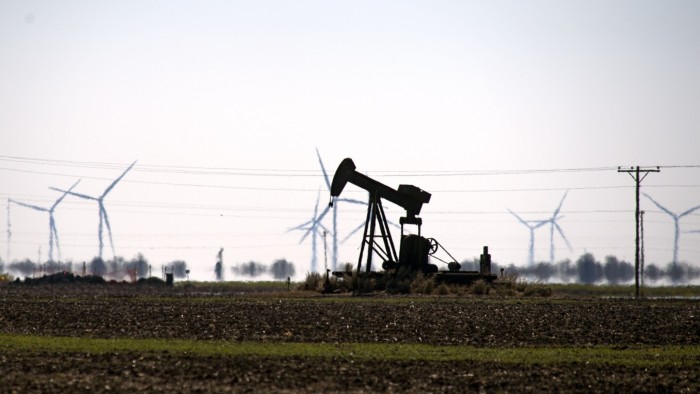
In a pivotal legislative session, a package of three proposed laws targeting renewable energy in Texas failed to advance, effectively preserving the state’s existing energy policy framework. These bills, which sought to impose stringent requirements such as mandating gas-fired backup generation for solar and wind projects, limiting their construction locations, and requiring half of all new power plant capacity to be gas-fired, were ultimately defeated. What makes this outcome particularly noteworthy for investors is the unusual coalition that opposed the legislation, including not only renewable energy advocates and manufacturers but also established oil and gas companies. This alliance highlights a consensus within Texas that a diversified energy portfolio is essential for economic competitiveness and reliability.
The imperative for this diversified approach stems from Texas’s remarkable growth. The Electric Reliability Council of Texas (ERCOT), which manages the state’s electricity grid, projects peak demand to nearly double by 2030. This surge is fueled by a booming population, expanding manufacturing bases, and a significant influx of data centers, all demanding cheap and reliable power. The stark memory of the 2021 winter storm, which caused widespread blackouts, further solidifies the state’s resolve to bolster its grid with every available energy source. Investors should interpret this as a long-term signal: Texas will continue to foster an environment conducive to both traditional fossil fuel development and the expansion of renewable energy, recognizing that both are critical for its economic future.
Current Market Dynamics and the Texas Counter-Narrative
While the Texas legislature was debating its energy future, global energy markets continued their dynamic shifts. As of today, Brent crude trades at $96.62 per barrel, marking a 1.93% increase within the day’s range of $91-$96.73. Similarly, WTI crude stands at $92.94, up 1.82%, with its daily range spanning $86.96-$93.13. Gasoline prices are also reflecting upward movement, currently at $3, up 1.01% for the day. This current uptick, however, follows a broader trend where Brent has seen a notable decline of $9, or 8.8%, over the past 14 days, from $102.22 on March 25th to $93.22 on April 14th.
This market volatility provides crucial context for the Texas energy policy decision. At a federal level, discussions persist regarding the future of green energy tax breaks, with some proposals in the House aiming to cut incentives. This creates a degree of policy uncertainty for renewable energy investments nationwide. However, Texas’s decision to reject limitations on renewables stands as a powerful counter-narrative. It demonstrates that, at least in key states, market fundamentals and the pressing need for grid stability are overriding ideological debates. For investors, this creates a more predictable and robust investment landscape within Texas, where the demand-supply imbalance necessitates an expansive, rather than restrictive, approach to energy development, regardless of federal shifts.
Forward-Looking Analysis: Upcoming Events and Strategic Positioning
The coming weeks present several key events that will further shape the global energy landscape, and Texas’s policy stance offers a unique lens through which to view their potential impact. On April 17th and April 24th, the Baker Hughes Rig Count reports will provide critical insights into North American drilling activity, much of which is concentrated in Texas’s prolific Permian Basin. A consistent commitment to diverse energy sources within Texas means that even if upstream activity fluctuates due to global crude prices or federal policies, the state’s broader energy investment environment remains attractive due to robust internal demand and a supportive regulatory framework for all energy types.
Globally, the upcoming OPEC+ meetings are particularly significant, with the Joint Ministerial Monitoring Committee (JMMC) convening on April 18th, followed by the Full Ministerial meeting on April 20th. Any decisions regarding production quotas will directly influence global crude supply and price stability. While these decisions originate far from Austin, their repercussions ripple through the investment theses for Texas-based operators. Texas’s energy policy, which ensures the growth of renewables alongside fossil fuels, positions it strategically. It minimizes reliance on any single energy source, providing a degree of insulation from the direct economic shocks of global supply adjustments, thereby ensuring a more stable demand profile for all energy investments within the state.
Addressing Investor Concerns: Demand, Stability, and Long-Term Value
Our proprietary reader intent data reveals that investors are keenly focused on understanding the trajectory of crude oil prices, frequently asking for a “base-case Brent price forecast for next quarter” and the “consensus 2026 Brent forecast.” While global supply and demand dynamics, including factors like Chinese tea-pot refinery runs and Asian LNG spot prices, are crucial to these forecasts, regional stability and energy security are increasingly pivotal. The Texas legislative outcome directly addresses this by ensuring a robust and diversified energy supply to meet the state’s exploding demand.
ERCOT’s projection that Texas’s power demand could surpass its supply as early as next summer underscores the urgency. The failure of the anti-renewable bills means that the state will continue to tap into all available resources to prevent such a scenario. This commitment to energy abundance, encompassing both traditional and renewable sources, is vital for maintaining the state’s economic dynamism and attracting further industrial investment, such as the numerous data centers and manufacturing plants flocking to Texas. For investors, this translates into a more secure long-term demand outlook for energy infrastructure, whether it’s natural gas pipelines for backup generation, transmission lines for wind and solar, or refining capacity for transportation fuels. Texas’s pragmatic, all-inclusive energy policy provides a clear signal of sustained growth and investment opportunity, mitigating risks associated with an unbalanced energy transition and offering a solid foundation for long-term value creation in the broader energy sector.