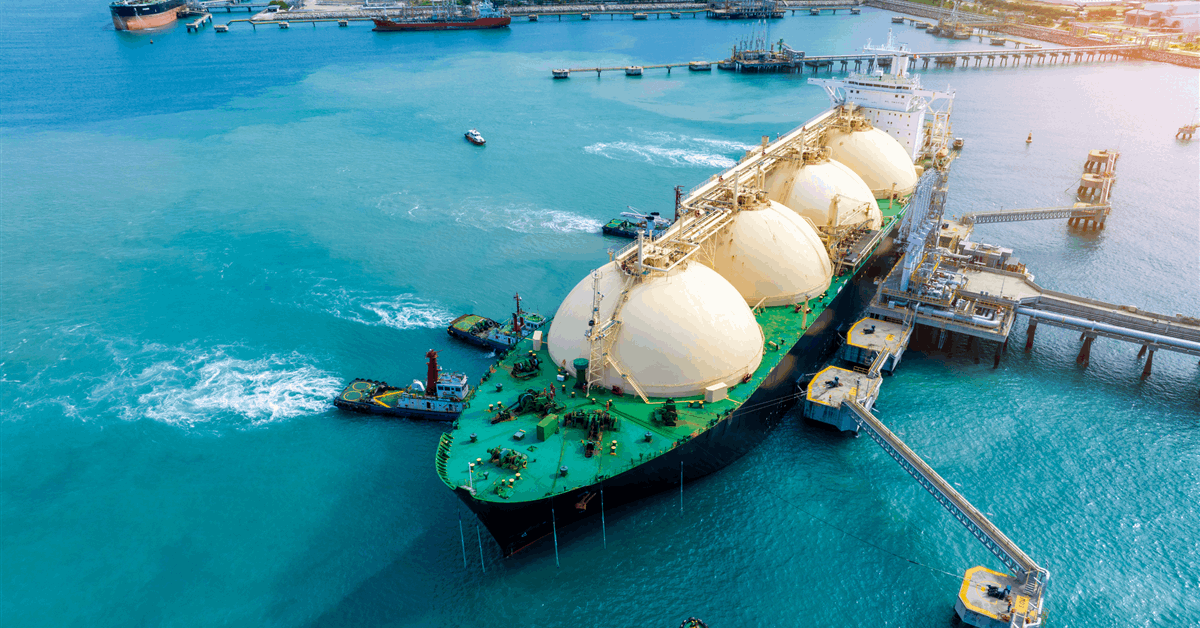
The United States Federal Energy Regulatory Commission (FERC) has delivered a significant boost to Glenfarne Group LLC’s Texas LNG project, upholding its prior approval and, crucially, extending the deadline for the start of operations from November 2024 to November 2029. This reauthorization, arriving three months ahead of Glenfarne’s own expectations, provides critical regulatory certainty for a project that has navigated judicial challenges and underscores the ongoing commitment to expanding U.S. liquefied natural gas (LNG) export capacity. For investors tracking the global energy transition and the strategic role of American natural gas, this development represents a key de-risking event for a 4 million metric tons per annum (MTPA) facility poised to contribute significantly to global energy markets.
Regulatory Hurdles Cleared, Path to FID Illuminated
The recent FERC decision marks the culmination of a complex regulatory journey, responding to a second remand from the Court of Appeals for the District of Columbia Circuit. Following the court’s August 2024 order vacating FERC’s April 2023 authorization due to the absence of a supplemental environmental impact statement (EIS), FERC diligently issued a final supplemental EIS last month. A subsequent modification by the court in March 2025, issuing a remand without vacatur, paved the way for FERC’s definitive reauthorization. This methodical process, though protracted, culminates in a reaffirmed finding that the Texas LNG Project aligns with the public interest, with all prior directives remaining intact. Glenfarne Group has wasted no time in capitalizing on this clarity, reiterating its target to achieve a Final Investment Decision (FID) by year-end. The company has affirmed that it has already secured sufficient customer offtake commitments to reach this pivotal milestone, a critical signal for potential equity and debt investors. Kiewit, having secured the engineering, procurement, and construction (EPC) contract last year, stands ready to proceed once FID is declared.
Navigating Volatile Markets: Investor Focus on Long-Term Value
In a period marked by significant energy market fluctuations, the certainty provided by FERC’s reauthorization for Texas LNG is particularly noteworthy. As of today, Brent crude trades at $90.38, a sharp decline of 9.07% within the day, ranging from $86.08 to $98.97. Similarly, WTI crude is at $82.59, down 9.41%, having traded between $78.97 and $90.34. This daily volatility follows a pronounced trend, with Brent having fallen by $20.91, or 18.5%, from $112.78 on March 30th to $91.87 yesterday. Such rapid price movements in the crude complex naturally lead investors to question the broader trajectory of energy prices, with many asking about our prediction for oil per barrel by the end of 2026. While LNG projects often operate under long-term contracts insulated from daily crude swings, the general sentiment around energy commodities can influence financing costs and investor appetite for large-scale infrastructure. The stability offered by a five-year extension for project completion helps de-risk the investment profile, providing a longer runway to navigate potential market shifts and optimize construction schedules. Moreover, the project’s export permits, granted in September 2015 and February 2020, allow it to export up to 4 million metric tons per year (equivalent to 204.4 billion cubic feet annually) to both FTA and non-FTA countries, securing its market access regardless of future geopolitical shifts.
Upcoming Catalysts and Strategic Positioning
The extended deadline to November 2029 for Texas LNG’s operational start provides Glenfarne with ample time to execute its plan, especially vital as the company targets FID by the close of this year. This longer timeline is a strategic advantage, allowing for more flexible capital deployment and adaptation to evolving market conditions. Beyond this internal project milestone, the broader energy landscape is set to see several significant events in the coming weeks that will shape investor sentiment and market dynamics. This weekend, the OPEC+ Joint Ministerial Monitoring Committee (JMMC) meets on April 18th, followed by the full Ministerial Meeting on April 19th. Investors are keenly watching these gatherings for any shifts in current production quotas, a frequent question from our readership, as such decisions can profoundly impact global crude supply and, indirectly, the economics of natural gas. Further out, weekly data releases from the API (April 21st, April 28th) and EIA (April 22nd, April 29th) on crude inventories, alongside the Baker Hughes Rig Count (April 24th, May 1st), will provide crucial insights into U.S. supply and demand. These indicators, while primarily focused on crude, contribute to the overall energy investment climate. For Texas LNG, located strategically on the north side of the Brownsville Ship Channel and designed with two liquefaction trains, the robust support from the “administration’s common-sense energy policies,” as noted by Glenfarne’s CEO Brendan Duval, is crucial. This governmental backing, coupled with the project’s significant export capacity and its place within Glenfarne’s broader 32.8 MTPA LNG portfolio (including Alaska LNG and Magnolia LNG), positions Texas LNG as a compelling long-term investment in the expanding global LNG market.
Long-Term Outlook: U.S. LNG’s Enduring Role
The reauthorization and deadline extension for Texas LNG reinforce the United States’ role as a pivotal player in the global energy transition and a reliable supplier of natural gas. As international demand for cleaner-burning fuels continues to grow, particularly in Asia and Europe seeking energy security and diversification, U.S. LNG projects like Texas LNG become increasingly vital. The project’s location in South Texas, with access to abundant Permian Basin natural gas via a planned third-party pipeline, offers a competitive advantage in terms of feedstock supply. While the current market sees significant volatility in crude prices, the long-term outlook for natural gas remains strong, driven by its lower carbon footprint compared to other fossil fuels and its role as a bridge fuel alongside renewables. Investors are increasingly looking beyond short-term price swings to the fundamental demand drivers for energy infrastructure, seeking assets that provide long-duration cash flows and contribute to global energy stability. Glenfarne’s Texas LNG, now with clear regulatory approval and an extended development timeline, presents a more defined opportunity for those seeking exposure to the enduring growth of U.S. LNG exports.


