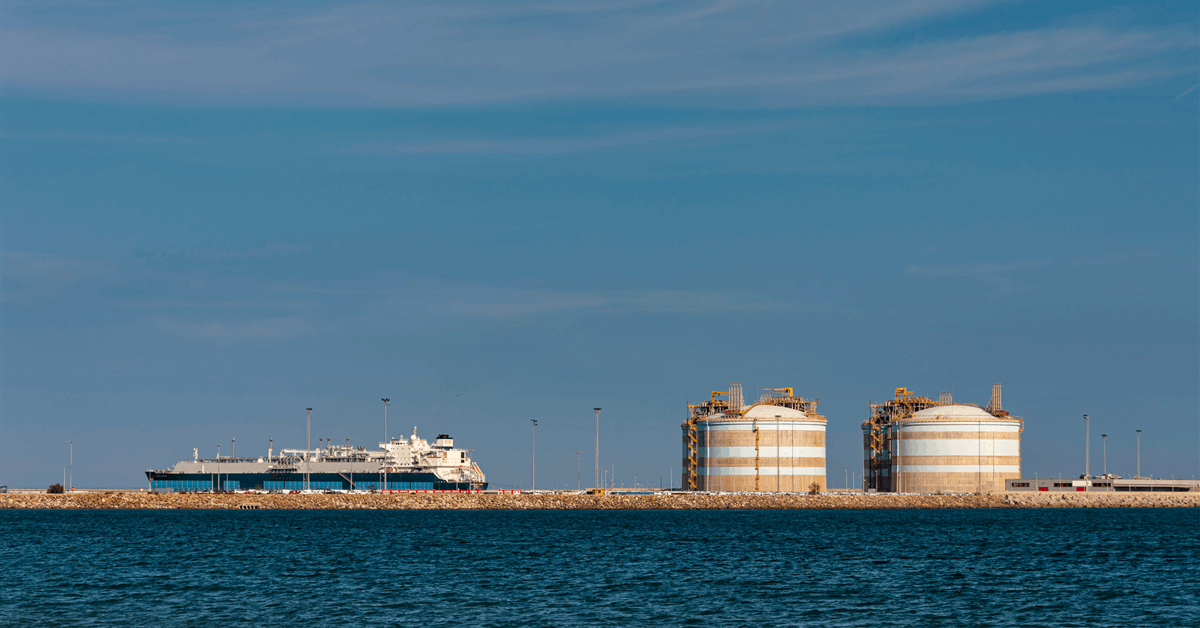
The path for Glenfarne Group LLC’s Texas LNG project to a final investment decision (FID) has received a significant boost with the Federal Energy Regulatory Commission (FERC) staff issuing a final supplemental environmental impact statement (SEIS). This crucial regulatory step brings the Brownsville-based natural gas export facility closer to full authorization, offering a clearer trajectory for investors monitoring the burgeoning U.S. liquefied natural gas sector.
Texas LNG, a critical piece of America’s expanding energy export infrastructure, already holds robust Energy Department permits. These authorizations, granted in September 2015 and February 2020, allow the export of up to four million metric tons of LNG annually. This volume translates to an impressive 204.4 billion cubic feet of natural gas equivalent per year, destined for both Free Trade Agreement (FTA) and non-FTA nations, underscoring its strategic global supply relevance.
Strategically positioned on the northern bank of the Brownsville Ship Channel – approximately 2.5 miles southwest of Port Isabel and 19 miles northeast of Brownsville – the facility is designed to feature two liquefaction trains. Its operational blueprint includes receiving feed gas via a planned third-party pipeline, highlighting the integrated nature of major energy infrastructure developments.
Navigating Regulatory Waters: FERC’s Latest Assessment
The recently issued SEIS marks a pivotal response to complex legal challenges. It directly addresses a second remand by the U.S. Court of Appeals for the District of Columbia Circuit in August 2024. That court order initially vacated FERC’s April 2023 authorization for the project, citing the absence of a required SEIS. However, in a subsequent modification in March 2025, the court issued a remand without vacatur, allowing the project to remain authorized while FERC completed its environmental review.
This latest FERC staff statement provides granular detail on the environmental considerations. Commission staff acknowledged that “communities in the areas near the terminal may experience significant cumulative visual impacts.” Regarding air quality, the assessment clarifies that the project’s impacts on communities with environmental justice concerns, while disproportionate and adverse, would ultimately be “less than significant.” For all other resource categories, FERC staff reiterated their conclusion that project approval, contingent on the implementation of environmental conditions from prior authorizations and additional recommended mitigation measures, would result in “less than significant impacts.” The Commission has affirmed it will thoroughly consider this SEIS analysis in its forthcoming merits order for the project.
Commercial Momentum and Investor Confidence
The regulatory clarity provided by the SEIS is a significant de-risking event for investors. Glenfarne Group, an energy infrastructure developer with offices in New York and Houston, quickly responded to the news, projecting final FERC clearance for the Texas LNG project in November. This timeline aligns with the company’s ambitious target to achieve a final investment decision (FID) by the close of the year – a key milestone for any large-scale energy development.
Market confidence in Texas LNG is further solidified by a strong foundation of commercial commitments. Glenfarne has successfully secured essential customer offtake agreements, crucial for underpinning project financing. These commitments come from a consortium of prominent players in the global energy market, including EQT Corp., Gunvor Group, Macquarie Group, and a leading European utility. The volume secured from these entities is explicitly deemed sufficient to reach FID, signaling robust demand for the project’s future output.
On the construction front, the project has also made substantial progress, with Kiewit having secured the engineering, procurement, and construction (EPC) contract last year. This demonstrates not only the project’s advanced planning but also the involvement of top-tier contractors capable of executing large-scale energy infrastructure.
Brendan Duval, Glenfarne’s Chief Executive and Founder, emphasized the significance of the SEIS, stating that it “strengthens an already robust record of federal analysis and support and confirms the basis for the existing authorization for this project.” This sentiment reinforces the project’s strong regulatory standing and its readiness to proceed.
Strategic Positioning in the Global Energy Landscape
Texas LNG is not merely another export terminal; it is designed with a “green by design” strategy, positioning it to meet evolving environmental standards and attract a broader range of investors and customers. As the global energy transition accelerates, projects that integrate sustainability principles from their inception are gaining a competitive edge. This approach could prove vital in securing long-term contracts and maintaining investor interest in a commodity market increasingly focused on environmental, social, and governance (ESG) factors.
For investors focused on the oil and gas sector, particularly natural gas and LNG, Texas LNG represents a compelling opportunity. The project’s advancement comes at a time when global demand for reliable energy supplies, especially LNG, remains strong, driven by Europe’s energy security needs and Asia’s growing industrial and residential consumption. The U.S., with its abundant natural gas reserves, is poised to remain a dominant force in the international LNG market, and facilities like Texas LNG are instrumental in facilitating this critical energy flow.
The imminent final FERC clearance and targeted FID by year-end suggest that Texas LNG is on track to become a significant contributor to U.S. natural gas exports. As the project moves into its construction phase, its progress will be closely watched by those seeking exposure to stable, long-term energy infrastructure investments and the broader global commodity markets.


