Tesla’s FSD Challenges Signal Potential Headwinds for EV Adoption, Offering Reprieve for Oil & Gas Demand
For investors navigating the complex currents of the global energy transition, the pace of electric vehicle (EV) adoption remains a critical variable. While the long-term trajectory toward electrification is widely accepted, the short-to-medium term rate of change significantly impacts demand projections for traditional petroleum products. Recent firsthand accounts regarding the performance of Tesla’s Full Self-Driving (FSD) software, a cornerstone of the company’s aspirational vision, suggest that technological hurdles could temper mainstream EV enthusiasm, potentially extending the runway for conventional fuel consumption.
A detailed examination of over 1,000 miles driven with Tesla’s FSD beta, primarily across the demanding urban and highway environments of Silicon Valley, reveals a system still far from truly autonomous. Despite its branding, the software functions as an advanced driver-assistance system (ADAS), demanding constant human supervision and intervention. This distinction is crucial for investors assessing the realistic timeline for a fully autonomous future and its subsequent impact on transportation models and energy demand.
The Reality of “Full Self-Driving”: An ADAS, Not a Robotaxi
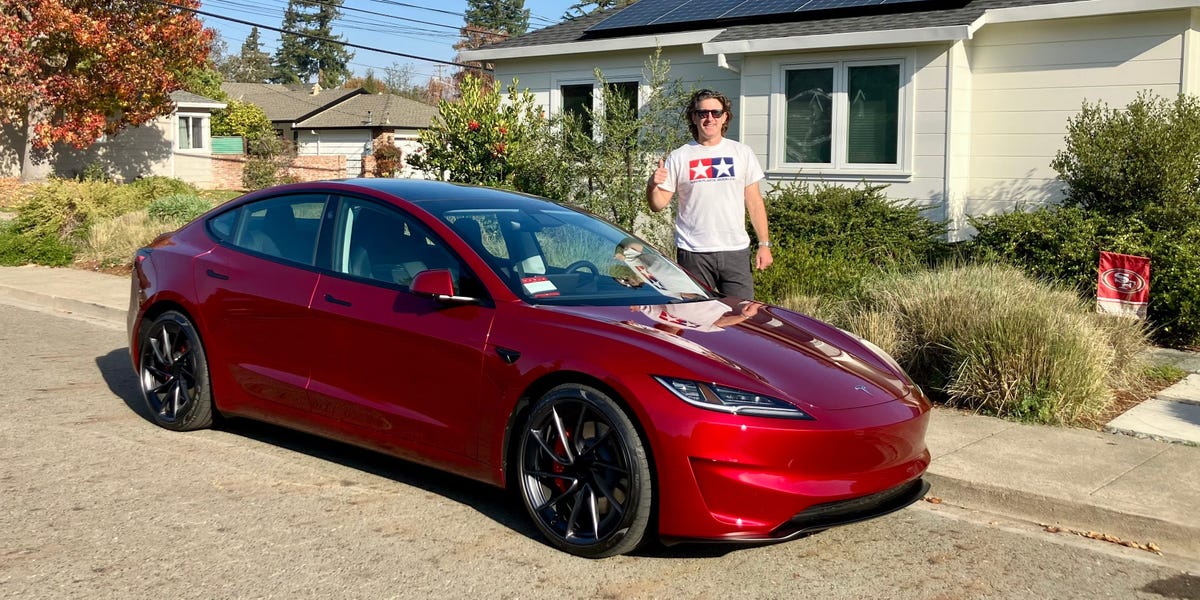
The allure of a vehicle that truly drives itself is powerful, promising reduced stress and increased productivity during commutes. Indeed, the Tesla Model 3 Performance, a robust and agile vehicle, offers an impressive driving experience independent of its autonomous capabilities. However, the FSD software, even in its latest iterations, frequently falls short of its namesake. While a Tesla robotaxi service is reportedly slated for Austin in June, promising full autonomy without supervision, the currently deployed FSD system available to consumers requires continuous vigilance from the driver.
Observations from extensive use highlight a duality. On one hand, FSD can alleviate some of the tedium of stop-and-go traffic, handling basic navigation and speed control with a degree of competence. The system consistently brings the vehicle to a complete stop at stop signs, a behavior that, while initially perceived as overly cautious, ultimately enhances safety and becomes normalized. Furthermore, anecdotal evidence suggests the FSD system operates with greater energy efficiency than a human driver, leading to slightly better battery performance over a given route – a minor but noteworthy detail for EV economics.
Persistent Glitches and Disengagements: A Drag on the Driver Experience
Despite these limited advantages, the FSD system exhibits a range of significant flaws that underscore its current limitations. Drivers frequently encounter scenarios where the software demands immediate human intervention, leading to what are termed “disengagements.” These are not minor inconveniences but critical moments requiring the driver to seize control to prevent potentially hazardous situations. Common issues include:
- Pothole Avoidance: The system consistently fails to detect or avoid potholes, leading to jarring impacts and potential wheel damage. This is a critical deficiency for real-world driving.
- Phantom Braking: Perhaps one of the most unsettling and dangerous issues, the vehicle can unexpectedly and aggressively brake on open roads, often at highway speeds, without any apparent obstacle. This creates a significant collision risk.
- Unreliable Navigation: FSD frequently struggles with complex navigation, often attempting to take incorrect turns, driving past designated exits, or becoming confused in multi-lane environments.
- Erratic Lane Changes: The system’s lane-changing behavior can be unpredictable, sometimes executing abrupt maneuvers or failing to signal appropriately, creating discomfort and potential danger.
- Poor Weather Performance: Rain, fog, or even bright sunlight can severely degrade FSD’s capabilities, leading to frequent disengagements and forcing drivers to rely entirely on manual control.
- Misinterpretation of Road Markings: The system often misinterprets lane lines, construction zones, and other temporary road markings, leading to unsafe positioning or hesitant driving.
These recurring issues transform the driving experience from one of relaxation to one of heightened alert. The driver effectively becomes a vigilant supervisor, constantly ready to override the system, negating much of the promised benefit of autonomous driving.
Safety, Regulation, and Public Trust: Critical Factors for Market Penetration
The legal and ethical implications of FSD’s current state are profound. Experts in mobility law emphasize that the driver remains fully liable for any incident, a fact Tesla clearly communicates to users. This legal reality, coupled with the system’s operational imperfections, creates a significant barrier to public acceptance and widespread adoption of autonomous features.
The frequent necessity for human intervention means that FSD does not, in fact, reduce the cognitive load on the driver; it merely shifts it from active control to continuous monitoring and rapid response. This dynamic can be more fatiguing than traditional driving, especially for longer journeys. For the EV market to truly displace internal combustion engines (ICE) on a massive scale, the technology must offer a demonstrably superior and safer experience, not just a different one.
Implications for Oil & Gas Investors: A Slower Energy Transition?
From the perspective of an oil and gas financial journalist, the struggles of Tesla’s FSD software carry significant weight for market forecasts. The narrative of rapid EV adoption, driven by technological breakthroughs like advanced autonomy, has been a key factor in projections for peak oil demand and the accelerated decline of petroleum consumption. However, if a leading EV manufacturer’s flagship autonomous product faces such fundamental challenges, it introduces a crucial reality check.
A slower, more cautious rollout of truly autonomous driving technology could directly impact the rate at which consumers switch from ICE vehicles to EVs. If the promise of a “self-driving” future remains distant and ridden with complications, a significant portion of the car-buying public may defer EV purchases, or opt for less technologically ambitious models. This hesitation translates into sustained demand for gasoline and diesel fuels, bolstering refining margins and supporting the existing upstream and midstream infrastructure for longer than some aggressive energy transition models predict.
For investors, this scenario suggests that the “demand destruction” from EVs might not be as swift or as dramatic as previously anticipated. Companies in the exploration and production (E&P) sector, as well as those involved in refining and distribution, could benefit from a more protracted transition period. While the long-term trend toward electrification remains undeniable, the practical challenges highlighted by FSD’s current performance indicate that the road to a fully electric, autonomous transportation system is considerably longer and bumpier than often portrayed in bullish EV projections.
Understanding these technological headwinds is paramount for accurately assessing future petroleum demand and making informed investment decisions across the entire energy value chain. The performance of FSD is not just a quirk for EV enthusiasts; it’s a bellwether for the pace of change in global transportation, and by extension, global energy markets.


