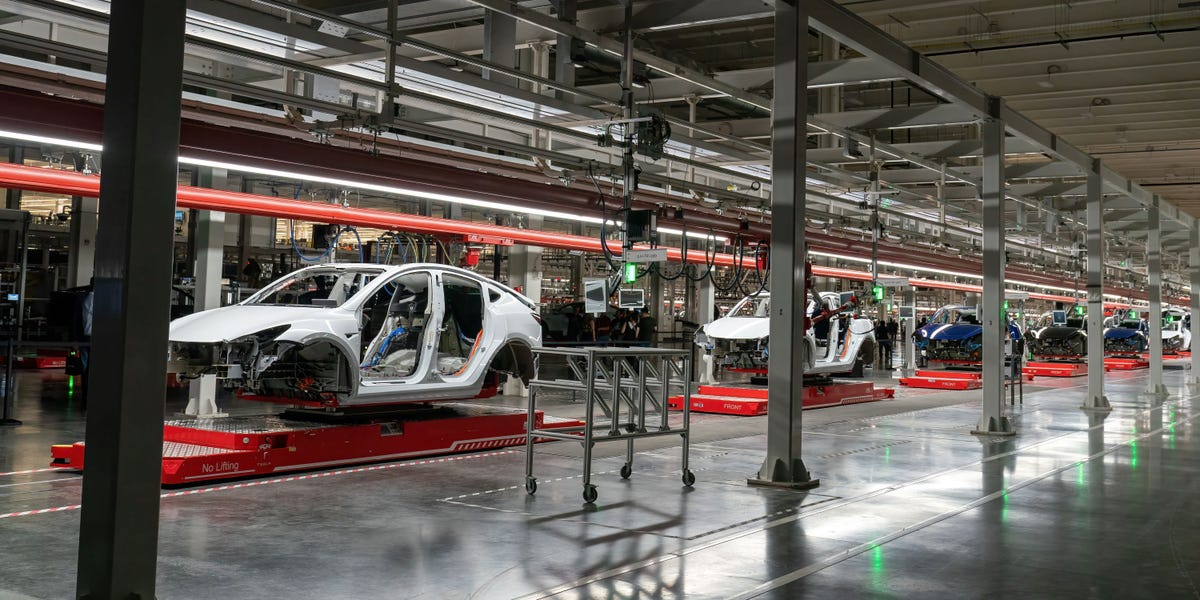
The electric vehicle (EV) sector, often touted as the vanguard of the energy transition, is facing increasingly complex headwinds. Recent insights from a major EV manufacturer’s internal culture session, coupled with a production halt at its Austin factory, offer a rare glimpse into the operational realities challenging even the industry’s titans. For oil and gas investors, this isn’t merely an automotive story; it’s a critical signal about the pace and resilience of the energy transition, directly impacting long-term demand forecasts for traditional hydrocarbons. While the narrative of an inevitable shift away from fossil fuels dominates headlines, the tangible struggles of a market leader underscore the persistent robustness of established energy markets and the investment opportunities they continue to present.
The EV Transition: A Reality Check from Austin
The week-long production shutdown at the Austin factory, a key hub for Cybertruck and Model Y production, ostensibly for cleaning and training, points to deeper operational and cultural challenges within a company synonymous with innovation. The internal training session, focusing on improving company culture and addressing employee burnout and dissatisfaction, highlights a significant human capital hurdle. An instructor candidly acknowledged widespread negative sentiment, with many employees leaving “with a negative taste in their mouth” and feeling “burnt out.” This isn’t just about morale; it translates directly into efficiency, productivity, and ultimately, delivery volumes. The company’s reported 13% drop in deliveries in April, alongside growing public scrutiny, suggests that scaling a revolutionary product is fraught with operational complexities that can slow even the most ambitious growth trajectories. For the oil and gas sector, these developments are crucial. A less efficient, more challenged EV production landscape implies a slower displacement of internal combustion engine vehicles, extending the runway for gasoline and diesel demand beyond some of the more aggressive transition models. This directly impacts long-term investment strategies in refining, exploration, and production.
Oil Market Resilience Amidst Green Tech Headwinds
While a leading EV manufacturer grapples with internal strife and production slowdowns, the traditional energy market continues to demonstrate robust pricing power. As of today, Brent crude trades at $96.62 per barrel, marking a 1.93% increase within a daily range that saw prices push towards $96.73. Similarly, WTI crude has climbed to $92.94, up 1.82%, navigating a daily range between $86.96 and $93.13. Gasoline prices have also seen an uptick, currently at $3 per gallon, a 1.01% rise. This daily uplift occurs against a broader backdrop where Brent had recently softened, dropping nearly 8.8% from $102.22 just a few weeks prior on March 25th, to $93.22 on April 14th. This current upward movement, despite the operational challenges faced by a bellwether EV company, highlights the immediate-term drivers of the oil market: geopolitical tensions, supply tightness, and resilient underlying demand. It suggests that while the long-term energy transition narrative is potent, current market dynamics are still heavily influenced by traditional supply-demand fundamentals and geopolitical risk premiums, often overshadowing slower-than-anticipated EV adoption rates. For investors, this underscores the importance of a diversified portfolio that acknowledges the enduring strength and volatility of hydrocarbon markets.
Forward Implications: OPEC+ and Inventory Watch
The struggles within the EV sector, as exemplified by the recent news, will undoubtedly factor into the calculus of major energy producers and policymakers. Looking ahead, the upcoming OPEC+ Joint Ministerial Monitoring Committee (JMMC) meeting on April 18th, followed by the Full Ministerial on April 20th, will be critical. These gatherings will assess global oil demand and supply balances, setting the tone for production quotas in the coming months. A slower, more challenging EV rollout, particularly from a dominant player, could lead OPEC+ to project a more resilient oil demand profile, potentially influencing their decisions on production levels and adherence to cuts. Analysts will be keen to see if any official statements or leaked discussions acknowledge a tempering of EV impact on demand forecasts. Beyond OPEC+, the market will closely monitor the Baker Hughes Rig Count on April 17th and 24th, providing insight into North American production activity. Crucially, the API Weekly Crude Inventory reports on April 21st and 28th, followed by the EIA Weekly Petroleum Status Reports on April 22nd and 29th, will offer tangible evidence of demand and supply dynamics. Persistent draws in crude inventories would reinforce the notion of robust underlying demand, further mitigating the perceived impact of any EV slowdown and supporting higher oil prices, irrespective of green tech headwinds.
Investor Sentiment: Navigating Uncertainty and Opportunity
Our proprietary reader intent data reveals a consistent focus on fundamental questions this week, reflecting investor efforts to cut through market noise. Many investors are asking for a base-case Brent price forecast for the next quarter, and also the consensus 2026 Brent forecast. The recent developments in the EV sector add another layer of complexity to these projections. While the long-term trajectory for EV growth remains positive, short-to-medium term challenges for key players introduce variability into demand erosion models. Our analysts integrate such nuanced signals into our forecasting framework, recognizing that the energy transition is rarely a linear path. Beyond broad price forecasts, investors are also keenly interested in the operational rates of Chinese ‘teapot’ refineries, a crucial bellwether for Asian demand. This interest highlights a key juxtaposition: while Western EV players face headwinds, traditional demand centers like China continue to drive substantial physical oil consumption. Robust activity from these ‘teapot’ refineries would signal strong regional demand, providing a powerful counter-narrative to the idea of rapidly diminishing global oil consumption and underpinning the demand side of our Brent forecasts. The sustained inquiries into these foundational elements demonstrate that despite the allure of new energy, the fundamentals of global oil supply and demand remain paramount for informed investment decisions.
In conclusion, the internal challenges faced by a leading electric vehicle manufacturer serve as a potent reminder that the energy transition, while inevitable, is not without its operational and human capital hurdles. For oil and gas investors, this translates into a nuanced outlook where the displacement of traditional fuels may occur at a more measured pace than often predicted. The resilience of current oil prices, the strategic decisions of OPEC+, and the continued robust demand from key global economies all underscore the enduring investment opportunities within the hydrocarbon sector. Astute investors will continue to monitor both the evolving landscape of new energy and the fundamental drivers of traditional markets, leveraging proprietary data to navigate this complex, multifaceted energy future.


