TerraPower’s Advanced Nuclear Reactor: A Paradigm Shift for Energy Investors
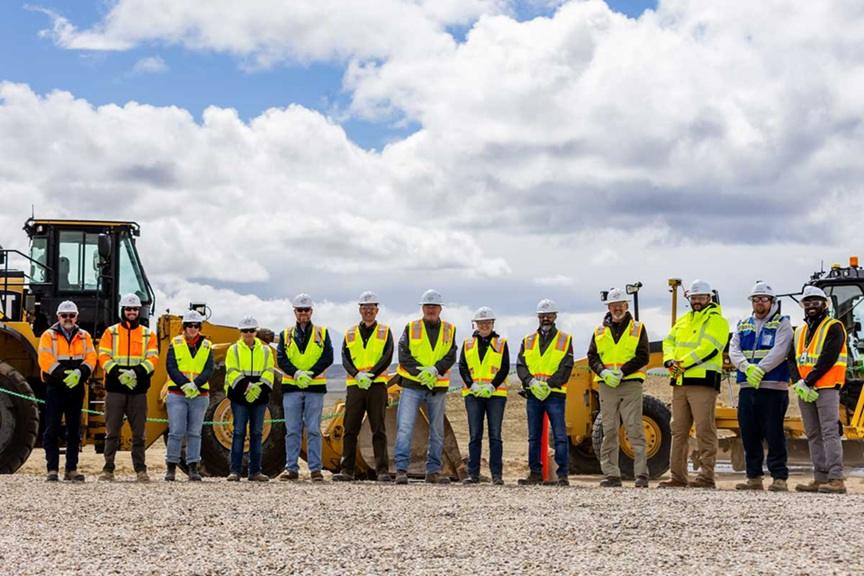
The global energy landscape is undergoing a profound transformation, and a recent development from TerraPower demands the immediate attention of every investor with exposure to the oil and gas sector. The commencement of construction on Kemmerer Unit 1 in Wyoming, spearheaded by Bill Gates’ innovative nuclear technology firm, signals the dawn of a new era for utility-scale advanced nuclear power in the United States. This isn’t merely an incremental step; it represents a foundational shift towards redefining grid stability and securing a robust, carbon-free energy supply for decades to come, challenging long-held assumptions about the future demand for traditional fossil fuels.
Natrium Technology: Redefining Grid Reliability and Competing with Natural Gas
At the heart of TerraPower’s innovation lies the Natrium system, a sophisticated design that marries a 345-megawatt (MW) sodium fast reactor with an integrated molten salt energy storage system. This synergistic pairing offers unprecedented flexibility, a critical attribute for modern power grids increasingly reliant on intermittent renewables like wind and solar. While the reactor provides a consistent baseload output of 345 MW, its integrated storage component boasts the capability to surge energy delivery to an impressive 500 MW for over five hours. This on-demand power capability presents a dispatchable, carbon-free solution for periods of peak demand or when renewable generation falters due to weather conditions or darkness. For oil and gas investors, this technology emerges as a potent long-term competitor to natural gas, particularly in its role as a flexible grid resource and a provider of ancillary services. The prospect of stable returns from essential services also opens up new avenues for diversified energy infrastructure investment, an area traditionally dominated by fossil fuel-fired power generation.
Current Market Dynamics and the Long-Term Outlook for Crude
Against the backdrop of this emerging nuclear frontier, the traditional energy markets continue to exhibit their characteristic volatility. As of today, Brent crude trades at $110.72, reflecting a modest +0.29% gain, within a daily range of $110.49-$112.43. This follows a significant rally over the past two weeks, with Brent climbing over 12% from $99.36 on April 13 to $111.7 on April 30. WTI crude, meanwhile, stands at $104.59, down slightly by 0.46% today. Such robust crude prices might seem to reinforce the dominance of fossil fuels, yet they also amplify the incentive for accelerated investment in alternatives. Investors closely tracking the “2026 weekly trend for crude oil” and seeking a “base-case Brent price forecast for next quarter” must now factor in the long-term disruptive potential of technologies like Natrium. While the immediate concerns of OPEC+ overproduction or weekly inventory reports remain paramount for short-term trading, the strategic pivot towards advanced nuclear fundamentally alters the long-term supply-demand equation for energy, particularly challenging the future role of natural gas in power generation.
Wyoming’s Strategic Pivot and Addressing Investor Concerns
The selection of Kemmerer, Wyoming, for Unit 1 holds profound strategic significance, embodying a thoughtful energy transition model. Located near a soon-to-be-retired coal facility, the project strategically leverages existing energy infrastructure sites and a local workforce experienced in power generation. This move is not merely about replacing old capacity but about establishing a new paradigm for energy production in a state long synonymous with fossil fuels. Investors are rightly asking about the resilience of WTI crude in the broader market and seeking clarity on long-term price forecasts. While weekly crude inventory reports and geopolitical shifts will continue to drive short-term price movements, the development in Wyoming underscores a deeper, structural shift. It signals a future where baseload power generation, traditionally supplied by coal and increasingly by natural gas, could see a significant new entrant. This long-term horizon demands that oil and gas investors consider portfolio diversification and engage with emerging energy technologies, rather than solely focusing on the immediate fluctuations of crude prices or the latest API/EIA reports.
Navigating the Future: Upcoming Market Signals and Diversification Strategies
While TerraPower’s groundbreaking in Wyoming sets a long-term trajectory, investors must continue to navigate the near-term market signals that shape the oil and gas sector. The upcoming calendar is packed with crucial data points: the Baker Hughes Rig Count on May 1 and May 8 will offer insights into drilling activity, while the EIA Short-Term Energy Outlook on May 2 and the IEA Oil Market Report on May 12 will provide updated forecasts on global supply and demand. Weekly API and EIA inventory reports on May 5, 6, 12, and 13 will continue to drive commodity trading. These events will undoubtedly influence the “2026 weekly trend for crude oil” and shape quarterly price forecasts. However, the emergence of advanced nuclear projects like Kemmerer Unit 1 requires a nuanced investment strategy. Rather than viewing these innovations solely as threats, forward-thinking oil and gas investors should evaluate opportunities for strategic partnerships, technological investments, or portfolio diversification into segments that align with the evolving energy mix. The market is increasingly rewarding companies that demonstrate adaptability and foresight in the face of a dynamic energy transition, balancing immediate market realities with a clear vision for the energy landscape of tomorrow.


