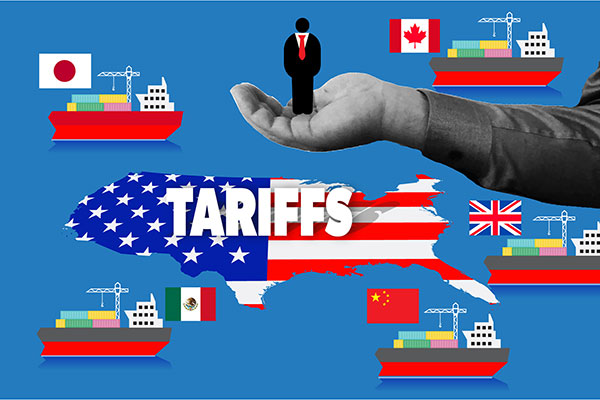
A significant legal challenge has reshaped the landscape of U.S. trade policy, with a federal trade court recently invalidating a vast majority of the tariffs previously enacted under emergency powers. This ruling, delivered by the Court of International Trade, represents a considerable reining in of executive authority concerning trade regulations and offers a potentially clearer horizon for global commerce, a development keenly watched by investors across the oil and gas sector.
The three-judge panel determined that the executive branch overstepped its mandate by utilizing the 1977 International Emergency Economic Powers Act (IEEPA) as a basis for imposing widespread import duties across nearly all international trading partners. In no uncertain terms, the court declared that the “Worldwide and Retaliatory Tariff Orders” exceeded any authority granted by IEEPA to regulate imports via tariffs, emphasizing that such power rests squarely with the legislative branch.
Legal Precedent and Remaining Tariffs
This landmark decision leaves untouched an earlier set of tariffs that were implemented under a distinct statute related to national security. These include existing duties on steel, aluminum, and certain automotive imports, which remain in effect. However, the broader suite of duties, often referred to as the “Liberation Day” tariffs, which were applied to a wide array of goods, are now effectively blocked. This distinction is crucial for understanding the nuanced impact on various sectors, including the energy industry’s supply chains.
The executive administration had previously championed these tariffs as a strategic tool to gain leverage in international trade negotiations, with stated goals of stimulating domestic manufacturing and alleviating the federal deficit. Following the adverse ruling, the White House promptly initiated an appeal. A spokesperson for the administration, Kush Desai, reiterated the stance that “trade deficits amount to a national emergency,” a factual assertion which the court did not dispute, even while challenging the legal framework for the tariff imposition.
For the foreseeable future, the executive branch’s ability to impose sweeping import taxes without direct congressional approval has been curtailed. The judiciary has unequivocally underscored that the power to regulate trade is constitutionally vested in lawmakers, not the presidency.
The Catalyst: State and Business Opposition
The legal challenge originated from a coalition of twelve states and a diverse group of small businesses, all contending that the tariffs were inflicting demonstrable harm upon local economies. Oregon Attorney General Dan Rayfield commented on the ruling, stating it “reaffirms that our laws matter,” highlighting the importance of adherence to established legal frameworks. New York Attorney General Letitia James further emphasized the constitutional aspect, asserting, “The law is clear: no president has the power to single-handedly raise taxes whenever they like.”
Adding another layer to the ruling, the court also struck down an additional set of tariffs that had been specifically targeted at China, Mexico, and Canada. These duties were initially justified by the administration as necessary measures to combat issues like drug trafficking and illegal immigration, but the court found these justifications insufficient to bypass congressional authority on trade policy.
Immediate Market Reaction and Oil & Gas Implications
In the immediate aftermath of the court’s announcement, financial markets reacted with notable optimism. U.S. stock futures experienced an uplift, the U.S. dollar strengthened against other major currencies, and Asian markets opened higher, signaling a broader positive sentiment towards reduced trade friction. This robust market response underscores the significant value investors place on stability and predictability in international trade relations, factors that are particularly pertinent for the capital-intensive and globally intertwined oil and gas industry.
For energy investors, this ruling carries several important implications. Firstly, the potential easing of trade barriers could lead to a reduction in input costs for various segments of the oil and gas value chain. Tariffs on a wide range of industrial components, machinery, and specialized equipment used in exploration, production, refining, and petrochemical operations typically inflate project costs and can erode profit margins. By removing these additional duties, companies might see improved economics on new and existing projects, enhancing their overall competitiveness.
Secondly, the ruling could foster greater stability in global supply chains. The oil and gas sector relies heavily on international trade for everything from drilling equipment and pipeline components to specialized chemicals and advanced technologies. Unpredictable tariff regimes create uncertainty, complicate logistical planning, and can force companies to seek out more expensive domestic alternatives or reconfigure their supply networks, often at significant cost. A more stable trade environment allows for more efficient and cost-effective procurement and distribution.
Furthermore, a reduction in trade tensions generally supports global economic growth, which is a primary driver for energy demand. As economies expand, so does the need for crude oil, natural gas, refined products, and petrochemical feedstocks. For oil and gas investors, a clearer and more open international trading system signals a positive outlook for future demand growth, translating into potentially higher commodity prices and improved financial performance for energy companies.
The specific relief from tariffs on goods beyond steel and aluminum could particularly benefit the downstream sector, including refining and petrochemicals. These industries often rely on a complex web of international suppliers for catalysts, additives, and specialized processing equipment. Lowering these trade barriers could reduce operational expenditures and improve refining margins and petrochemical plant profitability. Similarly, for the burgeoning Liquefied Natural Gas (LNG) export sector, a more predictable global trade environment could facilitate long-term supply contracts and support continued investment in new liquefaction and regasification infrastructure.
The Road Ahead: Appeals and Investor Vigilance
While the ruling provides a measure of immediate relief and clarity, the situation remains fluid. The executive administration has a ten-day window to revise its orders in response to the court’s decision, and it is widely anticipated that the appeal process will ultimately reach the Supreme Court. This indicates that the legal battle over presidential trade authority is far from over, and investors must remain vigilant in monitoring these developments.
The ongoing legal appeals introduce a degree of uncertainty that could still influence market sentiment and strategic planning for energy companies. However, the initial positive market reaction and the judicial reaffirmation of congressional authority over trade policy provide a strong signal of a preference for a rules-based, rather than unilaterally imposed, international trade system. For oil and gas investors, this signifies a potential shift toward a more predictable and less volatile global economic environment, ultimately supporting long-term investment strategies within the energy sector.