Sweden’s Nuclear Ambition: A Strategic Energy Pivot with Global Implications
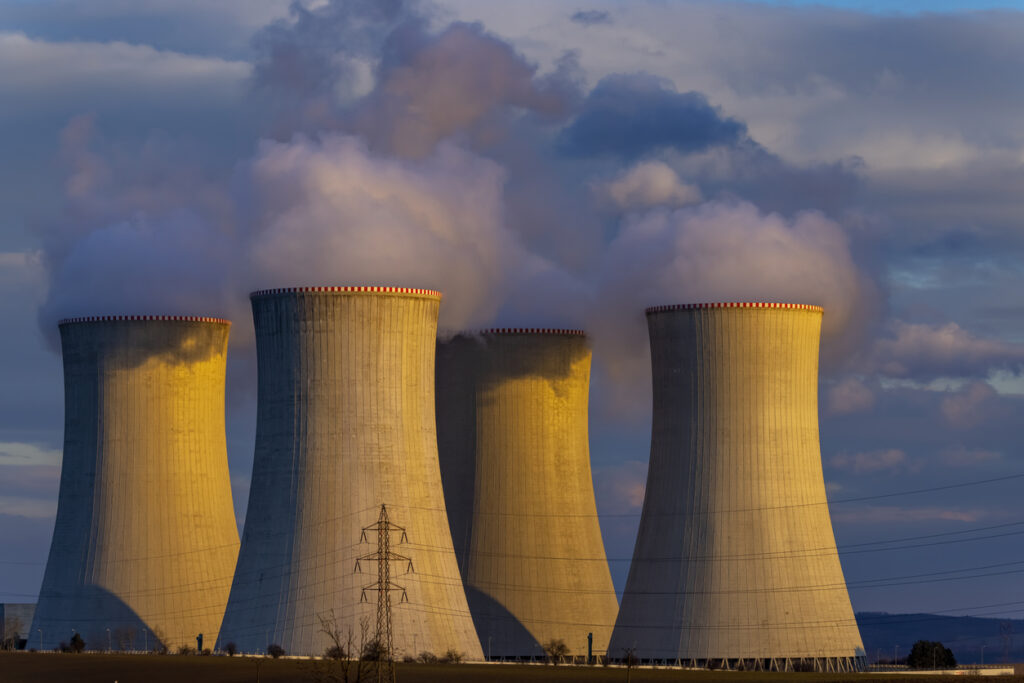
Sweden’s recent announcement of a $23.4 billion loan framework to jumpstart the construction of new nuclear reactors marks a profound strategic pivot, not just for the Scandinavian nation, but for the broader European energy landscape. This ambitious plan, targeting two new reactors by 2035 and a total of ten by 2045, underscores a renewed commitment to energy security and a “fossil-free” future, moving beyond a previous policy focused solely on renewables. For oil and gas investors, this development signals a long-term structural shift in the energy mix, potentially impacting future demand forecasts and capital allocation strategies across the continent. Understanding the nuances of this re-embrace of nuclear power, set against a backdrop of volatile crude markets and critical upcoming events, is essential for navigating the evolving energy investment terrain.
The Swedish Nuclear Reversal: A European Bellwether
The Swedish government’s move to secure parliamentary approval for a 220 billion Swedish crowns loan framework, equivalent to $23.4 billion, is a bold statement. This significant capital commitment is designed to facilitate the addition of 2.5 gigawatts (GW) of nuclear power, laying the groundwork for an eventual fleet of ten new reactors by 2045. This plan represents a dramatic reversal of the country’s 1980 decision to phase out nuclear power entirely, a policy that saw four reactors shut down over time, leaving only six of the original twelve operational today. The shift in terminology from “100% renewable” to “100% fossil-free” electricity by 2040 explicitly clears the path for nuclear expansion. Driving this change is the strategic imperative for low-carbon, 24/7 energy security, sharply accentuated by recent geopolitical events in Eastern Europe. The focus on Small Modular Reactors (SMRs) is particularly noteworthy, with state-owned utility Vattenfall already shortlisting American company GE Vernova and British firm Rolls-Royce SMR as potential suppliers. This embrace of SMR technology highlights a growing confidence in its economic viability and timely deployment, positioning Sweden at the forefront of a broader European trend to integrate nuclear power back into national energy strategies for achieving net-zero targets by 2050.
Market Realities: Volatility Amidst Long-Term Shifts
While Sweden charts a course for long-term energy transformation, the immediate global oil market continues to demonstrate significant volatility, reminding investors of the constant interplay between strategic vision and daily realities. As of today, Brent Crude trades at $90.38, reflecting a significant daily downturn of 9.07%, having seen prices fluctuate between $86.08 and $98.97. WTI Crude follows suit at $82.59, down 9.41% for the day, with its range spanning $78.97 to $90.34. This sharp correction in crude prices is also evident in the gasoline market, where prices stand at $2.93, a 5.18% drop for the day, moving within a range of $2.82 to $3.10. This immediate pressure on crude prices is underscored by the 14-day trend for Brent, which has seen a notable decline from $112.78 on March 30th to $91.87 just yesterday, representing an 18.5% correction. Such acute market movements highlight the challenges for investors in balancing short-term trading signals with the long-term implications of structural energy shifts like Sweden’s nuclear bet. While nuclear power doesn’t directly impact daily crude prices, its strategic expansion across Europe could gradually displace natural gas and, indirectly, even fuel oil in power generation, influencing long-term demand fundamentals for traditional hydrocarbons. Investors must therefore remain agile, recognizing that immediate price action can diverge sharply from underlying multi-decade energy transitions.
Forward Implications: Key Events Shaping the Energy Landscape
Looking ahead, the immediate horizon is dominated by critical energy events that will undeniably shape market sentiment and provide tactical opportunities for investors. This weekend’s back-to-back OPEC+ Joint Ministerial Monitoring Committee (JMMC) and Full Ministerial Meetings on April 18th and 19th, respectively, are paramount. Given the recent softness in crude prices—Brent’s 18.5% drop over the past two weeks—investors will be keenly watching for any signals regarding production quotas. Any indication of further cuts, adherence to current targets, or even a surprise output increase will significantly impact price trajectories, especially as our proprietary data shows readers are actively querying “What are OPEC+ current production quotas?” and “what do you predict the price of oil per barrel will be by end of 2026?”.
Following these crucial OPEC+ decisions, the market will pivot to weekly inventory reports, with API data due on April 21st and 28th, and the authoritative EIA Weekly Petroleum Status Report on April 22nd and 29th. These reports will provide crucial insights into U.S. supply-demand dynamics, refining activity, and ultimately, gasoline stock levels, which are critical given current pump prices at $2.93. Finally, the Baker Hughes Rig Count on April 24th and May 1st will offer a vital snapshot of upstream activity and future production potential in North America. For investors, these scheduled events provide essential data points for short-to-medium-term trading strategies and risk management, acting as crucial counterpoints to the longer-term structural shifts exemplified by Sweden’s nuclear re-orientation.
Investor Sentiment & Strategic Positioning for a Fossil-Free Future
Our proprietary reader intent data reveals a clear focus among investors on both immediate market performance and long-term price trajectory. Questions like “what do you predict the price of oil per barrel will be by end of 2026?” underscore a desire for comprehensive forward guidance, while specific queries about company performance, such as “How well do you think Repsol will end in April 2026,” highlight a granular interest in individual equity plays. Sweden’s $23.4 billion nuclear plan, while not an immediate driver of oil and gas commodity prices, serves as a powerful signal for the strategic repositioning required of energy investors. The explicit embrace of “fossil-free” over “renewable” indicates a more pragmatic and diversified approach to decarbonization across Europe, one that includes a significant role for nuclear power.
For investors in traditional oil and gas companies, this trend necessitates a re-evaluation of long-term demand forecasts, particularly for natural gas used in power generation. While natural gas will continue to play a crucial role as a transition fuel and for grid stability, a robust expansion of nuclear capacity, especially through SMRs, could temper its growth trajectory in specific regions. Conversely, this pivot opens new avenues for capital deployment. Companies involved in the nuclear supply chain—from uranium mining and enrichment to SMR development and construction (like GE Vernova and Rolls-Royce SMR)—stand to benefit significantly. Diversifying portfolios to include firms positioned for this “fossil-free” transition, alongside strategic holdings in traditional oil and gas, allows investors to capture value from both the enduring demand for hydrocarbons and the accelerating shift towards a more diversified, decarbonized energy future.