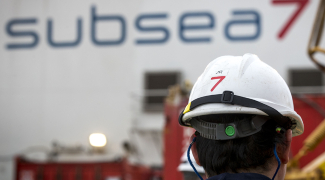
The global energy landscape continues to present a complex mix of volatility and strategic long-term investment. Amidst fluctuating commodity prices, major national oil companies (NOCs) are pressing forward with critical infrastructure development, signaling confidence in future demand. A prime example is the significant offshore engineering, procurement, construction, and installation (EPCI) contract recently awarded to Subsea7 by Saudi Aramco. This deal, valued between $750 million and $1.25 billion, underscores Aramco’s unwavering commitment to expanding its production capabilities and solidifies Subsea7’s crucial role in the Middle East’s vibrant offshore sector. For investors, this contract is more than just a headline; it’s a testament to the ongoing capital expenditure in the upstream segment, offering a beacon of stability in an otherwise dynamic market.
Strategic Imperatives: Aramco’s Enduring Offshore Vision
This latest award to Subsea7, encompassing 106 kilometers of infield and export pipelines, modifications to existing topsides, and associated hook-up activities, is a direct continuation of Aramco’s long-term strategic engagement with key service providers. The substantial contract value, ranging from three-quarters of a billion to over a billion dollars, highlights the scale of investment Saudi Arabia is pouring into its offshore assets. Engineering and project management are set to commence immediately from Subsea7’s regional offices, with offshore execution slated for 2027 and 2028. This multi-year timeline confirms that Aramco’s investment decisions are rooted in a long-term outlook for global energy demand, transcending short-term market fluctuations. For Subsea7, securing such a large-scale, multi-disciplinary project further entrenches its position as a preferred partner in one of the world’s most active upstream investment hubs, guaranteeing a robust project pipeline and revenue visibility well into the latter half of the decade. It signals a strong commitment to maintaining and enhancing production capacity, particularly from complex offshore fields, which are vital for meeting global energy needs.
Navigating the Currents: Current Market Dynamics and Strategic Investment
The timing of such a significant contract, while strategic for Aramco, occurs against a backdrop of notable shifts in global commodity markets. As of today, Brent Crude trades at $98.17, reflecting a 1.23% decline within the day’s range of $97.92 to $98.67. Similarly, WTI Crude stands at $89.74, experiencing a 1.57% drop within its day range of $89.57 to $90.26. This recent dip follows a more significant 12.4% retreat in Brent prices over the past 14 days, from $112.57 on March 27th to $98.57 yesterday. Gasoline prices have also seen a slight decline, currently at $3.08. Despite these immediate price movements, Aramco’s substantial commitment to this offshore project demonstrates a clear separation between short-term market volatility and long-term strategic capital allocation. For investors, this distinction is crucial: while daily price swings capture headlines, major EPCI contracts like this illustrate the underlying, sustained investment in upstream capacity that drives the long-term health of the oil and gas sector. Service providers like Subsea7 benefit from the stability and predictability of these large, multi-year projects, which act as a hedge against the inherent unpredictability of spot commodity markets.
Upcoming Events Shaping the Forward Outlook
Looking ahead, the next few weeks are packed with critical events that will undoubtedly influence market sentiment and potentially, future investment decisions in the broader energy sector. The upcoming OPEC+ Joint Ministerial Monitoring Committee (JMMC) meeting on April 18th, followed by the full ministerial meeting on April 20th, will be paramount. These gatherings will address production quotas and supply strategies, directly impacting global crude prices and the economic viability of future upstream projects. Investors are keenly watching for any signals regarding supply adjustments that could either tighten or loosen the market. Beyond OPEC+, the industry will closely monitor the Baker Hughes Rig Count reports on April 17th and April 24th for insights into drilling activity and potential future production trends. Furthermore, the weekly API and EIA Crude Inventory reports, scheduled for April 21st/22nd and April 28th/29th, will provide immediate snapshots of supply-demand balances in the crucial U.S. market. For a deal like the Subsea7-Aramco contract, with offshore execution planned for 2027-2028, these forward-looking indicators help frame the environment in which these assets will ultimately come online, reinforcing the need for long-term strategic planning in the face of evolving market dynamics.
Investor Focus: Clarity Amidst Complexity
Our proprietary reader intent data reveals a consistent theme among investors this week: a fervent desire for clarity and reliable data in a complex market. Investors are actively seeking answers to questions such as “What are OPEC+ current production quotas?” and “What is the current Brent crude price?”, underscoring their need for real-time, actionable intelligence to inform their investment strategies. This demand for robust market data and analytical tools highlights the challenge of making informed decisions when faced with both short-term market volatility and long-term strategic shifts. The Subsea7-Aramco contract directly addresses some of these underlying investor concerns. It demonstrates that despite the immediate fluctuations in crude prices and the ongoing discussions around production quotas, major players like Aramco are making substantial, multi-year capital commitments. For investors tracking the oil and gas services sector, such large-scale EPCI awards provide tangible evidence of sustained capital expenditure, offering a degree of predictability and confidence in the long-term demand for specialized offshore capabilities. This stability, derived from long-term contracts with financially robust NOCs, is a significant draw for investors seeking to mitigate risk in an inherently cyclical industry.
The Offshore Sector’s Enduring Appeal and Subsea7’s Advantage
The Middle East, and Saudi Arabia in particular, remains a cornerstone of global oil production, and its offshore resources are increasingly vital. The substantial investment from Aramco into this complex offshore pipeline and topside modification project reflects a broader trend of renewed confidence in the offshore sector globally. As onshore fields mature and geopolitical considerations drive diversification of supply, deeper and more challenging offshore developments become economically viable and strategically necessary. Subsea7’s ability to secure a contract of this magnitude, under its existing long-term agreement, speaks volumes about its technical expertise, operational efficiency, and established regional presence. The company’s immediate commencement of engineering and project management activities in Saudi Arabia and the UAE underscores its integrated regional capabilities. For investors, Subsea7 represents a key player positioned to capitalize on this enduring offshore investment cycle. The demand for advanced subsea infrastructure and specialized EPCI services is set to remain robust, driven by NOCs and IOCs alike seeking to unlock new reserves and maintain existing production, ensuring a steady stream of opportunities for leading service providers.


