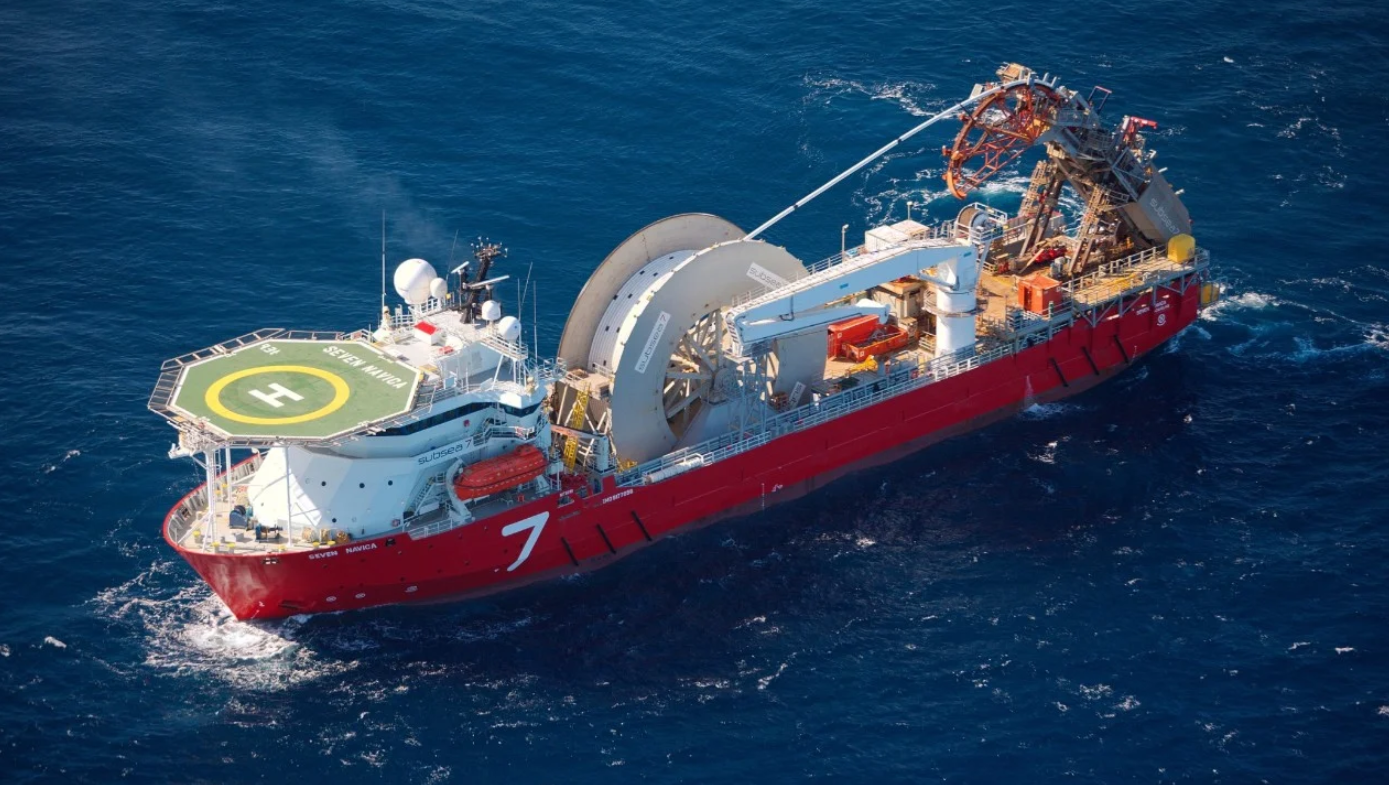
In a dynamic energy market characterized by persistent volatility, securing substantial, long-term contracts stands as a critical de-risking strategy for oilfield service providers. Subsea7’s recent award of an Engineering, Procurement, Construction, and Installation (EPCI) contract offshore Norway represents precisely such a strategic win. Valued between $150 million and $300 million, this agreement solidifies Subsea7’s backlog, providing revenue visibility through the latter half of the decade. For investors monitoring the oil and gas sector, this contract signals continued upstream capital expenditure in resilient offshore frontiers and underscores the enduring demand for specialized subsea engineering capabilities, even as broader market sentiment ebbs and flows with daily price movements.
Subsea7 Bolsters Backlog Amidst Evolving Market Dynamics
The newly secured EPCI contract encompasses a comprehensive scope, including the engineering, procurement, construction, and installation of critical infrastructure such as pipeline bundles, spools, protection covers, and tie-ins. This extensive remit leverages Subsea7’s core competencies and key vessels from its specialized fleet, with project management and engineering commencing immediately from its established offices in Stavanger, Norway, and Aberdeen, Scotland. Fabrication of the crucial pipeline bundles is slated for Wester, Scotland, showcasing an integrated, multi-national approach to project execution. Crucially, offshore operations are projected to unfold between 2025 and 2027. This multi-year horizon provides a significant degree of revenue predictability, a highly desirable attribute for investors in the oilfield services space, particularly given the current macro environment.
As of today, the energy markets reflect considerable short-term fluctuation. Brent crude trades at $90.38 per barrel, marking a 9.07% decline within a day range of $86.08 to $98.97. Similarly, WTI crude is priced at $82.59 per barrel, down 9.41% from its daily high, with its range spanning $78.97 to $90.34. This immediate downturn follows a broader trend: over the past two weeks, Brent has fallen from $112.78 on March 30th to $91.87 on April 17th, representing an 18.5% drop. Such volatility underscores the value of secured, long-duration contracts for service providers like Subsea7, insulating them somewhat from the immediate impact of commodity price swings and providing a stable foundation for future earnings.
Norway’s Enduring Appeal and Strategic Project Development
The location of this substantial contract offshore Norway further enhances its strategic importance. The Norwegian Continental Shelf is renowned for its stable regulatory environment, mature infrastructure, and commitment to long-term resource development. This makes it a preferred region for significant capital investment in complex subsea projects. Subsea7’s Vice President for Norway highlighted the importance of early engagement in the field development process, noting that this collaborative approach optimizes design solutions and contributes positively to final investment decisions (FIDs). This proactive involvement speaks to Subsea7’s strong client relationships and its ability to influence project economics from the outset, positioning it as a preferred partner for complex offshore endeavors. For investors, this suggests not just a one-off contract win, but a deeper integration into clients’ long-term development strategies, potentially leading to further opportunities.
The geographically diverse execution strategy—with engineering in Norway and Scotland, and fabrication in Scotland—demonstrates Subsea7’s robust operational footprint and its capacity to manage large-scale, international projects. This global-local approach allows for efficient resource allocation and leverages regional expertise, reinforcing the company’s competitive advantage in a highly specialized sector. The continued investment in projects like this on the Norwegian shelf signifies that despite global energy transition pressures, the demand for reliable, lower-carbon intensity oil and gas production from stable regions remains strong, underpinning the long-term outlook for companies supporting such developments.
Investor Focus: De-Risking Returns Amidst Macro Uncertainty
A recurring theme among investors, as evidenced by common inquiries this week, revolves around the future trajectory of crude oil prices. Questions like “What do you predict the price of oil per barrel will be by end of 2026?” highlight the prevailing uncertainty that shapes investment decisions across the energy value chain. For oilfield service companies, this uncertainty can translate into fluctuations in new project FIDs and contract awards. However, securing a contract with offshore operations extending into 2027 provides Subsea7 with a significant degree of revenue visibility and predictability, effectively de-risking its financial outlook against short-term market turbulence.
While investors ponder “What are OPEC+ current production quotas?” and their impact on global supply-demand balances, Subsea7’s contract underscores that long-lead-time offshore projects, once sanctioned, proceed largely independent of immediate daily price swings. This insulation from spot market volatility makes companies with strong backlogs particularly attractive to investors seeking stability within the broader energy sector. The ability to secure substantial, multi-year EPCI work demonstrates that key operators are committed to long-term resource development, providing a crucial counter-narrative to the prevailing discussions about oil price forecasts and production policy. It reinforces the idea that strategic investments in proven reserves continue, albeit with careful consideration of efficiency and cost-effectiveness.
Navigating the Future: Upcoming Events and Long-Term Project Development
The timeline for Subsea7’s new contract, with offshore operations extending into 2025-2027, positions it within a crucial period for the global energy market, one that will be shaped by several upcoming events. Over the next two weeks, key industry milestones include the OPEC+ Joint Ministerial Monitoring Committee (JMMC) meeting on April 18th, followed by the Full Ministerial meeting on April 19th. These meetings are critical for setting production quotas and influencing crude oil prices, which, in turn, affect the broader appetite for new upstream investments. While Subsea7’s contract is already secured, the outcomes of these OPEC+ discussions will invariably shape the landscape for future FIDs and the long-term project pipeline, especially as we approach the operational phase of this contract.
Further insights into market fundamentals will come from the API Weekly Crude Inventory reports on April 21st and 28th, and the EIA Weekly Petroleum Status Reports on April 22nd and 29th. These provide a snapshot of inventory levels and demand trends in the world’s largest consumer market. Additionally, the Baker Hughes Rig Count reports on April 24th and May 1st will offer an indication of drilling activity. While these are predominantly short-term indicators, they collectively inform the long-term outlook for oil and gas demand and supply, influencing the confidence of operators in sanctioning new, large-scale developments. For Subsea7, the successful execution of this substantial EPCI contract will not only contribute directly to its financial performance but also enhance its reputation as a reliable partner, positioning it favorably for future opportunities that emerge from the evolving market landscape and sustained demand for deepwater capabilities.