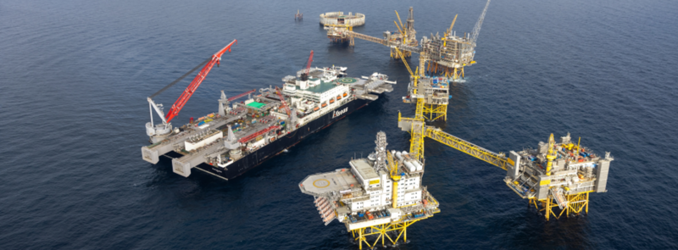
Subsea7 Secures Critical Backlog with ConocoPhillips Ekofisk Contract
In a significant development for the offshore services sector, Subsea7 has announced a substantial engineering, procurement, construction, and installation (EPCI) contract awarded by ConocoPhillips Skandinavia AS. This “large” award, valued between $300 million and $500 million, targets the Previously Produced Fields (PPF) development within Norway’s Greater Ekofisk Area. For investors tracking the energy sector, this deal is more than just a headline; it’s a strong signal about the strategic importance of brownfield developments, the resilience of the subsea market, and the careful capital allocation strategies being employed by major operators amidst fluctuating commodity prices. Our analysis delves into the implications of this contract for Subsea7’s financial trajectory, ConocoPhillips’ operational strategy, and the broader investment landscape for offshore oil and gas.
Strategic Backlog Boost Amidst Market Volatility
This new EPCI contract is a vital win for Subsea7, providing a robust boost to its order book and extending revenue visibility well into the latter half of the decade. The scope of work, encompassing subsea structures, umbilicals, risers, and flowlines (SURF), is integral to the redevelopment of these mature assets. Such “large” awards are crucial for service providers, offering stable, long-term revenue streams that help mitigate the impact of short-term market volatility on their financials. Commencing immediately from Subsea7’s Norwegian offices, the engineering and project management phases will lay the groundwork for major offshore installation campaigns scheduled for 2027 and 2028. This long-term project pipeline is particularly attractive to investors, signaling consistent operational activity and revenue generation in a sector often characterized by cyclical swings.
The contract’s foundation was laid by an earlier front-end engineering and design (FEED) agreement in May 2025. This early engagement allowed for optimized design solutions, a testament to the strong collaborative relationship between Subsea7 and ConocoPhillips. For investors, this history of successful collaboration and early involvement translates into reduced project risk and potentially more efficient execution, which can positively impact project margins and overall financial performance for the service provider. The Ekofisk Complex, located approximately 290 km southwest of Stavanger, is a cornerstone of Norwegian production, and its continued optimization through such projects underscores the enduring demand for specialized subsea expertise.
Ekofisk Redevelopment: A Blueprint for Capital Efficiency
ConocoPhillips’ strategy for the PPF development exemplifies a growing trend in the upstream sector: maximizing value from existing infrastructure. The redevelopment targets previously shut-in fields, leveraging the established Ekofisk Complex to extend production life and significantly improve recovery rates. This approach is highly capital-efficient compared to greenfield developments, as it minimizes the need for extensive new infrastructure and reduces lead times to production. For investors evaluating E&P companies, a focus on brownfield tie-backs and infrastructure utilization signals prudent capital allocation and a commitment to optimizing existing asset portfolios, rather than chasing high-cost, high-risk new discoveries.
While the contract is a firm commitment, its ultimate execution remains subject to approval of the Plan for Development and Operations (PDO) by Norwegian authorities. This is a standard regulatory step for any major offshore project in Norway, ensuring environmental compliance and resource stewardship. Historically, projects that reach this advanced stage, particularly those backed by strong operators like ConocoPhillips and leveraging existing infrastructure, typically receive the necessary approvals. The PPF project aligns well with Norway’s long-term energy strategy, which seeks to maximize economic recovery from its continental shelf, making a favorable PDO outcome highly probable and further de-risking the investment thesis for Subsea7.
Navigating Current Headwinds and Forward Market Outlook
The Subsea7 contract arrives at a time of considerable flux in the global oil markets, a dynamic that shapes investor sentiment and project economics. As of today, Brent crude trades at $91.87, representing a significant 7.57% daily decline and pushing it towards the lower end of its $86.08-$98.97 range. WTI crude mirrors this sentiment, down 7.86% to $84. This immediate downturn follows a broader trend; Brent has shed $20.91, or 18.5%, over the past 14 days, falling from $112.78 to its current level. This recent slide in prices undoubtedly raises questions for investors, many of whom are asking about the trajectory of oil prices for the remainder of 2026 and the factors influencing production quotas.
Looking ahead, the market’s immediate focus turns to critical upcoming events. This Saturday, April 18th, the OPEC+ Ministerial Meeting is scheduled, a pivotal gathering that will determine future production quotas. Investors are keenly interested in understanding any potential shifts in policy that could either stabilize or further pressure prices. A decision to maintain or even increase current production levels could exacerbate the recent price declines, whereas a cut could provide support. Beyond OPEC+, weekly data releases like the API and EIA Crude Inventory reports (due April 21st, 22nd, 28th, 29th) and the Baker Hughes Rig Count (April 24th, May 1st) will continue to provide real-time insights into supply-demand dynamics and drilling activity, all of which influence the economic calculations for projects like Ekofisk. Despite the short-term price volatility, the long-term nature of the Ekofisk PPF development, with offshore installation campaigns extending to 2028, suggests that both ConocoPhillips and Subsea7 are operating with a confident, long-term view of energy demand and project viability, anticipating a more favorable price environment in the coming years.
Investment Implications for Subsea Service Providers and E&P Operators
For investors considering Subsea7, this contract solidifies its position as a preferred partner for complex subsea projects and reinforces its earnings visibility. The “large” award, combined with the extended installation timeline, provides a foundation for sustained operational activity and financial performance, making the stock potentially more attractive in a volatile market. It underscores the continued demand for high-end subsea engineering and construction capabilities, particularly for brownfield expansions and life-extension projects that are becoming a core focus for many E&P companies globally.
For ConocoPhillips, this investment in the Greater Ekofisk Area demonstrates a strategic commitment to maximizing value from existing, high-quality assets. By leveraging established infrastructure, the company mitigates development risk and aims to enhance long-term production and reserves without the significant upfront capital outlay of entirely new projects. This disciplined approach to capital expenditure, even with current market uncertainty, signals a healthy long-term outlook for a company like ConocoPhillips. As investors continue to scrutinize the performance of major E&P players, contracts like this highlight the ongoing investment in the essential infrastructure that underpins global energy supply, reinforcing the long-term investment case for both the service providers facilitating these projects and the operators sanctioning them.


