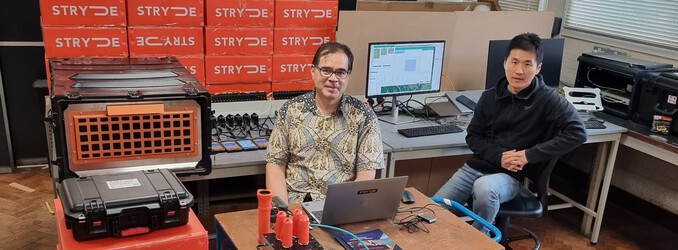
The energy investment landscape is in constant flux, shaped by geopolitical realities, supply-demand dynamics, and the accelerating drive towards sustainable solutions. Amidst this backdrop, foundational technologies that promise to enhance data acquisition and operational efficiency across the entire energy spectrum are becoming increasingly critical. A recent significant development underscores this trend: the deployment of advanced seismic imaging systems across a consortium of leading UK academic institutions. This initiative, powered by STRYDE’s Mini Seismic Systems, marks a pivotal moment, making high-density, cable-free nodal seismic technology broadly accessible for the first time in the UK scientific community. For astute investors, this isn’t merely an academic story; it represents a strategic investment in the underlying data infrastructure crucial for both optimizing traditional oil and gas operations and accelerating emerging energy transition projects.
Strategic Deep Dive: Unlocking Value with Advanced Seismic Imaging
The core of this UK initiative lies in the deployment of approximately 2,000 STRYDE Mini Seismic nodes, establishing a national technology pool hosted by the University of Cambridge. This move directly addresses a long-standing gap: the prohibitive cost and logistical complexity that previously limited UK researchers’ access to state-of-the-art “large-N” seismic surveys. STRYDE’s technology, characterized by its compact, cable-free, and cost-effective design, dramatically lowers the barrier to entry for high-resolution seismic data acquisition. The implications for various sectors are profound. From assessing geothermal energy potential and monitoring carbon capture and storage (CCS) sites to mitigating natural hazards like earthquakes and landslides, the ability to deploy thousands of sensors in high-density configurations provides unparalleled resolution of the Earth’s subsurface. For investors, this translates into reduced exploration risk, more efficient resource identification, and enhanced monitoring capabilities for high-value energy and environmental projects. This isn’t just about better images; it’s about better data leading to better decisions and ultimately, more secure and sustainable energy investments.
Navigating Volatility: Market Context for Foundational Tech Investment
In the immediate term, the energy market continues its characteristic volatility, a factor that consistently shapes investor sentiment. As of today, Brent crude trades firmly at $98.01 per barrel, marking a 3.24% increase within its daily range of $94.42 to $99.84. This rebound comes after a notable 12.4% decline over the past fortnight, where prices dipped from $108.01 on March 26th to $94.58 on April 15th. Such fluctuations in the immediate crude market underscore a growing investor appetite for more stable, long-term plays within the energy sector, particularly those underpinning the energy transition. While the price of gasoline at $3.08 per gallon, up 2.33% today, reflects ongoing demand, the strategic investment in foundational technologies like STRYDE’s nodes represents a calculated move. It signals a shift in capital allocation towards assets that provide value regardless of short-term price swings, focusing instead on the indispensable data required for future energy security and environmental stewardship. Investors are increasingly looking for opportunities that offer both resilience against market volatility and exposure to the growth trajectory of new energy frontiers.
Forward Impulses: Macro Events and Long-Term Vision
Looking ahead, the energy calendar is packed with critical data points that could inject further volatility into crude markets. Investors are keenly awaiting the OPEC+ Joint Ministerial Monitoring Committee (JMMC) meeting on April 18th, followed by the Full Ministerial meeting on April 20th, which will undoubtedly shape near-term supply expectations and production quotas. Coupled with the bi-weekly Baker Hughes Rig Count reports (next on April 17th and 24th) and weekly API and EIA crude inventory data (starting April 21st and 22nd), these events dictate the immediate trading environment. However, the strategic investment in foundational technologies like STRYDE’s nodes represents a crucial long-term pivot. While these macro events influence short-term commodity prices, the deployment of advanced seismic capabilities for geothermal, CCS, and environmental monitoring demonstrates that capital is increasingly flowing into solutions that transcend immediate market fluctuations. This long-term vision emphasizes resource optimization and environmental sustainability, laying the groundwork for future energy projects that are less susceptible to daily market swings and more aligned with global energy transition objectives.
Investor Focus: Beyond the Barrel Price
Our proprietary market intelligence reveals a strong investor interest in understanding the current Brent crude price and formulating robust base-case forecasts for the next quarter, alongside inquiries regarding OPEC+ production quotas. This focus on immediate market fundamentals is entirely understandable given the ongoing volatility. However, the strategic investment in advanced seismic technology for diverse applications, from geothermal energy to carbon capture and storage monitoring, signals a parallel, more profound shift in investor thinking. While the immediate price of oil remains paramount for traditional portfolios, there’s a growing recognition that future energy returns will increasingly be driven by technological efficiencies and robust data acquisition in emerging energy sectors. Investors are seeking clarity on how to position their portfolios for the energy transition, and foundational technologies that improve data resolution and reduce costs in new energy domains are key components of this strategy. This investment in seismic capability represents a tangible step towards de-risking and accelerating these vital energy transition projects, providing a compelling long-term thesis for investors looking beyond the daily price fluctuations.


