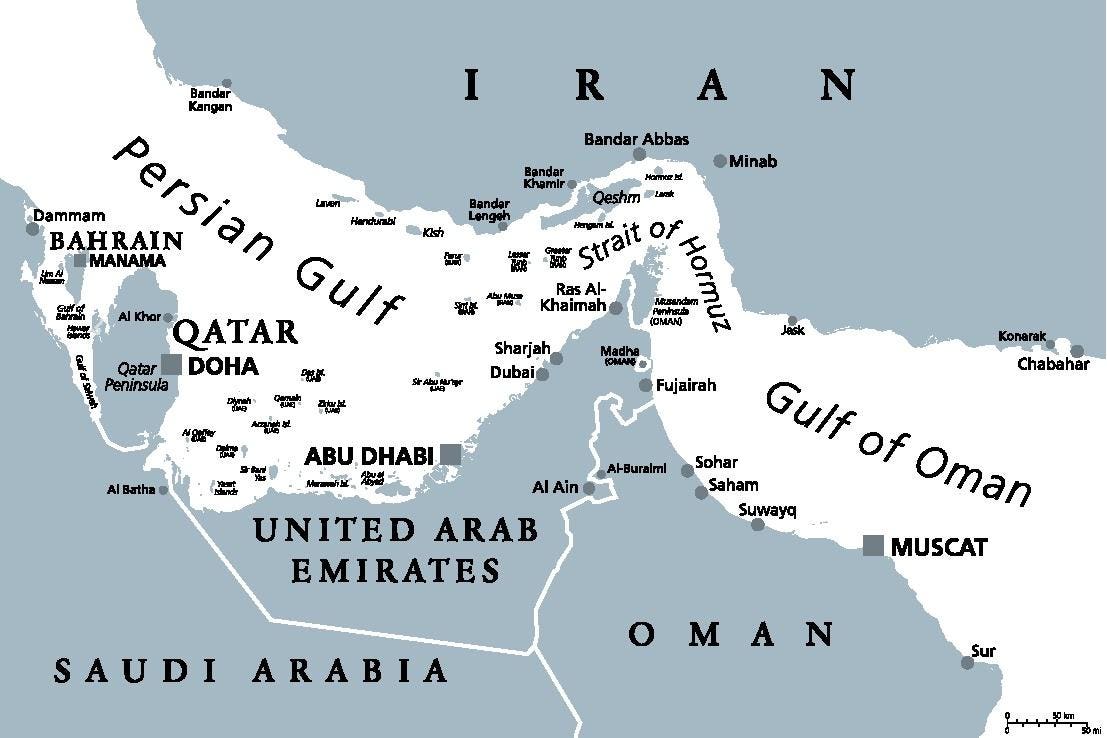
The recent escalation in the Middle East, marked by the United States’ targeted strikes on Iranian nuclear facilities, has once again thrust the Strait of Hormuz into the spotlight as a potential flashpoint. Iran’s swift parliamentary approval of a measure to close this critical maritime artery, though contingent on military execution, has amplified geopolitical risk premiums across energy markets. For oil and gas investors, understanding the strategic importance of this waterway and the likelihood of sustained disruption is paramount to navigating current volatility and future market dynamics. This analysis delves into the chokepoint’s critical role, assesses Iran’s capacity for blockade, and provides a forward-looking perspective informed by market data and upcoming industry events.
The Chokepoint’s Unrivaled Importance and Immediate Market Reaction
The Strait of Hormuz serves as the sole sea passage from the Persian Gulf to the open ocean, making it an indispensable conduit for global energy flows. Its strategic significance cannot be overstated, with approximately 30 to 33 million barrels of oil equivalent per day transiting its waters. This volume includes a staggering 21 million barrels per day of crude oil and products, representing roughly one-fifth of the world’s total supply. Beyond crude, the Strait is also vital for liquefied natural gas (LNG) cargoes, accounting for 20% of global LNG trade, predominantly from Qatar, and a third of all liquefied petroleum gas (LPG) shipments. Any significant disruption here would send immediate shockwaves through the global energy supply chain.
As of today, April 15th, Brent crude trades at $95.01, showing a modest daily gain of 0.23% and operating within a day’s range of $91-$96.89. WTI crude similarly sits at $91.56, up 0.31% for the day with a range of $86.96-$93.30. Gasoline prices reflect this underlying tension, currently at $2.99, up 0.67% today. While these daily movements appear contained, they follow a period of intense upward pressure; Brent crude had already surged more than 20% since last month amidst rising regional tensions. This rally has moderated slightly, with our proprietary data indicating a 14-day dip for Brent, from $102.22 on March 25th to $93.22 on April 14th. This current equilibrium, however, remains highly sensitive to any further escalation in the Strait of Hormuz, as the inherent risk premium is already baked into these elevated price levels.
Assessing Iran’s Capacity for Disruption and Its Self-Inflicted Wounds
While Iran has repeatedly threatened to close the Strait of Hormuz in response to perceived aggressions, a sustained blockade faces significant hurdles. The immediate practicality and strategic efficacy of such a move are highly questionable. Firstly, any attempt by Iran to seal off the Strait would likely provoke an immediate and robust military response from the United States. The U.S. Navy’s Fifth Fleet is strategically based in Bahrain, with multiple combined task forces routinely patrolling the Persian Gulf and the Strait itself. This formidable presence significantly diminishes any element of surprise Iran might hope to achieve and makes a prolonged closure highly improbable. Furthermore, Iran’s own extensive coastline and ports would become acutely vulnerable to a vastly superior American air and naval strike arsenal, making a full-scale blockade a potentially self-defeating endeavor.
Secondly, and critically from an economic standpoint, closing the Strait would inflict severe damage on Iran’s own energy exports. The country exports an average of 1.65 million barrels per day of crude oil and gas condensate, with a substantial 90% of these sanction-ridden, discounted shipments destined for China. A blockade would directly cut off Iran’s primary source of revenue, effectively shooting itself in the foot. Such a move would be economically catastrophic for Tehran, isolating it further from global markets and exacerbating its already challenging financial position. Investors should weigh the rhetorical threats against the stark military and economic realities that make a prolonged Iranian blockade an unlikely and ultimately unsustainable strategy.
Investor Focus: Navigating Price Volatility and Forward Projections
Our proprietary reader intent data reveals a significant focus this week on building a base-case Brent price forecast for the next quarter, alongside inquiries regarding the consensus 2026 Brent outlook and the operational status of Chinese ‘tea-pot’ refineries. Investors are clearly attempting to model various geopolitical risk premiums and understand the underlying supply-demand dynamics influencing future price trajectories. While a full closure of the Strait of Hormuz appears unlikely for reasons discussed, even a brief, symbolic disruption or heightened rhetoric can introduce significant volatility, creating both risk and opportunity for nimble investors.
Looking ahead, the market will closely watch the OPEC+ Joint Ministerial Monitoring Committee (JMMC) meeting on April 18th, followed by the Full Ministerial Meeting on April 20th. Any signals on production policy from these gatherings will be crucial, especially as global supply anxieties heighten due to geopolitical tensions. Further insights into immediate supply-demand balances will come from the weekly API and EIA crude inventory reports scheduled for April 21st/22nd and April 28th/29th. These regular updates provide a vital pulse on stock levels in key consumer markets, offering fundamental counterpoints to the geopolitical noise. While a precise price forecast remains challenging amidst such variables, a short-term risk premium will likely persist, influenced heavily by ongoing Middle East developments and the outcomes of these critical energy events. Investors should carefully monitor these dates, as they provide tangible data points against which to assess market sentiment and physical supply conditions.
Strategic Implications for Global Energy Markets and Investment Outlook
The recurrent threats to the Strait of Hormuz underscore the inherent vulnerabilities in global energy supply chains and demand a strategic long-term perspective from investors. While alternative pipeline routes exist for some Gulf producers, their capacity is limited and cannot fully bypass the Strait for the vast majority of crude, products, and gas flows. This reality means the Strait remains a foundational element of energy security, and its ongoing geopolitical exposure necessitates a cautious approach to regional investments.
For investors, this environment reinforces the importance of diversification and resilience. Companies with diversified asset bases outside of geopolitically sensitive chokepoints, or those investing in energy transition technologies that reduce reliance on such volatile regions, may present more stable long-term opportunities. Furthermore, the persistent risk premium associated with the Strait of Hormuz could continue to support higher crude oil prices, even in periods of otherwise balanced supply and demand. This implies that upstream producers with strong balance sheets and low production costs may continue to generate robust free cash flow, while downstream operators might face margin compression if crude price volatility cannot be fully passed on to consumers. Understanding the enduring strategic importance of the Strait, and its potential to introduce sudden market shocks, is essential for crafting robust investment strategies in the dynamic oil and gas sector.