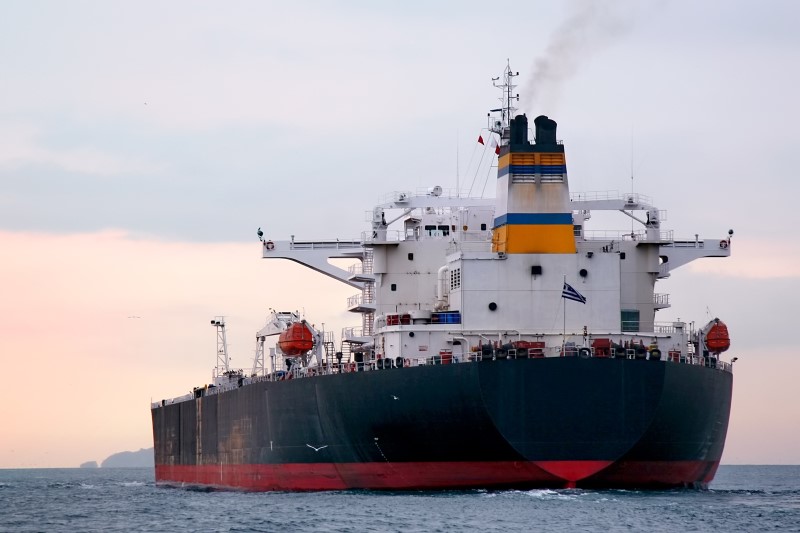
The global oil market has once again found itself under the shadow of Middle Eastern geopolitical tensions, with recent missile exchanges between Israel and Iran prompting a sharp watch on critical energy infrastructure. Despite the heightened rhetoric and initial market jitters, proprietary vessel-tracking data indicates a surprisingly steady flow of oil tanker traffic through the Strait of Hormuz. This vital artery, responsible for channeling over a quarter of the world’s oil supplies, has maintained consistent transit volumes, suggesting that immediate supply disruptions have been averted, at least for now. For investors, understanding this stability against a volatile backdrop is crucial for assessing risk premiums and future price trajectories in the energy sector.
Hormuz Flows Remain Resilient Amidst Regional Flare-Up
In the wake of recent geopolitical developments, the physical transit of energy through the Strait of Hormuz has demonstrated remarkable resilience. Over the past seven days, the rolling average for oil tankers exceeding 10,000 deadweight tons traversing the Strait held firm at approximately 42 to 45 vessels. This consistent pace underscores the continued functionality of this critical maritime chokepoint. Our data further shows that daily inbound oil tanker movements into the Persian Gulf ranged between 20 and 23 vessels, with roughly 22 ships exiting each day. Beyond crude, liquefied petroleum gas (LPG) tankers maintained a daily transit rate of 8 to 10 vessels, while liquefied natural gas (LNG) carriers continued to pass through within their normal daily range of 6 to 8 ships. Total commercial traffic, encompassing all vessel types, amounted to around 110 vessels, with only a minor dip observed in inbound bulk carriers. While short-term data can fluctuate due to factors like loading schedules, weather, and localized electronic interference impacting navigation signals, the overarching trend points to uninterrupted operations. This steadiness is particularly significant given Iran’s heavy reliance on the Strait for its own oil and gas exports, creating a strong incentive for the nation to maintain its navigability despite any threats.
Market Response: Cautious Optimism Meets Lingering Uncertainty
The stability of Hormuz flows has played a pivotal role in shaping the market’s reaction to the recent geopolitical friction. As of today, Brent Crude trades at $94.6 per barrel, showing a marginal decline of 0.2% within a daily range of $91 to $96.89. This price action reflects a market that has largely absorbed the immediate shock without pricing in a full-blown supply disruption. Looking at the broader trend, Brent has actually seen a decline of approximately $9, or 8.8%, over the past 14 days, moving from $102.22 on March 25th to $93.22 on April 14th. This downward trajectory, even amidst rising tensions, suggests that other fundamental factors were already exerting pressure on prices, or that the market had initially over-priced the geopolitical risk. The recent indication from President Trump that a decision on any potential strike against Iran could take up to two weeks appears to have provided a temporary calming effect, easing immediate concerns within the shipping industry and, by extension, the broader oil market. However, the underlying geopolitical risks remain, and the market maintains a vigilant stance, ready to react to any escalation or direct military intervention that could threaten the Strait’s operational integrity.
Navigating the Future: Key Events on the Horizon
While the Strait of Hormuz has demonstrated resilience, investors must look beyond the immediate situation to upcoming events that will further shape the oil market’s trajectory. The next two weeks are packed with critical catalysts. The market will be closely watching the OPEC+ Joint Ministerial Monitoring Committee (JMMC) meeting on April 18th, followed by the Full Ministerial Meeting on April 20th. These gatherings are crucial for understanding the cartel’s production policy, particularly given current price levels and the ongoing geopolitical premium. Any deviation from current supply strategies could significantly impact global balances. Domestically, the Baker Hughes Rig Count reports on April 17th and April 24th will provide vital insights into North American production trends and producer sentiment. A sustained increase in drilling activity could signal a stronger supply response, potentially capping upside price movements. Furthermore, the API Weekly Crude Inventory (April 21st, April 28th) and the EIA Weekly Petroleum Status Report (April 22nd, April 29th) will offer granular data on U.S. crude and product inventories, serving as key indicators of demand strength and supply-demand equilibrium. These events, combined with the lingering geopolitical uncertainty, will dictate the market’s direction well into the next quarter.
Addressing Investor Queries: Decoding the Oil Market’s Path
Our investor community is actively seeking clarity on the complex interplay of factors driving the energy market, and the stability of Hormuz flows is a critical input to these analyses. Many are asking for a base-case Brent price forecast for the next quarter. The current steady state in Hormuz suggests that the risk premium associated with physical supply disruption, while present, is not at an extreme level. This forms a foundational assumption for any forecast: absent a direct closure, significant upside from a supply shock is mitigated. However, shifts in OPEC+ policy or demand signals, such as the operational status of Chinese “teapot” refineries—another frequently asked question this week—could still move the needle. Robust demand from these independent refiners could tighten an otherwise well-supplied market, even with stable Hormuz flows. Similarly, while not directly related to crude, inquiries about Asian LNG spot prices are relevant; the consistent transit of 6-8 LNG carriers daily through Hormuz ensures regional supply access, influencing price dynamics by preventing scarcity. The consensus 2026 Brent forecast is currently grappling with this very geopolitical sensitivity. The $94.6 mark suggests a market priced for ongoing tension but not immediate catastrophe. Investors are keenly trying to discern whether this reflects a new normal or merely a temporary reprieve before potential escalation. The interplay of these factors—geopolitical stability, OPEC+ decisions, and global demand dynamics—will ultimately define the path for oil prices in the coming months.