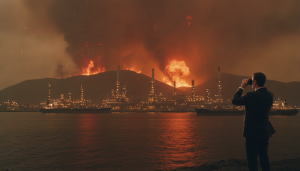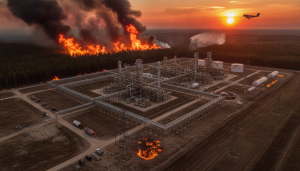
The devastating wildfires that have swept across Spain, consuming an estimated 382,000 hectares and claiming lives, serve as a stark reminder of the escalating climate emergency. These events are not isolated incidents but accelerating indicators of a future demanding significant “readjustment and recalibration” in national preparedness and response. For energy sector investors, the implications extend far beyond humanitarian concerns, translating directly into tangible costs, policy shifts, and a re-evaluation of long-term asset resilience. As a senior investment analyst, my focus is on how these intensifying climate impacts will reshape the operational landscape and financial outlook for oil and gas companies, particularly those with significant European exposure.
The Rising Price Tag of Climate Preparedness
Spain’s experience, marked by record-breaking heatwaves and the tragic loss of over 1,100 lives linked to the heat between August 3 and August 18 last year, underscores a critical shift: climate events are becoming more severe and more recurrent. The call from the Spanish government for a “state pact” to tackle the climate emergency, moving beyond short-term political cycles, signals a commitment to sustained, non-ideological action. For energy companies, this translates into a non-negotiable increase in capital expenditures and operational costs. We anticipate mandates for hardening infrastructure against extreme weather, investing in new technologies for emissions reduction, and contributing to national climate resilience funds. Utilities and midstream operators, in particular, will face pressure to adapt their physical assets – pipelines, storage facilities, power grids – to withstand higher temperatures, more frequent fires, and unpredictable weather patterns. These are not optional upgrades; they are becoming essential for maintaining operational continuity and ensuring long-term asset value, directly impacting shareholder returns.
Market Volatility Reflects Shifting Climate Risk Perceptions
The broader energy market is currently navigating a complex interplay of supply dynamics, geopolitical tensions, and, increasingly, the financial implications of climate-related events and policy responses. As of today, Brent Crude trades at $90.38 per barrel, a notable decline of 9.07% within the day, with its range spanning $86.08 to $98.97. Similarly, WTI Crude has seen a sharp dip to $82.59, down 9.41%, trading between $78.97 and $90.34. Gasoline prices have also followed suit, landing at $2.93, a 5.18% decrease today. This recent volatility comes against a backdrop of a significant 14-day downtrend for Brent, which fell from $112.78 on March 30 to $91.87 just yesterday, representing an 18.5% drop. While immediate factors like inventory reports and global economic sentiment certainly play a role in these daily movements, the increasing frequency and severity of climate events like the Spanish wildfires contribute to a broader sense of uncertainty. Investors are grappling with how these physical risks, combined with potential policy interventions and carbon pricing mechanisms, might impact long-term demand forecasts and the cost of doing business. The question of where oil prices will settle by the end of 2026 is increasingly being influenced by the speed and scale of global climate action, adding a new layer of complexity to traditional supply-demand models.
Upcoming Events and the Long-Term Investment Horizon
The energy investment calendar over the next two weeks presents several key data points that, when viewed through the lens of escalating climate preparedness, offer crucial insights. The upcoming OPEC+ Joint Ministerial Monitoring Committee (JMMC) and Full Ministerial meetings on April 18th and 19th, respectively, will set production quotas. While these decisions primarily focus on balancing global supply and demand, the broader context of climate policy cannot be ignored. Stricter environmental regulations in major consumption regions, spurred by events like the Spanish wildfires, could temper long-term demand growth projections, influencing OPEC+’s strategic outlook. Furthermore, the regular API and EIA Weekly Petroleum Status Reports on April 21st, 22nd, 28th, and 29th, alongside the Baker Hughes Rig Count on April 24th and May 1st, will provide granular detail on current inventory levels and drilling activity. For investors, these reports must now be considered alongside the potential for increased regulatory burdens and climate adaptation costs, which could impact future drilling economics and refining margins, particularly in regions prone to extreme weather. The Spanish government’s commitment to outlining its climate action plan early next month will be a critical forward-looking catalyst, potentially setting a precedent for other European nations and further accelerating the shift towards a climate-resilient economy.
Investor Focus: Resilience and Strategic Positioning
Our proprietary reader intent data reveals a strong focus among investors on company-specific resilience and broader market trends. Questions like “How well do you think Repsol will end in April 2026?” highlight the direct interest in how major players in affected regions are positioned. For Repsol, a prominent Iberian energy firm, the implications of Spain’s heightened climate preparedness are direct. Investors will scrutinize their investments in renewables, their carbon capture strategies, and their physical asset hardening plans. Companies that demonstrate a robust strategy for adapting to both physical climate risks and evolving regulatory frameworks will likely be favored. While questions about “OPEC+ current production quotas” remain perennial, the underlying long-term demand picture is increasingly shaped by global decarbonization efforts and the costs associated with climate adaptation. Investors are demanding transparency on how energy companies are factoring these escalating climate-related costs and policy shifts into their capital allocation decisions and risk assessments. The ability to innovate, diversify into lower-carbon solutions, and build resilience into core operations will be paramount for sustained shareholder value in this new climate reality.