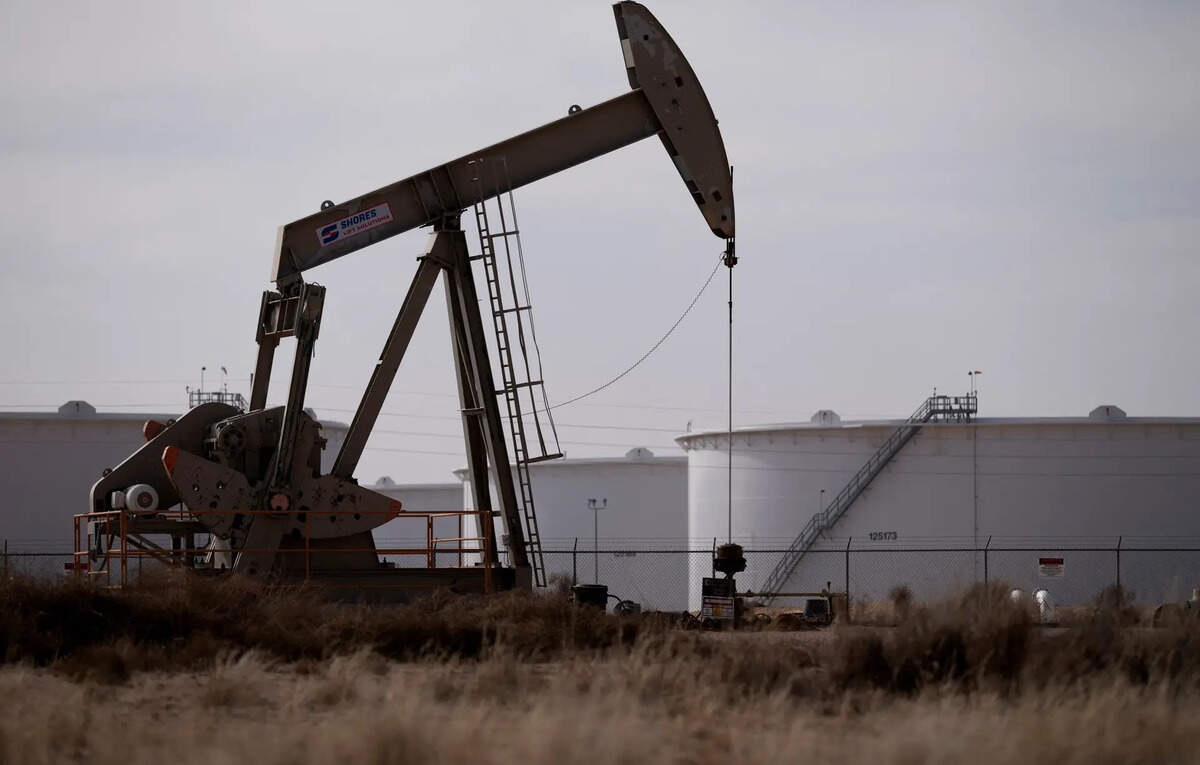
Global Oil Demand Growth Forecast Slashed for 2025 Amid Trade Uncertainty
The global energy landscape is signaling a significant shift for 2025, as a leading commodity insight firm has sharply revised its projections for worldwide oil demand expansion. Investors should take note: the new forecast indicates an average daily increase of merely 750,000 barrels per day (b/d), a substantial reduction of 500,000 b/d from earlier estimates. This downward adjustment points to mounting pressures from volatile U.S. trade policies and an anticipated oversupply in the crude market, setting a challenging tone for energy sector participants.
This revised outlook represents a marked deceleration, particularly when contrasted with the robust 1.75 million b/d year-over-year growth observed in the first quarter of 2025. For the subsequent quarters of the year, the pace of demand growth is expected to slow considerably, averaging just 420,000 b/d. This trajectory suggests a period of constrained consumption, impacting investment strategies across the oil and gas value chain.
Mounting Economic Headwinds and Their Impact on Oil Consumption
Industry experts are openly acknowledging the profound uncertainty shaping the oil market’s future. Jim Burkhard, a prominent voice in crude oil research, emphasized the negative repercussions, stating, “Although the magnitude of a potential economic and oil demand downturn is as uncertain as the future course of U.S. tariffs, the impact will be negative. Initial warning signs of a potential downturn are only starting to come into view. The level of severity is now the big question.” This sentiment underscores the critical need for investors to monitor macroeconomic indicators, particularly those related to global trade and industrial activity, which directly influence petroleum consumption trends.
The interplay of geopolitical developments and economic policy is clearly casting a long shadow over the energy sector. The prospect of prolonged or intensified trade disputes, especially involving major economies, threatens to dampen global economic growth, subsequently curtailing the demand for crude and refined products. This environment demands a cautious approach to portfolio allocations within oil and gas, with a focus on companies demonstrating resilience and operational efficiency.
A Turning Point for U.S. Crude Production: Decline Projected for 2026
Beyond demand concerns, a significant shift is projected for U.S. crude oil production, a dominant force in global supply over recent years. For the first time in nearly a decade, excluding the anomalous COVID-19 impacted year of 2020, analysts anticipate a year-on-year decline in U.S. output in 2026. While 2025 is still expected to see an average of 13.46 million b/d, representing a gain of 252,000 b/d over 2024, the subsequent year forecasts a drop to 13.33 million b/d, a reduction of 130,000 b/d.
This projected downturn signals a potential pivot point for the international oil market. Production from offshore fields and other long-lead time projects will likely provide some stability to output figures this year. However, the more price-sensitive U.S. shale basin production, which has driven much of the recent growth, is expected to slow down with a lag, responding to lower price environments. Jim Burkhard highlighted the significance of this shift: “U.S. oil production growth has been a dominant feature in the oil market since 2022. A price-driven decline in U.S. production would be a pivot point for the oil market—and set conditions for a potential price recovery. But much will depend on the severity of an economic slowdown and the impact on demand growth beyond 2025.” Investors should consider how this evolving supply dynamic might influence future oil prices and the profitability of upstream producers.
Fragile Price Outlook and Significant Downside Risks
The current market analysis bases its price assumptions on a somewhat subdued environment: Dated Brent crude is modeled in the mid-to-low USD 60s per barrel, while West Texas Intermediate (WTI) is positioned in the low USD 60s to high USD 50s per barrel. However, the report cautions that these price decks carry substantial downside risk. The primary triggers for further price weakness include a failure to ease existing trade barriers and any accelerated reversal of production cuts by OPEC+ member nations.
Ian Stewart, an associate director at the firm, articulated the market’s sensitivity: “Dizzying changes to U.S. tariffs—both real and proposed—are taking their toll on market sentiment. Our current outlook assumes that there will ultimately be some movement away from trade barriers to China as well as signs of progress in U.S. trade talks with Europe, Japan and other major trading partners. That means that the risk for additional downside is very real. Any periods of price strength are likely to be fragile.” This assessment underscores the precarious nature of the current oil market, where sentiment can quickly swing based on geopolitical headlines and policy announcements. Investors must remain vigilant regarding global trade developments, as these could directly impact crude demand and price stability.
Previous analysis by the firm further illustrates this sensitivity, suggesting that sustained WTI crude prices at USD 50 per barrel could trigger a production decline exceeding 1 million b/d in the U.S. Lower 48 onshore regions within a 12-month timeframe. This scenario highlights the elasticity of U.S. shale supply and its potential to rebalance the market, albeit at a lower price point. For investors, understanding these thresholds is crucial for assessing potential entry and exit points in the energy commodities space.
Navigating a Complex Investment Landscape
The revised outlook for global oil demand growth, coupled with a projected downturn in U.S. crude production, paints a complex picture for energy investors. The overarching themes are heightened uncertainty, particularly around international trade policy, and a sensitive supply-demand balance. While a slowdown in U.S. output could, in theory, pave the way for a future price recovery, its timing and magnitude remain contingent on the severity of a broader economic slowdown and its sustained impact on global oil consumption beyond 2025.
Successful navigation of this environment will require a deep understanding of macroeconomic trends, careful monitoring of trade negotiations, and a keen eye on OPEC+ strategies. Companies with strong balance sheets, diversified operations, and a focus on cost efficiency may be better positioned to weather potential volatility. Investors should prepare for a market where periods of price strength could prove fleeting, and downside risks are both tangible and significant.