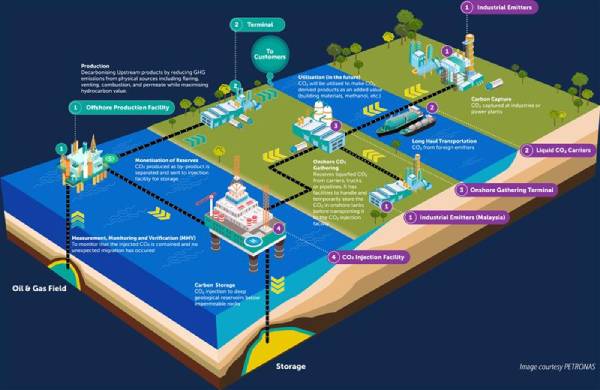
The recent announcement of a Front-End Engineering Design (FEED) contract award for the Southern onshore CO2 receiving terminal in Peninsular Malaysia marks a critical step forward for Southeast Asia’s burgeoning carbon capture, utilization, and storage (CCUS) landscape. This strategic infrastructure project, designed to handle CO2 from both domestic and international industrial emitters before offshore geological storage, signals a profound commitment by PETRONAS and the Malaysian government towards decarbonization. For astute energy investors, this development is more than just an engineering milestone; it represents a tangible move into a high-growth segment of the energy transition, offering a glimpse into future revenue streams and strategic positioning in a carbon-constrained world. As traditional oil and gas markets navigate persistent volatility, projects like this offer a compelling long-term diversification play and a testament to the evolving energy investment thesis.
Malaysia’s Decarbonization Drive and the CCUS Investment Thesis
Malaysia’s commitment to climate targets is becoming increasingly evident through projects like the Southern onshore CO2 terminal. This flagship CCUS initiative underscores the nation’s readiness to implement large-scale, low-carbon infrastructure, positioning it as a regional leader in carbon management. For investors, the long-term investment thesis in CCUS is compelling: a growing global imperative to reduce emissions translates into a demand for scalable, effective carbon abatement solutions. While some investors are still closely monitoring the near-term trajectory of hydrocarbon prices – a common query among our readers, such as predictions for the price of oil per barrel by the end of 2026 – the strategic pivot towards CCUS by national oil companies like PETRONAS highlights a broader understanding that sustainable growth requires diversification beyond traditional upstream activities. This project is not merely an environmental endeavor; it’s an economic imperative, aiming to establish Malaysia as a regional hub for carbon storage, attracting investments and creating new industries around CO2 capture, transport, and storage services. The involvement of a global engineering specialist like RINA in the FEED phase further de-risks the project, lending credibility to its technical feasibility and eventual commercial viability.
Navigating Market Volatility: A Backdrop for Strategic Investments
The current market environment provides a sharp contrast between short-term hydrocarbon price fluctuations and the long-term strategic commitments seen in CCUS. As of today, Brent Crude trades at $90.38, reflecting a notable 9.07% decrease. WTI Crude has followed suit, dropping to $82.59, down 9.41% over the day. This recent volatility is underscored by Brent’s journey from $112.78 just a few weeks ago on March 30th to its current level, representing a nearly 20% decline in less than three weeks. Such significant swings keep investors on edge, with many actively asking about OPEC+’s current production quotas and how these dynamics will impact integrated energy companies. Yet, against this backdrop of price uncertainty, investments in critical energy transition infrastructure like the Malaysian CO2 terminal persist. This demonstrates a clear division in investment strategies: while short-term plays may focus on commodity price movements, long-term capital is increasingly flowing into projects that address fundamental shifts in the global energy landscape. The ongoing engineering work for this project is a prime example of sustained capital allocation towards future-proof energy solutions, regardless of daily market noise.
Engineering Excellence and Project De-risking: The RINA Factor
The selection of RINA Consulting for the FEED contract is a testament to the increasing complexity and high expectations placed on large-scale carbon management initiatives. Their global team of specialists, advanced testing facilities, and expertise in integrity assessments are crucial for a project of this magnitude, which will receive CO2 from multiple industrial emitters before injecting it into offshore geological storage. For investors, the FEED phase is a critical de-risking step. It solidifies the technical design, refines cost estimates, and establishes a robust execution strategy with a strong focus on safety, efficiency, and objectivity in technology selection. A well-executed FEED contract provides greater certainty for subsequent investment decisions, including final investment decisions (FIDs) and potential project financing structures. The confidence placed in RINA’s engineering depth and execution capability suggests that PETRONAS is committed to building Malaysia’s most strategic CCS infrastructure to date on a solid technical foundation. This focus on engineering excellence from the outset is a positive signal for long-term project success and, consequently, for the attractiveness of related investment opportunities.
Upcoming Catalysts and the Road Ahead for Energy Transition Investments
The broader energy market will see several significant events unfold in the coming weeks, which, while not directly tied to CCUS project development, will shape the macroeconomic environment for energy investments. The upcoming OPEC+ JMMC and Ministerial Meetings on April 19th and 20th, respectively, will be critical in shaping near-term oil supply rhetoric and market sentiment. Further insights into market fundamentals will come from the API and EIA weekly inventory reports on April 21st, 22nd, 28th, and 29th, alongside the Baker Hughes Rig Count on April 24th and May 1st. These events will provide crucial data points for investors assessing the supply-demand balance and the overall health of the hydrocarbon sector. For CCUS projects like Malaysia’s terminal, these macro events influence the availability of capital, project financing costs, and the overall investor appetite for energy infrastructure. While the long-term drivers for CCUS are rooted in climate policy and decarbonization mandates, the pace and scale of deployment are inextricably linked to broader market conditions and the strategic decisions made by major energy players. Investors should monitor these upcoming catalysts closely, not just for their immediate impact on oil prices, but for their implications on the broader capital allocation strategies within the evolving energy sector.