The Southern European Inferno: A Catalyst for Oil Demand and Investor Reassessment
As summer scorches Southern Europe for the second time this season, a potent blend of record temperatures and devastating wildfires is reshaping the immediate energy demand landscape. From sun-baked beaches in Croatia to fire-ravaged suburbs in Spain and Mount Vesuvius in Italy, the relentless heat is more than just a discomfort for holidaymakers; it’s a significant, albeit tragic, driver for increased power generation and refined product consumption across the continent. For oil and gas investors, this extreme weather event underscores the fragility of supply-demand balances and demands a critical re-evaluation of short-term market dynamics.
Immediate Demand Surge Amidst Scorching Temperatures
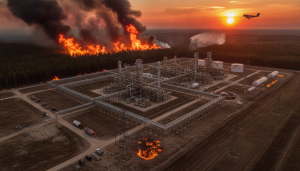
The sheer intensity of the current heatwave across Portugal, Spain, France, Italy, Greece, and the Balkans is translating directly into heightened energy needs. With temperatures exceeding 40°C in numerous regions, electricity grids are straining under the load of air conditioning units running full tilt. Simultaneously, the proliferation of wildfires – which have already consumed over 400,000 hectares in the first seven months of 2025, an 87% increase over the two-decade average – demands substantial resources. Firefighting efforts alone require significant quantities of diesel for ground vehicles and aerial operations, while emergency services and logistics chains consume additional refined products. As of today, Brent crude trades robustly at $98.87 per barrel, marking a 4.15% daily gain from its intra-day low of $94.42, effectively reversing a recent decline from $108.01 recorded on March 26th. WTI crude also reflects this bullish sentiment, trading at $90.76, up nearly 3% within a daily range of $87.32 to $91.82. Gasoline prices are similarly elevated at $3.08, climbing 2.66% today. This immediate market reaction suggests that while the long-term trend has been downward, the current heat-induced demand shock is providing strong upward pressure on prices, illustrating how localized events can quickly impact global benchmarks.
Beyond the Thermometer: Investor Queries and Global Ripple Effects
The persistent heatwave in Europe is clearly prompting investors to refine their market outlooks. Our proprietary data indicates a significant uptick in investor queries this week regarding a base-case Brent price forecast for the next quarter, signaling a heightened focus on short-term demand drivers. The consensus 2026 Brent forecast is also under scrutiny, with market participants assessing whether such extreme weather events will become a more regular feature, thereby permanently shifting demand expectations. This is not merely a regional phenomenon; the cascading effects extend globally. Increased demand for electricity in Europe, primarily met by natural gas, could exert upward pressure on global LNG spot prices. Our internal analytics reveal a notable surge in inquiries concerning Asian LNG spot prices this week, a clear indication that traders and analysts are evaluating the potential for European buying to draw supply away from key Asian markets, tightening the global gas balance. This interconnectedness underscores the need for a holistic view when assessing the impact of seemingly regional events on global energy markets.
Upcoming Events to Shape Supply Response
The immediate demand surge in Europe arrives just ahead of critical supply-side discussions, adding another layer of complexity for investors. The OPEC+ Joint Ministerial Monitoring Committee (JMMC) is scheduled to convene on April 18th, followed by the full OPEC+ Ministerial Meeting on April 20th. These meetings will be closely watched for any signals regarding production policy adjustments. While OPEC+ primarily focuses on balancing global supply and demand, a sustained period of unexpected demand acceleration from Europe could factor into their deliberations, potentially strengthening the case for maintaining current output levels or even considering more aggressive cuts if market stability is perceived to be at risk from other factors. Furthermore, the upcoming EIA Weekly Petroleum Status Reports on April 22nd and April 29th, alongside API Weekly Crude Inventory data on April 21st and April 28th, will provide crucial insights into inventory levels. Investors will be keen to see if the European demand shock translates into notable inventory drawdowns, offering tangible evidence of the heatwave’s impact on the global energy balance. The Baker Hughes Rig Count reports on April 17th and April 24th will offer a broader look at North American supply-side activity, providing context to the ongoing interplay between demand fluctuations and production responses.
The Persistent Reality of Climate and Future Energy Resilience
The current European heatwave, described by experts as “longer and stronger” due to fossil fuel pollution, is not an isolated incident but rather a symptom of a larger climate trend. The warnings from EU fire scientists of “extreme to very extreme conditions” persisting in Southern Europe in the coming week, and the projection of “particularly severe” risks, suggest this is a recurring, if not escalating, challenge. For energy investors, this necessitates a forward-looking perspective beyond immediate price movements. The increasing frequency and intensity of such events raise questions about the long-term resilience of energy infrastructure and the evolving demand profile for power generation, particularly in tourist-dependent economies. Investment decisions in generation capacity, grid modernization, and the balance between conventional fuels and renewables must increasingly account for these extreme weather patterns. This persistent reality of climate change reinforces the dynamic nature of energy markets, requiring continuous adaptation and strategic foresight from all participants.