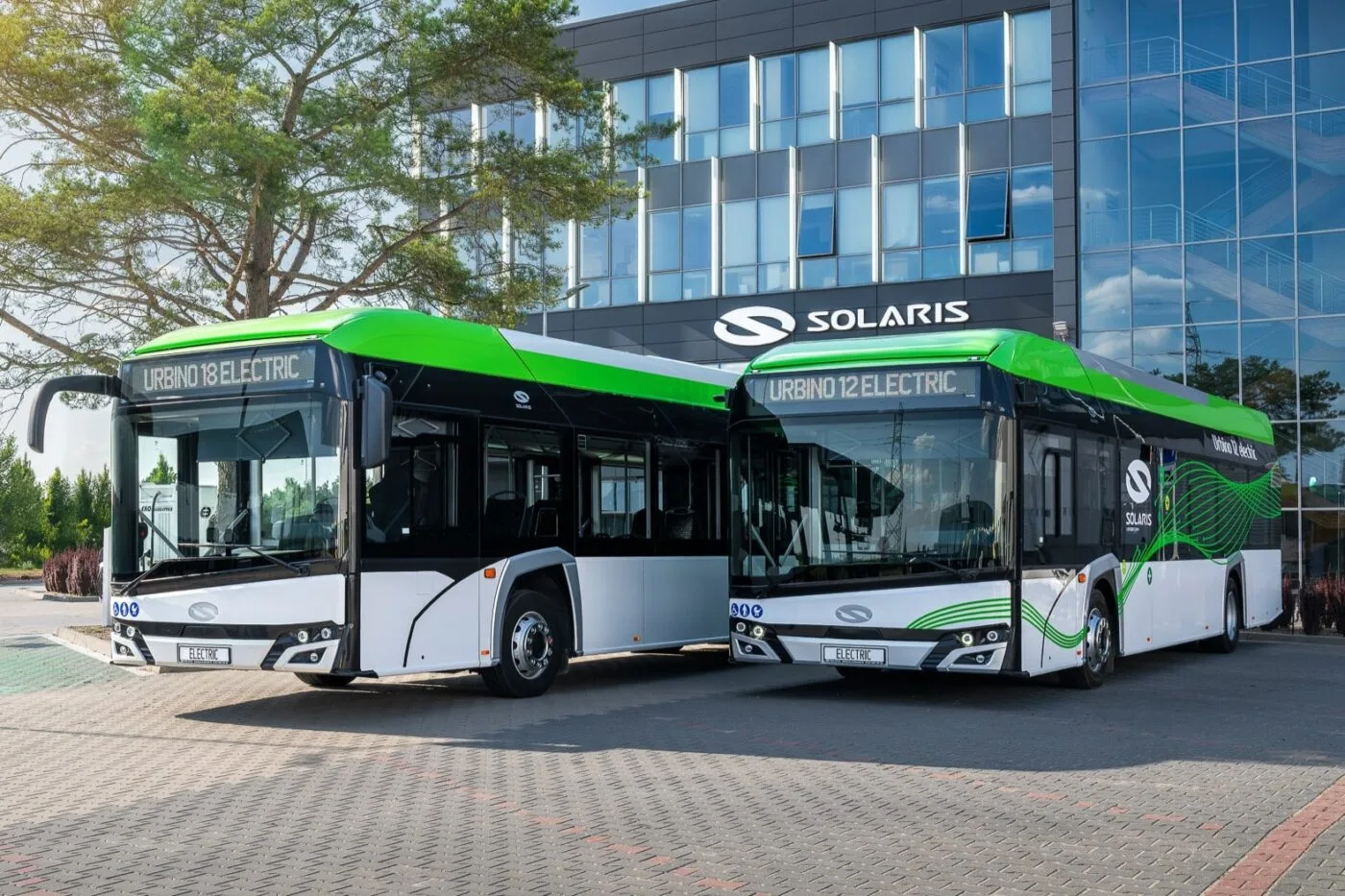
The recent announcement of Solaris securing an order for 30 battery-electric buses from the Municipality of Gdańsk, Poland, might seem like a niche development in the broader energy landscape. However, for astute oil and gas investors, this contract for 18 Urbino 12 and 12 articulated Urbino 18 vehicles, slated for service by September 2026, serves as a potent microcosm of the accelerating energy transition. This move by Gdańsk to deploy its first zero-emission Solaris buses signals a clear trajectory for urban mobility, directly impacting long-term demand forecasts for refined petroleum products. As we navigate a volatile market characterized by immediate supply-side pressures and a persistent, underlying shift towards electrification, understanding such developments is crucial for optimizing portfolio strategy and anticipating future market dynamics.
Electrification of Public Transport: A Persistent Headwind for Refined Product Demand
The transition to electric vehicles in public transport is not a distant threat but a current reality, exemplified by Gdańsk’s latest order. These 30 Solaris buses, equipped with substantial battery packs—600 kWh for the 12-meter models and up to 800 kWh for the articulated versions—are designed for high operability on a single charge. Their deployment by September 2026 means 30 fewer diesel-powered buses will operate daily, contributing incrementally to the erosion of diesel demand in the European market. While 30 buses might seem negligible in the grand scheme of global oil consumption, this contract is indicative of a widespread, policy-driven shift. From an investor’s perspective, these individual orders aggregate into a significant structural change. As of today, the market is already reflecting demand uncertainties, with Brent Crude trading at $90.38, a notable decline of 9.07% within the day’s range of $86.08-$98.97. WTI Crude mirrors this sentiment, sitting at $82.59, down 9.41% from its range of $78.97-$90.34. Gasoline prices are also feeling the pressure at $2.93, down 5.18%, underscoring a broader market nervousness that these long-term demand shifts only amplify.
Policy Mandates, Technological Maturity, and Investor Questions on Future Oil Prices
The decision by Gdańsk to invest in these advanced EV buses is rooted in evolving policy landscapes, particularly within the EU, which mandates stringent safety and emissions standards. These Urbino models, designed with modular drive systems and advanced features like driver assistance systems, pedestrian detection, blind-spot monitoring, and camera-based mirrors, highlight the increasing maturity and safety of EV technology. The ability to carry up to 70 passengers in the 12-meter versions and 107 in the articulated models, coupled with efficient plug-in charging and full low-floor designs, makes them a compelling alternative to traditional internal combustion engine vehicles for urban centers. Investors are increasingly focused on how these accelerating trends will shape the energy market. A common query among our readers this week is: “What do you predict the price of oil per barrel will be by the end of 2026?” While precise predictions are inherently difficult, the continued adoption of EVs in municipal fleets, driven by both technological advancements and regulatory push, suggests a persistent downward pressure on long-term demand forecasts for crude. The 14-day Brent trend, which saw prices decline from $112.78 on March 30th to $91.87 on April 17th, a drop of over 18%, partially reflects the market grappling with these longer-term demand uncertainties alongside immediate supply-side factors.
Navigating Short-Term Volatility Amidst Long-Term Transition Signals
While the long-term demand picture is being reshaped by electrification, the immediate oil market remains highly susceptible to short-term supply dynamics. For instance, the upcoming OPEC+ Joint Ministerial Monitoring Committee (JMMC) and full Ministerial meetings on April 18th and 19th, respectively, are critical events. Their decisions on production quotas will undoubtedly inject significant volatility into a market already grappling with the bearish implications of softening demand signals. Many of our readers are asking about “OPEC+ current production quotas,” a testament to the immediate impact these decisions have. Following these, the API Weekly Crude Inventory reports on April 21st and 28th, and the EIA Weekly Petroleum Status Reports on April 22nd and 29th, will provide crucial insights into current supply-demand balances in the United States. Further, the Baker Hughes Rig Count on April 24th and May 1st will offer a glimpse into future production capacity. These frequent data releases and policy events create a dynamic environment where short-term supply adjustments can temporarily overshadow the gradual, yet inexorable, demand erosion stemming from the global energy transition. Savvy investors must therefore differentiate between transient market noise and foundational shifts.
Investment Implications for Oil & Gas Portfolios
For oil and gas investors, the Gdańsk EV bus order is a clear signal to reassess portfolio allocations and consider the strategic positioning of energy companies. Companies heavily reliant on refining margins for gasoline and diesel face increasing headwinds as electrification penetrates urban transport and logistics. Conversely, integrated majors that are actively diversifying into renewable energy, sustainable fuels, or carbon capture technologies may be better positioned to navigate this transition. The modular design of the Solaris buses, which optimizes passenger space, and the commitment to EU safety and cybersecurity standards, represent a paradigm shift in vehicle design that oil and gas companies must acknowledge. This shift in urban mobility directly impacts the long-term ‘terminal value’ of traditional hydrocarbon assets. While short-term supply disruptions or geopolitical events can still drive significant price spikes, the underlying structural demand erosion from electrification, bolstered by sustained policy support and technological advancements, suggests a prudent investor should increasingly favor companies demonstrating clear strategies for energy transition or those with robust natural gas assets that can serve as a bridge fuel. The continued deployment of such sophisticated EV fleets underscores the importance of a forward-looking investment approach, balancing immediate market opportunities with the undeniable momentum of a transforming global energy landscape.