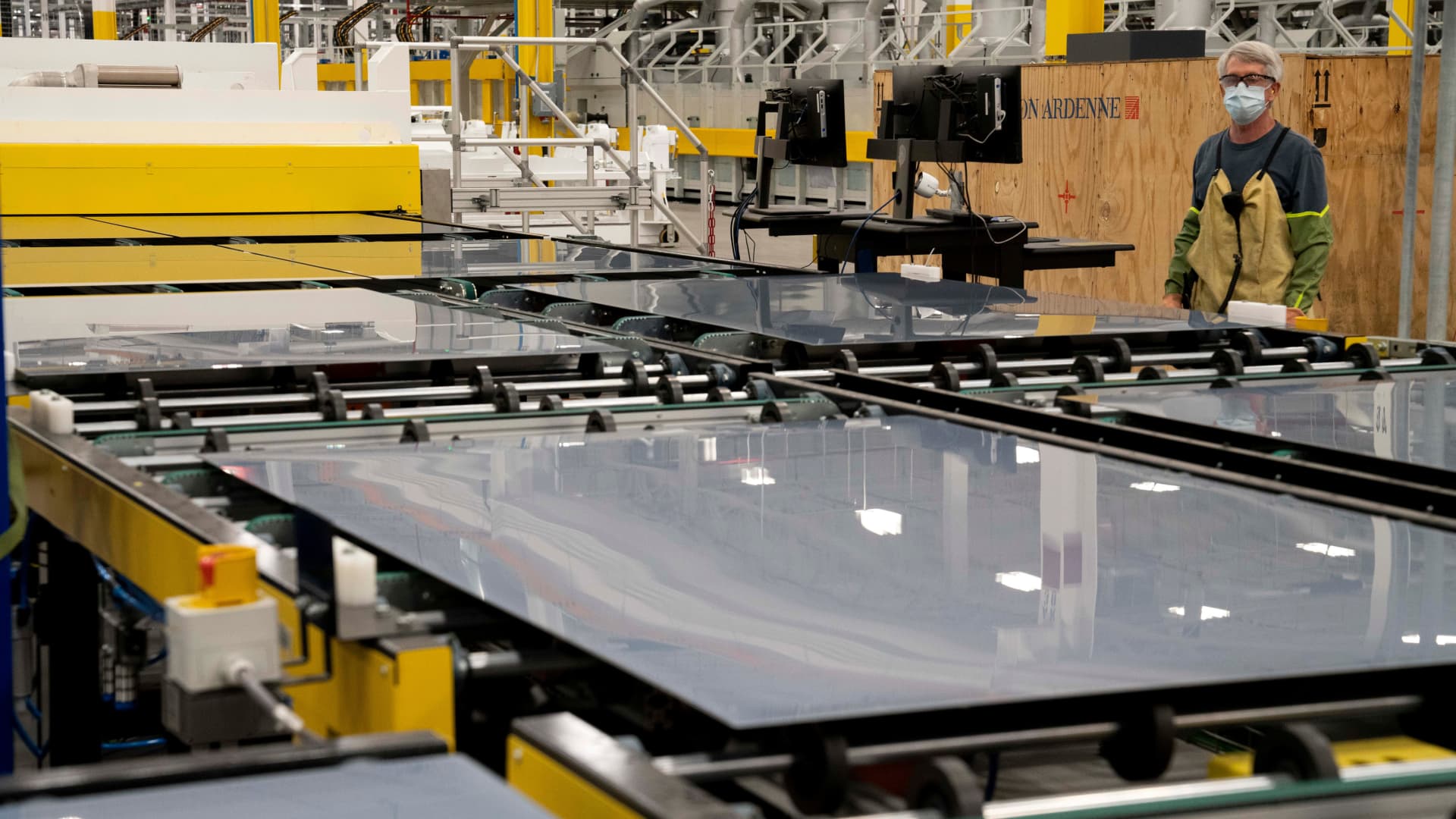
The global energy sector continues its dynamic evolution, frequently reshaped by geopolitical forces and shifting policy landscapes. Recent trade measures implemented by the U.S. government, specifically targeting imported solar components, are sending significant tremors through the renewable energy industry. While directly challenging solar manufacturers, these developments inadvertently bolster the investment case for traditional oil and gas entities, offering a potential haven for capital seeking stability amidst an increasingly volatile energy transition.
For investors closely monitoring the energy market, the immediate fallout from these tariffs provides a stark example of policy risk. First Solar, a prominent publicly traded solar module producer with significant U.S. market presence, has experienced notable financial turbulence. The company’s stock value recently saw a sharp depreciation of roughly 11% in a single trading session, compounding a year-to-date decline nearing 20%. This significant downturn followed candid remarks from CEO Mark Widmar, who characterized the scope and impact of the new tariffs as a “significant economic headwind” for the company’s extensive global manufacturing network, particularly those operations supplying the critical American market.
Solar Sector Confronts Policy-Driven Headwinds
Even firms previously perceived as resilient to protectionist trade policies due to their domestic manufacturing capabilities are now grappling with unforeseen obstacles. First Solar, for instance, had been widely considered well-insulated, yet the latest tariff regime has introduced considerable uncertainty into its 2025 financial projections. This rapid shift prompted an immediate reaction from Wall Street. Influential analytical firms such as KeyBanc, Oppenheimer, and Jefferies swiftly downgraded the company’s stock following its first-quarter financial disclosures. Such broad-based downgrades signal a deepening concern among the investment community regarding the near-term profitability and long-term growth trajectory of even the most established solar companies under these new trade strictures.
The root of this challenge lies in the tariffs’ broad application to First Solar’s international production facilities. CEO Widmar elaborated that plants located in Malaysia and Vietnam, which are solely dedicated to supplying the U.S. market, along with a facility in India that serves both South Asia and North America, are now operating under considerable economic pressure. The severity of this strain is evident in the company’s contemplation of reducing or even idling production at its Malaysian and Vietnamese factories. Adding another layer of complexity for strategic planning is the profound uncertainty surrounding the future of the current 10% tariffs. A 90-day pause has been initiated, leaving investors and executives to speculate whether these rates will persist, escalate, or be modified, thereby clouding any precise quantification of future tariff burdens on module shipments and hindering long-term capital allocation decisions.
Revised Financial Outlook Reflects Tariff Impact
In direct response to these formidable policy-driven challenges, First Solar has been compelled to significantly revise its full-year financial guidance. While specific revised figures were not fully detailed, the downward adjustment underscores the immediate and substantial economic pressure exerted by the tariffs. For investors, this development highlights how quickly regulatory and trade policies can disrupt expected earnings and growth, making capital deployment in sectors highly susceptible to such shifts inherently riskier.
The Strengthening Investment Thesis for Oil & Gas
Against this backdrop of heightened volatility in the renewable sector, the investment appeal of traditional oil and gas stocks appears to be strengthening. While fossil fuel companies face their own unique set of environmental and regulatory pressures, the current trade disruptions in the solar market illuminate a different kind of risk – one tied directly to protectionist policies that can rapidly alter economic fundamentals. For investors seeking reliable returns and a degree of stability in their energy portfolios, the established global demand for oil and gas, coupled with often more predictable regulatory frameworks (albeit with their own complexities), presents a compelling alternative.
Oil and gas exploration and production companies, refiners, and midstream operators, while exposed to commodity price fluctuations, typically operate within mature markets with established supply chains and infrastructure less susceptible to sudden shifts in trade tariffs on specific manufactured components. The energy security imperative, particularly in a world facing geopolitical uncertainties, continues to underpin the strategic value and demand for fossil fuels. This enduring necessity can translate into more resilient cash flows and dividends for investors, especially when compared to renewable segments grappling with the added layer of trade policy uncertainty.
Strategic Positioning for O&G Investors
Savvy investors are now re-evaluating their capital allocation within the broader energy sector. The challenges faced by solar firms, stemming from government intervention, may prompt a shift in investor sentiment towards companies in the oil and gas space that demonstrate strong balance sheets, efficient operational models, and strategic asset portfolios. These companies are well-positioned to capitalize on any redirection of investment capital away from more volatile renewable sub-sectors. Furthermore, the global economy’s continued reliance on hydrocarbons for transportation, industrial processes, and power generation ensures a foundational demand that provides a degree of insulation from the specific trade headwinds impacting manufactured energy technologies.
Considering the long-term energy transition, a diversified portfolio remains key. However, the recent policy-induced turbulence in the solar market serves as a powerful reminder that not all energy investments carry the same risk profile. For those prioritizing stability and a potentially clearer path to investor returns in the near to medium term, a strategic allocation towards robust oil and gas entities could prove to be a prudent move.
Conclusion: O&G as a Stable Harbor Amidst Policy Storms
The latest U.S. trade tariffs on solar imports underscore a critical lesson for energy investors: policy risk is a formidable, often unpredictable, force that can swiftly reconfigure market dynamics. While these measures aim to reshape the renewable energy landscape, their immediate effect has been to create significant headwinds for leading solar players, prompting downgrades and production uncertainties. In this environment of increased volatility for renewable energy, traditional oil and gas stocks emerge as a potentially more stable and attractive investment proposition. For investors navigating the complexities of the modern energy market, the steady demand, established infrastructure, and comparatively lower exposure to these specific trade policy shifts make oil and gas a compelling option for portfolio diversification and resilient returns.