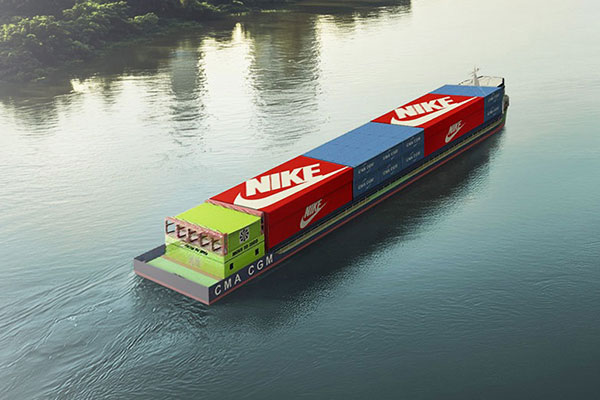
The global shipping industry, a historical bedrock of demand for heavy marine fuels, is increasingly signaling its intent to decarbonize. A recent development in Southeast Asia offers a potent preview of this transition: the launch of the region’s inaugural fully electric container barge by a major shipping line. This initiative, operating along a crucial 180-kilometer Vietnamese waterway, is more than just an isolated green project; it represents a strategic shift by key players like CMA CGM and its partner Gemadept. For oil and gas investors, this move underscores the accelerating pace of alternative fuel adoption in a sector previously considered largely impervious to electrification. Understanding these early-stage, commercially viable projects is crucial for recalibrating long-term demand forecasts for traditional marine fuels and identifying emerging investment opportunities in green logistics infrastructure.
Decarbonization Navigates Inland Waterways
The introduction of a fully electric container barge for the bustling route between Binh Duong Province and Bà Rịa-Vũng Tàu port is a concrete manifestation of the shipping industry’s drive toward carbon neutrality. This single barge is projected to cut approximately 778 tons of carbon emissions annually, a tangible reduction achieved through replacing conventional fossil fuels with green electricity. Powering this innovative vessel is a new solar-powered charging station at Cai Mep, Vietnam’s main container port, which is expected to generate up to 1 GWh of clean electricity each year. This integrated approach – electric vessels powered by on-site renewable generation – highlights a comprehensive strategy rather than piecemeal solutions.
The commitment extends beyond a single vessel. The formation of Green River Transportation, a joint venture between CMA CGM and Gemadept, aims to not only operate this electric barge but also expand river shipping services across the Mekong Delta. This ambition aligns directly with CMA CGM’s broader corporate target of achieving carbon neutrality by 2050. Investors are keenly watching how such initiatives impact the long-term outlook for energy demand. As some of our readers have recently asked about building a base-case Brent price forecast for the next quarter and the consensus 2026 Brent forecast, these projects, while individually small, contribute to the cumulative erosion of demand for traditional fuels, a critical variable in any credible long-term price model. The early adoption by global brands like NIKE, leveraging the barge for goods transport from manufacturing sites to port, validates the commercial viability and growing corporate demand for low-carbon logistics solutions.
Economic Calculus: Green Investment Amidst Crude Volatility
The economic rationale behind investing in electric marine transport is becoming increasingly compelling, particularly against a backdrop of volatile crude oil prices. As of today, Brent crude trades at $96.13 per barrel, marking a 1.41% increase on the day, with WTI crude similarly climbing 1.18% to $92.36. While these daily gains might suggest robust demand, it’s important to consider the broader context: over the past 14 days, Brent crude has seen a notable decline of approximately 8.8%, dropping from $102.22 to $93.22. This inherent volatility, coupled with generally elevated crude prices, makes the predictable operational costs of electric power generated from renewables significantly more attractive for long-term planning.
CMA CGM’s expansion in Vietnam, including a newly announced $600 million container terminal in Haiphong set to open in 2028, further demonstrates a long-term strategic commitment to the region and its infrastructure. This substantial investment signals confidence in the Vietnamese market and, by extension, the integration of sustainable logistics within its operations. The electric barge, set to launch in early 2026, is not merely an experiment but a fundamental component of a growing, low-carbon network. For oil and gas investors, this trend highlights a critical shift in capital allocation within the logistics sector, favoring solutions that insulate businesses from fossil fuel price fluctuations and escalating carbon costs.
Forward Outlook: Navigating Demand Shifts with Upcoming Events
The long-term implications of projects like the solar-powered barge extend far beyond Vietnam’s inland waterways. CMA CGM explicitly aims to replicate this zero-emissions model in other regions where river transportation is vital. This vision for global replication directly impacts the future demand for marine bunker fuels, a segment typically seen as a resilient pillar of oil consumption. While the immediate impact on global oil demand is modest, these pioneering initiatives foreshadow a structural shift that will increasingly influence oil market dynamics.
Investors must consider these evolving demand patterns when evaluating upcoming energy market signals. The next two weeks bring crucial events, including the OPEC+ Joint Ministerial Monitoring Committee (JMMC) meeting on April 18 and the full Ministerial Meeting on April 20, where decisions on crude production levels will profoundly affect global supply. Simultaneously, the Baker Hughes Rig Count reports on April 17 and April 24, alongside the API and EIA weekly crude inventory reports on April 21/22 and April 28/29, will provide vital insights into North American production activity and prevailing demand signals. As our readers frequently inquire about Asian LNG spot prices and the operational status of Chinese “teapot” refineries, these questions underscore a regional focus on energy demand and refining capacity. A shift towards electrification in Southeast Asian shipping, even in its nascent stages, points to a future where regional fuel demand profiles will increasingly diverge from historical patterns, impacting everything from refining margins to the competitiveness of different energy sources.
Investment Implications for a Changing Energy Landscape
For oil and gas investors, the advent of commercially viable, zero-emission marine transport solutions presents both challenges and opportunities. The challenge lies in anticipating and adapting to the gradual but inevitable erosion of demand for traditional marine fuels. Companies heavily invested in bunker fuel production and supply chains will need to diversify or risk facing stranded assets in the long term. However, opportunities also emerge for those who pivot towards supplying the alternative energy infrastructure required for this transition, such as green electricity generation, charging infrastructure, or even advanced battery technologies suitable for marine applications.
The Green River Transportation joint venture signifies a model for future green logistics operations – partnerships between shipping giants and local infrastructure developers to build out sustainable networks. This kind of vertical integration into renewable energy and electric propulsion offers a blueprint for how the shipping industry intends to achieve its decarbonization targets. Investors should therefore look beyond short-term commodity price movements and critically assess the strategic investments being made by major players in heavy-duty transport. These early signals from the marine sector are indicative of broader energy transition trends that will reshape the investment landscape across the entire oil and gas value chain.