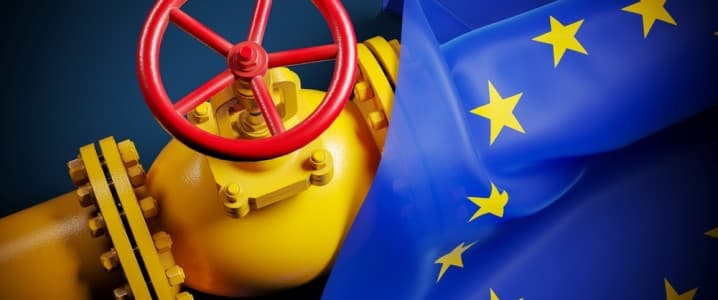
European energy markets are once again grappling with significant geopolitical friction as Slovakia leverages its crucial veto power over the European Union’s proposed 18th sanctions package against Russia. The central demand from Bratislava: an exemption allowing it to continue importing Russian pipeline gas for nearly another decade. This ongoing stalemate underscores the complex interplay between energy security, national interests, and the collective will to impose sanctions, creating ripples of uncertainty for investors monitoring the continent’s energy future.
Slovakia’s Standoff: A Decade-Long Gas Waiver Demand
Slovakia’s Prime Minister Robert Fico has made it unequivocally clear: his nation will only drop its opposition to the latest round of EU sanctions if it receives a specific waiver. This waiver would permit Slovakia to honor its existing contract with Russian energy giant Gazprom until its expiration in 2034. This request directly contradicts the European Union’s ambitious target of completely phasing out Russian gas supplies by January 1, 2028, a timeline Fico dismisses as providing “insufficient” guarantees for Slovakia’s long-term energy security.
The core of Slovakia’s argument is rooted in pragmatism. As Fico articulated, the most viable solution is to allow the fulfillment of this long-standing agreement. However, the European Commission, the EU’s executive arm, has reportedly rejected this proposition on principle, asserting that such an exemption would fundamentally undermine the integrity and intent of the broader anti-Russian sanctions regime. This clash of priorities highlights the deep divisions that persist within the bloc, particularly concerning the practical implementation of energy policy in the face of geopolitical imperatives.
The Stalled 18th Sanctions Package and Market Implications
The EU’s efforts to achieve unanimous approval for its 18th sanctions package against Russia hit a wall earlier this week due to Slovakia’s firm stance. This comprehensive package is designed to escalate economic pressure on Moscow, notably including a floating price cap mechanism for Russia’s crude oil exports and a ban on the use of Nord Stream pipeline infrastructure. For global oil and gas investors, any delay in implementing these measures introduces an element of unpredictability regarding future crude supply dynamics and price stability.
The proposed floating oil price cap aims to further restrict Russia’s oil revenues, potentially influencing global crude benchmarks and trade flows. A ban on Nord Stream infrastructure use, while largely symbolic given the current operational status of the pipelines, signals a continued commitment to severing energy ties, impacting long-term infrastructure investment decisions in the region. Kaja Kallas, the EU’s High Representative for Foreign Affairs and Security Policy, succinctly framed the situation, stating that “the ball is now in Slovakia’s court,” underscoring the weight of Bratislava’s decision on the collective EU strategy.
Persistent Reliance: Hungary and Slovakia’s Unique Position
Slovakia is not alone in its cautious approach to rapidly decoupling from Russian energy. Both Slovakia and Hungary have historically proven to be significant impediments to EU sanctions packages and ambitious plans to abandon Russian gas, consistently citing national energy security as their primary concern. Unlike many other EU member states, which have diversified their energy imports or are heavily reliant on liquefied natural gas (LNG), these two nations continue to receive Russian gas via a pipeline traversing the Balkans. This pipeline connectivity provides a critical, and often less expensive, energy lifeline that makes a swift transition particularly challenging for their economies.
For energy investors, this regional dependency highlights the fragmented nature of the European energy market. While Western European nations have largely moved away from Russian pipeline gas, the continued reliance of countries in Central and Eastern Europe creates bottlenecks and potential arbitrage opportunities, as well as risks associated with supply disruptions or policy changes affecting these specific routes.
The European Commission’s Decarbonization and Diversification Roadmap
In May, the European Commission unveiled a detailed roadmap aimed at entirely eliminating the EU’s dependency on Russian energy sources. Specifically for natural gas, the Commission has set an ambitious target to cease all imports of Russian gas by the end of 2027. This strategy involves a multi-pronged approach, including enhancing the transparency, monitoring, and traceability of Russian gas across EU markets. Crucially, the roadmap also dictates that new contracts with Russian gas suppliers will be prevented, and spot contracts, typically for immediate payment and delivery, are slated to be halted by the end of 2025.
This aggressive timeline for energy independence presents a stark contrast to Slovakia’s demand for a 2034 waiver. For investors in renewable energy, LNG infrastructure, and alternative gas sources, the Commission’s roadmap signals a robust commitment to diversification and decarbonization, potentially driving significant capital flows into these sectors across the continent. However, the current impasse with Slovakia demonstrates the political hurdles that remain in achieving these overarching strategic objectives.
Investment Outlook Amidst EU Disunity
The ongoing negotiations surrounding Slovakia’s demands carry significant implications for the broader oil and gas investment landscape. A prolonged delay or a compromised sanctions package could introduce greater volatility into European energy markets, potentially impacting gas prices, investment decisions in new supply infrastructure, and the pace of the energy transition. If Slovakia secures its exemption, it could set a precedent, potentially encouraging other member states with similar dependencies to seek their own waivers, further complicating the EU’s unified energy strategy.
Investors should closely monitor the outcome of these discussions. The approval of the 18th sanctions package, particularly the floating oil price cap, could recalibrate the risk premium associated with Russian crude, affecting global supply and demand balances. Conversely, a continued stalemate signals persistent internal disunity within the EU, which can undermine confidence in its ability to execute long-term energy policy. The path forward for European energy security remains fraught with political complexities, demanding astute analysis from those navigating the global oil and gas markets.