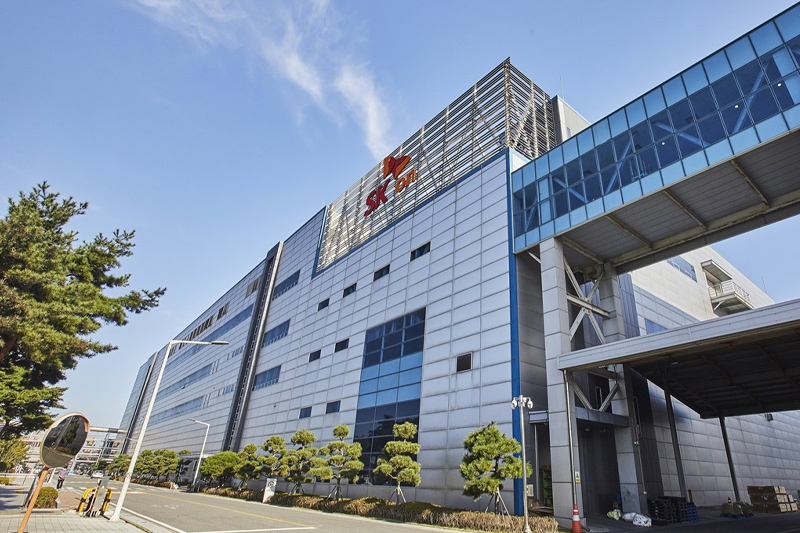
The global energy landscape is undergoing a profound transformation, with the electrification of transportation emerging as a dominant force reshaping traditional fuel markets. Against this backdrop, advancements in battery technology are not merely incremental improvements; they represent pivotal shifts that dictate the pace and direction of the energy transition. Major players in the electric vehicle (EV) supply chain are racing to innovate, and recent developments from South Korean battery powerhouse SK On underscore the critical progress being made in next-generation energy storage solutions, particularly solid-state batteries.
For investors closely monitoring the intersection of energy and technology, these breakthroughs signal an accelerating evolution within the automotive sector, directly impacting long-term demand projections for fossil fuels. SK On, a prominent name in battery manufacturing, has unveiled significant research findings aimed at enhancing the cycle stability and longevity of solid-state batteries. This research, conducted in collaboration with leading academic institutions, directly addresses some of the most persistent hurdles preventing the widespread commercialization of this highly anticipated technology.
SK On’s Dual Path to Commercialization
SK On is strategically pursuing the development of two distinct solid-state battery chemistries, signaling a robust and diversified approach to market leadership. Their research pipeline includes a variant utilizing polymer-oxide composites and another based on sulphide materials. This dual-pronged strategy aims to mitigate risks and capitalize on the unique advantages each chemistry may offer for different applications or market segments. The company has laid out an ambitious, yet clear, timeline for bringing these advanced technologies to fruition.
According to their projections, SK On anticipates having commercial prototypes for the polymer-oxide composite solid-state batteries ready by 2028. Following closely, prototypes for the sulphide-based solid-state batteries are targeted for 2030. These timelines are crucial benchmarks for investors, indicating the imminent arrival of truly disruptive energy storage solutions that could fundamentally alter the performance, safety, and cost dynamics of electric vehicles and other electrified systems. Such developments directly influence the competitive landscape for traditional internal combustion engine vehicles, thereby impacting the future of refined petroleum products.
Unlocking the Promise of Lithium Metal Anodes
A central focus of SK On’s groundbreaking research revolves around the formidable challenge and immense potential of lithium metal anodes. Lithium metal is widely recognized as the holy grail of anode materials for next-generation batteries, primarily due to its extraordinarily high energy density. It boasts a theoretical capacity approximately ten times greater than that of conventional graphite anodes currently used in most commercial lithium-ion batteries. Harnessing this capacity could lead to EVs with significantly longer ranges and faster charging times, making them even more competitive against gasoline-powered vehicles.
However, the path to commercializing lithium metal anodes has been fraught with technical difficulties. Lithium metal exhibits high reactivity with air, which leads to the uneven formation of inorganic compounds on its surface during charging and discharging cycles. This problematic layer impedes the smooth movement of lithium ions, drastically reducing charging and discharging efficiency. Furthermore, it actively promotes the formation of dendrites – needle-like structures that can penetrate the separator, leading to short circuits, reduced battery life, and significant safety concerns. Consequently, solid-state batteries utilizing lithium metal anodes have historically been limited to a meager lifespan, often achieving only around 100 charge and discharge cycles, rendering them impractical for widespread automotive use.
A Breakthrough in Cycle Stability with Hanyang University
SK On, in collaboration with Hanyang University, has engineered a significant advancement that directly tackles the inherent limitations of lithium metal anodes. Their innovative approach centers on modifying the surface of the lithium metal anode to overcome its reactive nature and enhance cycle stability. The research team developed a novel method to remove the resistant surface layer that typically forms on lithium metal, which hinders performance.
The solution involves immersing the lithium metal anode in a specially formulated solution comprising nitromethane, dimethoxyethene, and lithium nitrate. This process results in the formation of a new, highly effective protective layer on the anode’s surface. This engineered layer exhibits dual benefits: high ionic conductivity, primarily attributable to the lithium nitrate component, and enhanced mechanical strength, provided by lithium oxide. The experimental results from this groundbreaking study are compelling: the surface-modified lithium metal anode demonstrated stable operation for over 300 charge and discharge cycles at room temperature. This represents a remarkable achievement, effectively tripling the operational lifespan compared to conventional lithium metal solid-state batteries. The significance of this breakthrough is further underscored by SK On’s prompt application for a patent covering this innovative method.
The Power of Academic Collaboration
These scientific achievements are not isolated incidents but rather a testament to SK On’s sustained commitment to research and development, bolstered by strategic partnerships with academia. Kisoo Park, Head of SK On’s Research and Development Department, emphasized this synergy, stating, “These achievements are the result of SK On’s continuous research and development efforts and technological expertise made possible through collaboration with academia. They will serve as an important foundation for overcoming the technological challenges of solid-state batteries.”
The company’s engagement extends beyond Hanyang University. A separate research initiative with Yonsei University is investigating the intricate relationship between gel polymer electrolyte curing time and overall battery life. While the full details of this particular research were not extensively elaborated in the recent announcements, it highlights SK On’s comprehensive approach to understanding and optimizing every component of advanced battery systems.
Implications for the Energy Transition and Investors
For investors in the oil and gas sector, these advancements in solid-state battery technology carry profound implications. Enhanced battery performance, particularly in terms of cycle life, safety, and energy density, directly accelerates the adoption curve for electric vehicles. As EVs become more competitive in terms of range, charging speed, and durability, the shift away from internal combustion engines will gain further momentum. This translates into a potentially faster erosion of demand for refined petroleum products, particularly gasoline and diesel, in the long term.
Conversely, these developments also highlight new investment opportunities within the broader energy transition. Companies at the forefront of battery technology, raw material extraction (lithium, nickel, cobalt, etc.), and charging infrastructure are poised for significant growth. The energy industry, traditionally dominated by fossil fuels, is diversifying, and understanding the technological underpinnings of this diversification is critical for astute financial decision-making. SK On’s progress in solid-state batteries is not just a technological feat; it is a market signal, indicating a future where electric power increasingly fuels global mobility, thereby reshaping the investment horizon for energy portfolios worldwide.