Geopolitical Crosscurrents Reroute China’s Crude Imports, Raising Shipping Costs
The global oil market is once again demonstrating its susceptibility to geopolitical tremors, with recent U.S. sanctions directly impacting China’s critical crude import infrastructure. The blacklisting of the Rizhao Shihua Crude Oil Terminal in Shandong province has forced three supertankers, collectively carrying nearly 6 million barrels of crude, to seek alternative destinations. This immediate logistical scramble signals rising operational costs and potential supply chain inefficiencies for China’s refining sector, adding another layer of complexity for investors navigating an already volatile energy landscape. As we delve into the implications, it’s crucial for investors to understand how such targeted actions create ripple effects, from tanker rates to the strategic decisions of global oil majors.
Immediate Logistical Headaches and Spiking Freight Rates
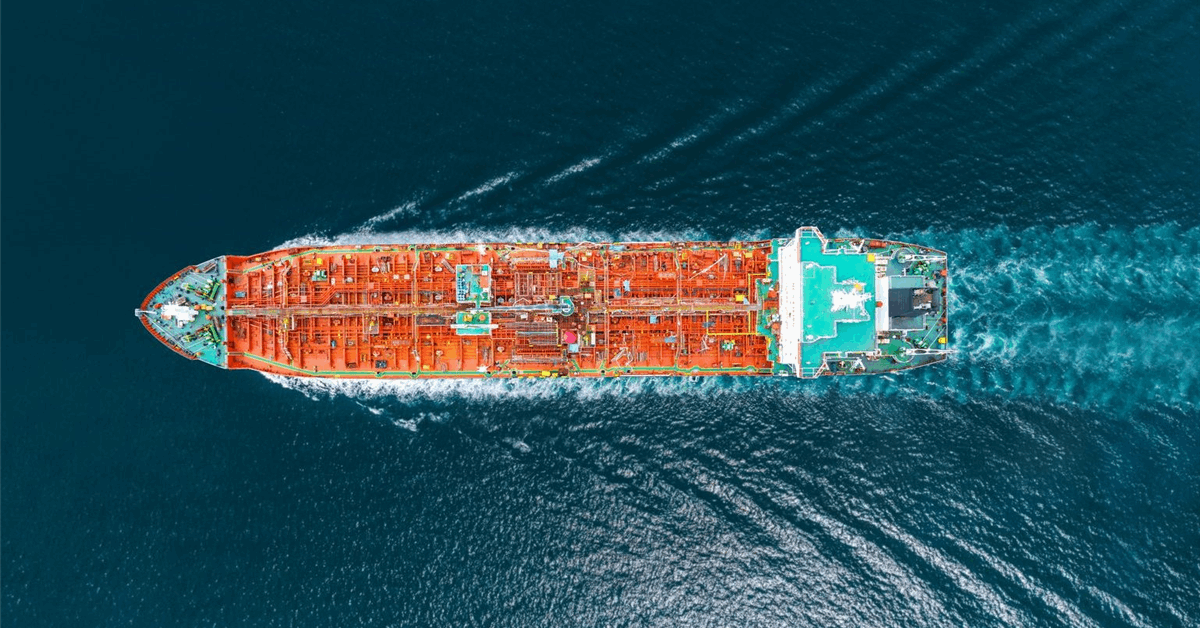
The direct consequence of the Rizhao sanctions has been the swift rerouting of three Very Large Crude Carriers (VLCCs) – the Spherical, New Vista, and Habshan. These vessels, loaded with crude from Brazil, Abu Dhabi, and Africa respectively, were originally bound for Rizhao, a crucial entry point handling approximately one-tenth of China’s total oil imports and a major conduit for Sinopec’s vast refining network. Now, the Spherical and New Vista are signaling Ningbo Zhoushan, near Shanghai, while the Habshan heads to Tianjin. This diversion is not merely a change of address; it represents increased transit times, higher fuel consumption, and potentially substantial demurrage charges as these vessels wait for new berths or discharge instructions. Such logistical strain inevitably translates to elevated shipping costs, which will ultimately be borne by refiners or passed on to consumers, further tightening margins in an environment where investors are keenly focused on operational efficiency. The potential for offloading onto smaller vessels for onward transport to Sinopec refineries along the Yangtze River, as suggested by industry analysts, also introduces additional handling fees and delays, highlighting the compounding nature of these supply chain disruptions.
Market Response Amidst Broader Volatility
This localized supply chain disruption unfolds against a backdrop of significant market volatility. As of today, Brent Crude trades at $90.38, reflecting a substantial 9.07% drop within the day’s range of $86.08-$98.97. Similarly, WTI Crude has fallen to $82.59, down 9.41% from its daily high. This sharp decline follows a notable trend, with Brent having shed $22.4, or nearly 19.9%, over the past 14 days from its $112.78 high on March 30th. While the rerouting of a few tankers alone doesn’t dictate global crude prices, it certainly contributes to an overarching sense of uncertainty. Investors are consistently asking about the long-term price outlook for oil per barrel by the end of 2026, and events like the Rizhao sanctions underscore the persistent geopolitical risk premium embedded in these forecasts. The incident reinforces the fragility of global supply chains and the potential for targeted sanctions to create localized, yet impactful, price dislocations and operational challenges for major players like Sinopec, a company whose performance is often a bellwether for the broader Chinese energy sector.
China’s Strategic Imperatives and Investor Questions
The sanctions on Rizhao, directly linked to its role in processing Iranian crude, force China to reassess its strategic energy vulnerabilities. For Sinopec, which partly owns the terminal and relies on its pipeline network to feed numerous facilities in Shandong, the immediate challenge is mitigation. The rerouting of supertankers to alternative ports like Ningbo Zhoushan and Tianjin offers a temporary solution, but these ports may face increased congestion and capacity constraints. The long-term implications for Sinopec and other Chinese refiners could involve accelerating diversification of crude import points, investing in enhanced domestic logistics, or even re-evaluating sourcing strategies to minimize exposure to sanction-related risks. Investors, particularly those with exposure to major Asian refiners or shipping companies, are asking how resilient entities like Repsol might fare in this evolving geopolitical landscape. The ability of Chinese state-owned enterprises to adapt to these new realities will be a key factor in their operational stability and profitability, directly influencing investment performance in the coming quarters. This incident serves as a stark reminder of how geopolitical pressures can translate into tangible operational costs and strategic shifts for national oil companies.
Navigating the Future: Upcoming Catalysts and Geopolitical Tensions
Looking ahead, the market will be closely watching several upcoming events that could shed further light on the interplay between supply, demand, and geopolitical risk. The OPEC+ Joint Ministerial Monitoring Committee (JMMC) and Ministerial Meetings scheduled for April 19th and 20th, respectively, will be critical. Investors are keenly interested in OPEC+’s current production quotas and how recent market volatility, exacerbated by localized disruptions like the Rizhao incident, might influence their collective output decisions. While the direct volume impact of the rerouted tankers is small on a global scale, the precedent set by such sanctions could prompt OPEC+ to maintain a cautious stance on supply, especially if broader geopolitical tensions are perceived to escalate. Furthermore, the weekly API and EIA Crude Inventory reports on April 21st and 22nd (and again on April 28th and 29th) will provide crucial insights into U.S. supply-demand dynamics, while the Baker Hughes Rig Count on April 24th and May 1st will indicate future production trends. These data points, viewed through the lens of ongoing geopolitical friction and its impact on global shipping and trade flows, will be instrumental for investors seeking to position their portfolios in a market characterized by both fundamental shifts and unexpected external shocks.