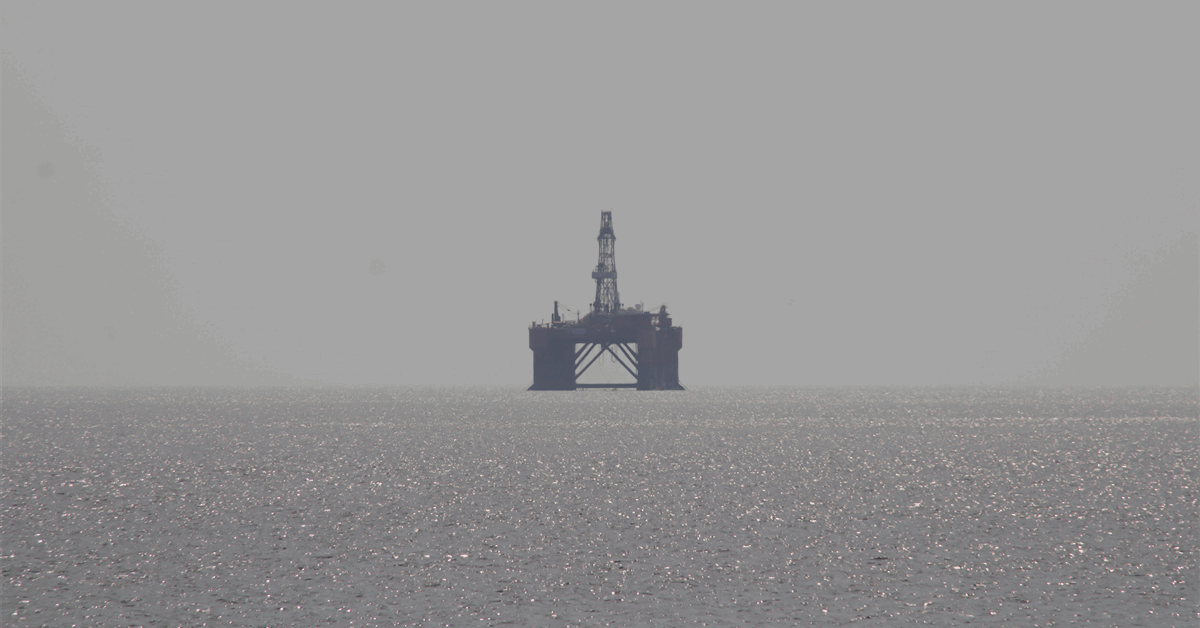
Shell’s Strategic Double-Down in the US Gulf: Kaikias EOR and Long-Term Value Creation
Shell PLC has solidified its commitment to the profitable US Gulf of Mexico deepwater basin with a final investment decision on a waterflood oil recovery project at the Kaikias field. This move, which anticipates first injection in 2028 and promises to extend the production lifecycle of the crucial Ursa platform by several years, is more than just another project approval. It represents a calculated step to maximize value from existing, advantaged assets, underscoring Shell’s long-term upstream strategy amidst evolving global energy dynamics. For investors, this decision highlights a focus on production longevity and high-margin barrels, key attributes in navigating commodity market volatility.
Maximizing Existing Assets: The Kaikias Waterflood and Ursa Integration
The Kaikias waterflood project is a prime example of Shell’s strategy to enhance and extend the life of its deepwater portfolio. By injecting water to displace additional oil from the reservoir, the company aims to unlock significant remaining reserves from a field discovered in 2014 and brought online in 2018. Kaikias, wholly owned by Shell, feeds directly into the Ursa tension leg platform, where Shell holds a 61.35% operating stake. This investment follows closely on the heels of Shell’s earlier $735 million acquisition in the Gulf from ConocoPhillips, completed in the second quarter, which notably increased its stake in Ursa by 15.96%. Shell Upstream President Peter Costello articulated this strategy, emphasizing the goal to “maximize high-margin production and longevity in a core basin to maintain liquids production.” This integrated approach, leveraging existing infrastructure and proven EOR techniques, speaks to a disciplined capital allocation focused on extending the economic life of established assets rather than solely pursuing new frontiers.
Navigating Volatility: Long-Term Investments Amidst Market Swings
Shell’s decision to greenlight the Kaikias EOR project, with its 2028 injection timeline, offers a clear signal of its long-term perspective, especially when viewed against the backdrop of current market conditions. As of today, Brent Crude trades at $91.87, representing a significant 7.57% dip over the last 24 hours and an 18.5% decline from its $112.78 high just two weeks prior. WTI Crude mirrors this trend, standing at $84, down 7.86%, while gasoline prices have fallen 4.85% to $2.95. This recent downward pressure underscores the inherent volatility of commodity markets. However, Shell’s investment in Kaikias demonstrates a strategic commitment to projects that offer robust economics and long-term cash flow visibility, irrespective of short-term price fluctuations. By focusing on “profitable and carbon-competitive oil and gas projects with a strong integrated value chain,” Shell aims to build resilience into its upstream portfolio, ensuring sustained production and returns even through periods of market uncertainty. This approach is critical for investors seeking stability in their energy holdings.
The Gulf of Mexico as a Core Basin: A Consistent Investment Thesis
The Kaikias waterflood is not an isolated event but part of a broader, consistent investment thesis by Shell in the US Gulf of Mexico. This region continues to be a cornerstone of the company’s upstream strategy, evidenced by several recent developments. Earlier this year, Shell brought the Dover field, discovered in 2018, onstream as a second tie-back to its Appomattox production hub. Dover is expected to contribute 20,000 barrels of oil equivalent per day (boed) at peak and holds an estimated 44.5 million boe of proven and probable reserves. Looking ahead, 2025 will see the onstream production from the Whale field, a joint venture with Chevron where Shell holds a 60% operating stake, anticipated to produce up to 100,000 boed. These projects, ranging from tie-backs to new deepwater developments, collectively demonstrate Shell’s unwavering focus on maintaining and growing stable liquids production from its advantaged deepwater business. The scale and longevity of these projects reinforce the Gulf’s strategic importance in Shell’s global portfolio, providing a reliable source of high-margin barrels for decades to come.
Investor Focus: Production Longevity, Market Dynamics, and Upcoming Catalysts
For investors closely monitoring the energy sector, Shell’s deepwater Gulf of Mexico strategy, exemplified by the Kaikias EOR project, directly addresses key concerns about asset longevity and future production stability. Many are currently asking about the long-term oil price outlook, with questions like “what do you predict the price of oil per barrel will be by end of 2026?” dominating sentiment analysis. Shell’s investment in extending the Ursa platform’s life, with first injection slated for 2028, speaks to a confidence in sustained demand and profitable operating environments well into the next decade. These long-cycle deepwater projects offer a degree of insulation from the immediate market swings that preoccupate short-term traders. However, the broader market context remains crucial. Investors should keep a close eye on several upcoming events that could influence the near-term trajectory of oil prices and, by extension, the valuation of major energy players like Shell. The OPEC+ Ministerial Meeting scheduled for April 18th will be a critical determinant of supply policy, potentially impacting crude prices and market sentiment. Subsequent API and EIA Weekly Crude Inventory reports on April 21st, 22nd, 28th, and 29th will provide fresh data on US supply and demand dynamics, while the Baker Hughes Rig Count on April 24th and May 1st will offer insights into future domestic production. While Shell’s deepwater strategy plays out over years, these frequent data releases and policy decisions will continue to shape the investment landscape, making the long-term value proposition of projects like Kaikias all the more important for maintaining investor confidence.


