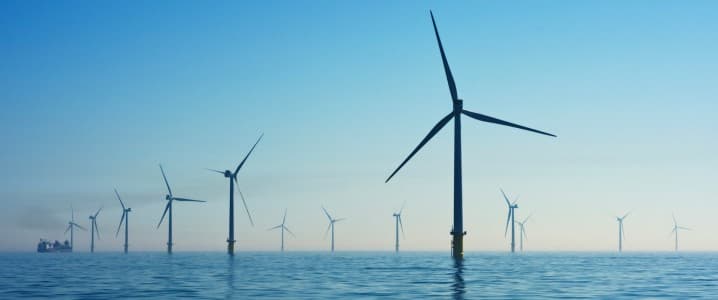
Shell’s recent announcement to exit two significant offshore wind projects in Scotland, following its withdrawal from the Atlantic Shores venture in the United States, marks a decisive turning point. This strategic pivot underscores a broader industry recalibration among supermajors, as the economics of renewable energy projects face increasing headwinds. For investors, this move signals a renewed commitment to Shell’s core oil and gas business, driven by a confluence of factors including energy security priorities, inflationary pressures, and a pursuit of higher-margin returns in a volatile global energy landscape.
Shell’s Decisive Retreat from Offshore Wind
The recent divestments by Shell are not isolated incidents but rather a clear pattern of strategic realignment. In Scotland, the company has sold its 50% stake in the MarramWind floating offshore wind farm project to ScottishPower Renewables and returned the lease for the CampionWind project to Crown Estate Scotland. These moves follow closely on the heels of Shell’s withdrawal from the Atlantic Shores offshore wind joint venture with EDF in the U.S. These projects, particularly MarramWind, held substantial potential, with an estimated capacity to deliver up to 3 gigawatts of renewable energy. Shell’s rationale for these exits is clear: the economics of capital-intensive generation projects have deteriorated significantly. Regulatory shifts, persistent cost inflation, and elevated interest rates have squeezed already tight margins, making many new renewable ventures uncompetitive. The company explicitly stated its intent to “maximize the value of our platforms and high-grade our portfolio, shifting away from capital-intensive generation projects to assets that support our trading and retail strengths.” This language is a strong indicator of a more disciplined capital allocation strategy, prioritizing immediate profitability and robust cash flow generation over long-term, lower-return renewable ambitions.
Market Dynamics Reinforce O&G Focus
This strategic pivot by Shell is unfolding against a backdrop of significant shifts in the global energy market. As of today, Brent crude trades at $90.38 per barrel, marking a substantial daily decline of 9.07%, with its intraday range spanning from $86.08 to $98.97. Similarly, WTI crude is at $82.59, down 9.41%. This recent dip is part of a broader trend, with Brent having fallen from $112.78 just two weeks ago on March 30th to its current level, representing a nearly 20% contraction. Such volatility and the recent downward pressure on prices highlight the inherent risks and opportunities within the energy sector. For investors, this environment demands a focus on companies with resilient business models and a clear path to profitability. The decision by Shell and other majors, such as BP, to pivot back to their core oil and gas operations is a direct response to these market realities. The energy crisis underscored the critical importance of energy security and affordability, often at the expense of pure sustainability goals in the short term. With gasoline prices also experiencing a daily decline, currently at $2.93 per gallon, down 5.18%, the broader energy complex is signaling a period of re-evaluation and consolidation, favoring established, high-yield assets over nascent, capital-intensive ones.
Addressing Investor Concerns and Future Catalysts
Our proprietary reader intent data reveals a keen focus among investors on the future trajectory of oil prices, with many asking, “what do you predict the price of oil per barrel will be by end of 2026?” This question underscores a fundamental desire for clarity on the long-term profitability of oil and gas investments, especially as majors like Shell re-emphasize their commitment to the sector. The immediate future holds several key events that will undoubtedly shape market sentiment and influence these price predictions. Investors should closely monitor the upcoming OPEC+ Joint Ministerial Monitoring Committee (JMMC) Meeting on April 19th, followed by the full OPEC+ Ministerial Meeting on April 20th. These gatherings are critical for determining global supply policy and could introduce significant market shifts. Furthermore, the weekly API and EIA crude inventory reports, scheduled for April 21st and 22nd respectively, and again on April 28th and 29th, will offer vital insights into demand and supply balances in the world’s largest consumer market. The Baker Hughes Rig Count, due on April 24th and May 1st, will also provide crucial indicators of future drilling activity and potential supply growth. These forthcoming data points and policy decisions will be instrumental in refining our outlook for crude prices through the remainder of 2026, directly impacting the investment thesis for companies like Shell that are doubling down on their hydrocarbon portfolios.
Implications for Energy Transition and Portfolio Strategy
Shell’s strategic shift carries significant implications for both the broader energy transition narrative and individual investor portfolios. While the move might appear to be a step back from renewable commitments, it is more accurately described as a strategic recalibration. Supermajors are not abandoning the energy transition entirely, but rather de-risking their portfolios by divesting from capital-intensive, lower-return renewable projects that do not align with their core competencies or meet stringent financial hurdles. Instead, they are prioritizing investments in established, profitable oil and gas assets that can generate the cash flow necessary to fund future ventures and reward shareholders. For investors, this signals a potential increase in capital allocation towards traditional exploration and production, refining, and integrated gas operations. This could translate into stronger financial performance, higher dividends, and increased share buybacks from these companies in the short to medium term. The emphasis on “energy security and affordability” over pure “sustainability” reflects a pragmatic response to geopolitical realities and market demands. As Shell, BP, and other peers streamline their operations, investors should evaluate their exposure to traditional O&G versus renewable energy assets, considering the evolving risk-reward profiles in each segment. The renewed focus on hydrocarbon efficiency and profitability by these industry giants will undoubtedly shape the competitive landscape and investment opportunities in the global energy sector for years to come.


