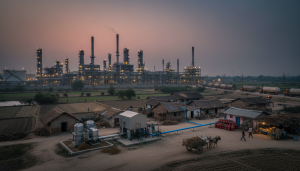
Shell plc is significantly expanding its footprint within Nigeria’s crucial deepwater oil sector, announcing a pivotal acquisition that sees the energy giant take over TotalEnergies’ stake in the prolific Bonga field. This strategic move, valued at $510 million, underscores Shell’s commitment to sustained liquids production and strengthens its position as a dominant operator in one of Africa’s most important hydrocarbon provinces.
Shell’s Strategic Consolidation in Bonga
The transaction, confirmed on May 29, 2025, involves Shell acquiring TotalEnergies’ entire 12.5 percent interest in the Bonga field. This purchase elevates Shell’s ownership in the deepwater asset to a commanding 67.5 percent, marking a substantial consolidation of its operational control and revenue share from this high-capacity production block. The Bonga field, a cornerstone of Nigeria’s offshore production, is situated approximately 120 kilometers (75 miles) south of the Niger Delta within the Oil Mining Lease (OML) 118 block. Its impressive design capacity of 250,000 barrels per day positions it as a critical contributor to Nigeria’s crude oil output and a valuable asset for any major international oil company.
For investors tracking global upstream developments, this acquisition signals Shell’s continued confidence in deepwater exploration and production, particularly in established basins like Nigeria. Peter Costello, President of Shell’s Upstream business, highlighted the importance of this deal, stating that it “brings another significant investment in Nigeria deep-water that contributes to sustained liquids production and growth in our Upstream portfolio.” This sentiment reinforces Shell’s strategic imperative to maintain a robust portfolio of producing assets that can generate strong cash flows, even as the company navigates the broader energy transition. The $510 million price tag reflects the premium associated with a mature, high-producing asset in a key region, offering long-term stability and returns for Shell’s shareholders.
TotalEnergies’ Portfolio Optimization
On the other side of the transaction, TotalEnergies’ decision to divest its non-operated stake aligns with its stated strategy of optimizing its global portfolio. Nicolas Terraz, TotalEnergies’ President for Exploration and Production, articulated the French firm’s focus on “its operated gas and offshore oil assets” in Nigeria. This indicates a deliberate shift towards assets where TotalEnergies has direct operational control, allowing for greater strategic influence and potentially better alignment with its long-term decarbonization and growth objectives. While the Bonga field remains a high-value asset, a non-operated interest may not fit into TotalEnergies’ evolving capital allocation priorities, which increasingly favor projects with lower carbon intensity or those where the company can leverage its operational expertise more fully.
This move is characteristic of major European energy companies that are actively re-evaluating their portfolios to shed non-core assets and concentrate investments in strategic areas. For TotalEnergies, this could mean deploying the $510 million generated from the sale into gas projects, renewable energy ventures, or other operated offshore oil opportunities that offer a stronger strategic fit within its ambitious energy transition framework. Investors will be keen to observe how these funds are reallocated to gauge the impact on TotalEnergies’ future growth trajectory and carbon footprint reduction goals, as the company seeks to enhance its overall enterprise value through focused investments.
The Significance of OML 118 and the 2021 PSA
The Bonga field, part of the OML 118 block, holds historical significance as one of Nigeria’s pioneering deepwater developments. Its successful operation paved the way for subsequent deepwater projects, establishing Nigeria as a key player in this technically challenging but highly rewarding segment of the oil and gas industry. The underlying framework for this asset, the Production Sharing Agreement (PSA) signed in 2021, is equally crucial. This agreement, reached after two years of intensive negotiations involving the Nigerian state, Shell, TotalEnergies, ExxonMobil, and Eni, was a landmark achievement for all parties involved.
The 2021 PSA was vital in providing a renewed fiscal and contractual framework for the OML 118 partners, offering greater certainty and stability for long-term investment in the block. It resolved long-standing disputes and created a more attractive environment for international oil companies to commit capital to Nigerian deepwater assets. Shell’s increased stake post-PSA underscores the company’s belief in the stability and profitability offered by this updated agreement. For investors, the resolution of these fiscal uncertainties is a strong positive signal for the broader Nigerian upstream sector, suggesting that major projects can move forward with clearer economic parameters and reduced regulatory risk, fostering an environment conducive to continued foreign direct investment in energy.
Deepwater Investment Outlook in Nigeria
Nigeria’s deepwater sector continues to attract significant interest from global energy players, despite the operational complexities and occasional regulatory hurdles associated with operating in the region. The Bonga field’s consistent production capacity and its location in a geologically prospective area highlight the enduring appeal of these assets. The government’s efforts, particularly through the Petroleum Industry Act (PIA), aim to streamline regulations, enhance fiscal terms, and foster a more predictable investment climate. Deals like Shell’s acquisition demonstrate that these efforts are beginning to bear fruit, encouraging continued capital inflow into the nation’s energy sector and ensuring Nigeria remains a competitive destination for large-scale oil and gas projects.
The robust economics of deepwater projects, often characterized by high-quality crude and substantial reserves, make them attractive to companies like Shell that possess the technological expertise and financial muscle to develop and operate them effectively. As global energy demand continues to evolve, maintaining a diversified upstream portfolio with a strong deepwater component provides resilience and consistent cash generation, crucial for funding future energy transition initiatives. This strategic move by Shell reinforces the long-term potential seen in Nigeria’s offshore oil and gas industry for savvy investors looking for stable, large-scale production assets.
Investment Implications and Market Outlook
For investors in Shell, this acquisition represents a targeted capital deployment into a proven, high-capacity deepwater asset, enhancing the company’s existing upstream portfolio. The increased ownership translates directly into a larger share of future revenues from the Bonga field, contributing positively to Shell’s cash flow and earnings stability. It signals a pragmatic approach to portfolio management, balancing energy transition goals with the imperative to generate strong returns from conventional hydrocarbon assets, thereby reinforcing its position as a leading integrated energy company.
Conversely, for TotalEnergies shareholders, the divestment is a clear step in its portfolio rationalization, allowing the company to reallocate capital to strategically aligned projects. While the immediate cash injection is beneficial, the long-term impact will depend on how effectively TotalEnergies deploys these funds to accelerate its growth in operated assets, particularly in gas or renewables, thereby enhancing its overall strategic positioning and demonstrating its commitment to a diversified energy future.
Overall, this $510 million transaction between two energy giants highlights the dynamic nature of the global oil and gas market, particularly within Africa’s rich hydrocarbon basins. It underscores the ongoing strategic adjustments by major players, balancing traditional upstream profitability with evolving energy transition mandates. Investors should view this deal as an indicator of sustained interest and significant investment potential within Nigeria’s deepwater oil and gas sector, particularly for companies demonstrating a clear strategy for asset optimization and operational excellence in a critical global energy hub.