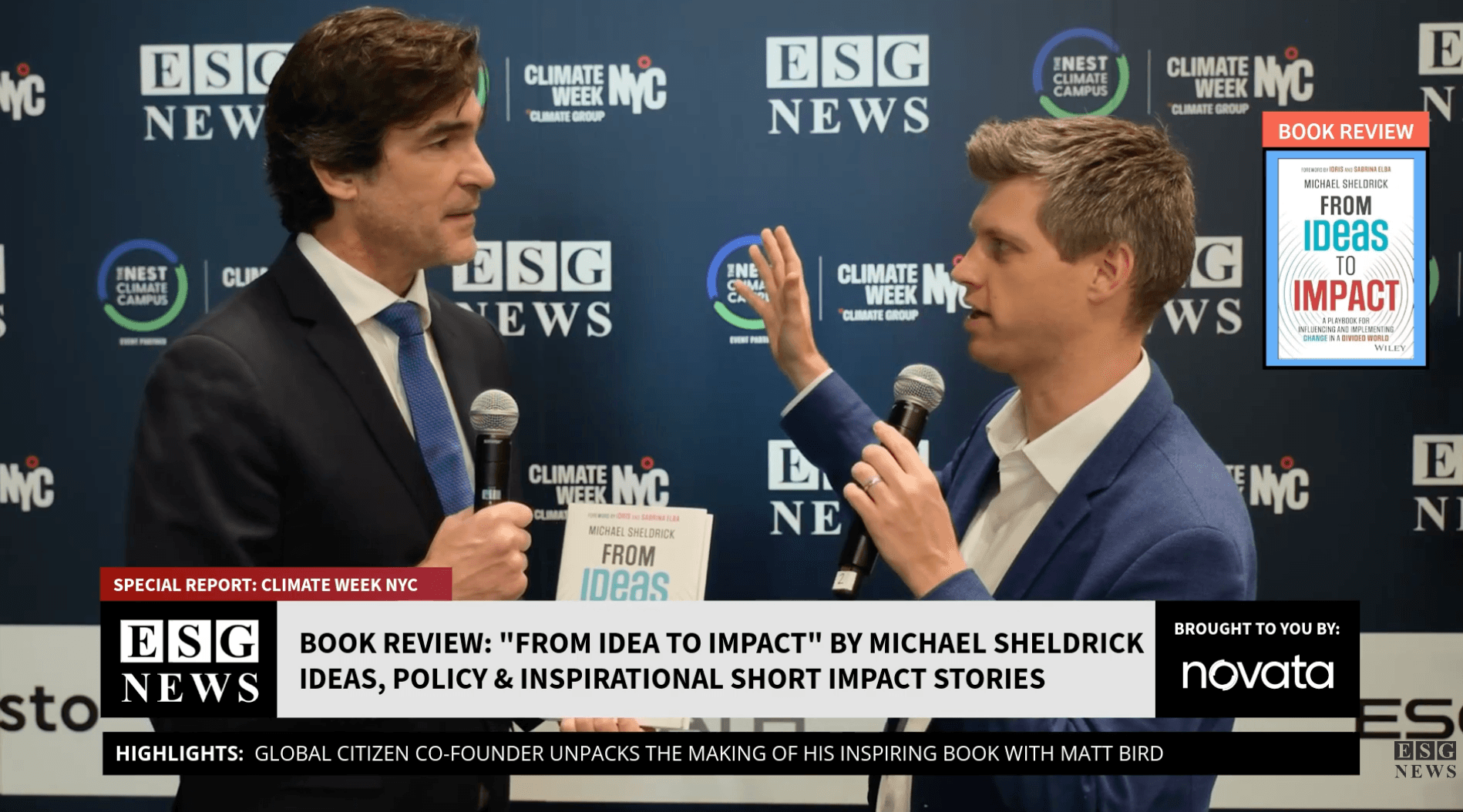
In a world grappling with unprecedented energy market volatility and the accelerating pace of the energy transition, finding a reliable compass for investment decisions is paramount. Michael Sheldrick’s new book, “From Idea to Impact,” offers a framework for understanding and driving systemic change that, while not explicitly about capital markets, provides surprisingly potent insights for oil and gas investors. Sheldrick’s core message — that impactful change stems from proactive engagement, overcoming apathy, and understanding the levers of policy — resonates deeply within an O&G sector constantly reshaped by global events, technological shifts, and evolving regulatory landscapes. For those navigating the complex currents of energy investing, adopting an “impact” mindset, as Sheldrick advocates, means moving beyond passive observation to actively dissecting market drivers, anticipating policy shifts, and identifying companies poised for long-term resilience and growth.
Navigating Volatility with a Strategic “Impact” Mindset
The oil and gas sector is no stranger to dramatic price swings, but the recent trajectory underscores the critical need for a strategic, impact-driven investment approach. As of today, Brent Crude trades at $94.7, marking a -0.82% decline within the day’s range of $93.87 to $95.69. Similarly, WTI Crude stands at $86.36, down -1.21% in a day ranging from $85.5 to $86.78. More striking is the 14-day trend: Brent has plummeted from $118.35 on March 31st to $94.86 on April 20th, representing a significant drop of nearly 20% ($-23.49). This kind of rapid depreciation can easily foster what Sheldrick terms a “crisis of apathy” among investors, leading to paralysis or reactive, speculative trades. However, an “impact” mindset encourages investors to look beyond immediate price movements. Instead of succumbing to short-term panic, it means rigorously analyzing the underlying factors driving these price shifts – be it geopolitical tensions, supply-demand rebalances, or macroeconomic signals – and assessing how these systemic forces will impact company fundamentals. Investors who understand these deeper currents are better positioned to identify value amidst the noise, aligning their portfolios with companies demonstrating resilience and adaptability in a volatile environment.
Policy as the Ultimate Lever: Anticipating Future Market Moves
Sheldrick’s emphasis on policy change as the engine of systemic impact is profoundly relevant to the oil and gas investment landscape. Governments and international bodies wield immense power over the sector through regulations, climate mandates, energy transition policies, and supply management agreements. Astute investors recognize that understanding and anticipating these policy shifts provides a significant strategic advantage. A prime example of policy’s immediate market impact is the upcoming OPEC+ Joint Ministerial Monitoring Committee (JMMC) Meeting scheduled for April 21st. The outcomes of this meeting, particularly regarding production quotas, will directly influence global crude supply and, consequently, price stability. Beyond OPEC+, other crucial data points signal policy and operational impacts: the EIA Weekly Petroleum Status Reports (April 22nd, April 29th) and API Weekly Crude Inventory (April 28th, May 5th) offer insights into U.S. supply dynamics, which can be influenced by domestic energy policy and strategic reserve decisions. Furthermore, the Baker Hughes Rig Count (April 24th, May 1st) provides a leading indicator of future production activity, reflecting the industry’s response to prevailing prices and policy incentives. Investors who actively track these events, understanding their potential “impact” on supply-demand balances and regulatory environments, are better equipped to position their portfolios for the future rather than simply reacting to headlines.
Beyond Price Prediction: Investor Questions and the “First Step” Principle
Our proprietary data on investor queries reveals a common thread: a strong desire for predictive certainty. Questions like “is wti going up or down,” “How well do you think Repsol will end in April 2026,” and “what do you predict the price of oil per barrel will be by end of 2026?” highlight this natural yearning for clear direction. While pinpointing exact price movements or future stock performance is inherently challenging, Sheldrick’s philosophy encourages investors to overcome inertia by taking a “single first step” that “sparks momentum.” For the O&G investor, this translates into moving beyond speculative predictions to rigorous fundamental analysis. Instead of asking merely “up or down,” a more impactful approach involves dissecting the factors that will *drive* price. For a company like Repsol, which has significant exposure to both traditional O&G and burgeoning renewable energy projects, an impactful first step involves analyzing its specific transition strategy, capital allocation towards renewables, and how global ESG policies will affect its long-term valuation. Similarly, predicting oil prices by the end of 2026 demands a deep dive into global economic growth forecasts, geopolitical stability, the pace of the energy transition, and the long-term supply response from key producers – each a “first step” in building a robust investment thesis rather than chasing a magic number. This proactive, analytical engagement is the true path to generating sustainable returns.
Building Resilience: Sheldrick’s Playbook for O&G Investment
Sheldrick’s concept of an accessible playbook for changemakers offers an invaluable metaphor for O&G investors seeking to build resilient portfolios in a dynamic market. This isn’t about following a generic formula, but rather adopting a structured, proactive approach to identifying companies best positioned for long-term success. One crucial element is scrutinizing companies’ environmental, social, and governance (ESG) frameworks. No longer a peripheral concern, robust ESG strategies demonstrate foresight in navigating regulatory pressures, attracting capital, and enhancing operational efficiency. Investors should prioritize companies actively investing in carbon capture technologies, exploring hydrogen pathways, or integrating renewable energy solutions into their operations, as these initiatives represent strategic “first steps” towards future impact and value creation. Furthermore, a resilient O&G portfolio requires diversification across the value chain – from upstream exploration and production to midstream infrastructure and downstream refining. Identifying management teams with a clear, adaptable vision for navigating the energy transition and a proven track record of capital discipline is also paramount. Ultimately, Sheldrick’s message underscores that enduring impact, whether in policy or portfolio returns, stems from informed, proactive engagement. By applying this “idea to impact” framework, O&G investors can transform market uncertainty into opportunities for strategic, long-term growth.


