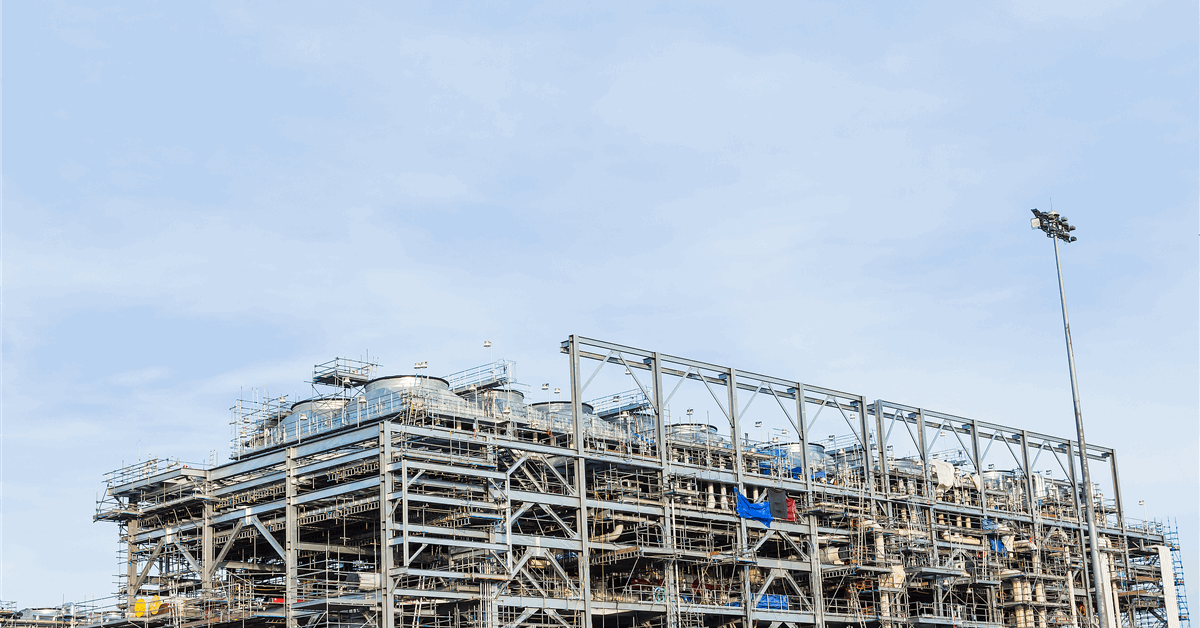
Sempra Infrastructure Partners’ final investment decision (FID) on Phase 2 of the Port Arthur LNG project marks a pivotal moment for global natural gas markets and a significant opportunity for energy investors. This massive undertaking in Jefferson County, Texas, underscores a robust long-term outlook for liquefied natural gas, particularly as geopolitical shifts and energy security concerns continue to reshape global supply chains. With commercial operations slated for 2030 and 2031, this expansion represents a substantial commitment to meeting future energy demand, backed by a formidable consortium of financial and industry heavyweights. For investors navigating the complex energy landscape, Port Arthur LNG Phase 2 offers a compelling case study in strategic infrastructure development, risk mitigation, and the enduring value proposition of natural gas in the evolving energy mix.
Port Arthur LNG Phase 2: A Strategic Expansion in a Volatile Market
The decision to proceed with Phase 2 of Port Arthur LNG is a testament to the perceived long-term stability and demand for U.S.-produced natural gas. This expansion will add two new liquefaction trains, alongside an LNG storage tank and associated facilities, boosting the project’s nameplate capacity by approximately 13 million metric tons per annum (mtpa). The incremental capital expenditures for this phase are estimated at $12 billion, complemented by an additional $2 billion for shared common facilities. Such a substantial investment highlights the scale required to bring significant new LNG capacity online. Crucially, the project is underpinned by 20-year sales and purchase agreements with strategic partners including ConocoPhillips as the anchor, EQT, and JERA Co. Inc., effectively de-risking future revenue streams. This long-term contracting strategy is paramount for major infrastructure projects, providing revenue predictability that is highly attractive to investors seeking stability amidst broader market fluctuations. The continued involvement of Bechtel Energy Inc. from Phase 1 further promises to leverage existing efficiencies and mitigate execution risks, a critical factor for large-scale, multi-year construction endeavors.
Robust Funding and Institutional Confidence Amidst Crude Volatility
The financial backing for Port Arthur LNG Phase 2 demonstrates profound institutional confidence in the project’s economics and the long-term demand for LNG. A $7 billion equity investment, led by Blackstone Credit & Insurance and joined by KKR, Apollo-managed funds, and Private Credit at Goldman Sachs Alternatives, will fund a 49.9 percent minority equity interest. Sempra Infrastructure Partners will retain a 50.1 percent majority stake. This diverse consortium of top-tier financial institutions underscores the project’s attractiveness as a stable, long-term asset. It is particularly noteworthy that this substantial capital commitment is being made at a time of considerable volatility in the broader energy markets. As of today, Brent Crude trades at $90.38, reflecting a significant decline of 9.07% within a day range of $86.08-$98.97. Similarly, WTI Crude stands at $82.59, down 9.41% from its daily high. This sharp correction follows a broader trend where Brent has fallen from $112.78 just two weeks ago to $91.87 yesterday, illustrating the dynamic and often unpredictable nature of crude oil pricing. Despite these short-term crude market gyrations, the sustained investment in long-term natural gas infrastructure like Port Arthur LNG Phase 2 signals a fundamental belief among institutional investors in the enduring and growing global demand for natural gas, often viewed as a critical bridge fuel in the energy transition and a cornerstone of energy security.
Sempra Infrastructure’s Evolving Ownership and Future Valuation
In a related but separate strategic move, Sempra has also agreed to sell a 45 percent equity interest in Sempra Infrastructure Partners to affiliates of a KKR-led consortium, which includes Canada Pension Plan Investment Board (CPP Investments). This transaction, valued at $10 billion for the stake, implies an equity value of $22.2 billion and an enterprise value of $31.7 billion for Sempra Infrastructure Partners. Upon closing, which is anticipated in the second or third quarter of 2026, the KKR-led consortium will become the majority owner with a 65 percent equity stake, with Sempra retaining 25 percent and Abu Dhabi Investment Authority (ADIA) holding its existing 10 percent. The payment structure for Sempra includes 47 percent of the cash at closing, 41 percent by the end of 2027, and the balance approximately seven years after closing. This staggered payment schedule, alongside the significant enterprise valuation, speaks volumes about the long-term value ascribed to Sempra Infrastructure Partners’ asset portfolio, including projects like Port Arthur LNG. Investors frequently inquire about the long-term trajectory of commodity prices, often asking, “What do you predict the price of oil per barrel will be by end of 2026?” While this specific transaction focuses on infrastructure equity rather than direct commodity prices, the valuation and payment schedule reflect a strategic bet on the sustained profitability of gas infrastructure through and beyond 2026, demonstrating that fundamental asset value and long-term contracted revenues can attract significant capital even when short-term price forecasts remain uncertain. This move positions the new majority owner to capitalize directly on the revenue streams generated by Port Arthur LNG as it comes online.
Forward Outlook: LNG Demand Drivers and Upcoming Market Signals
The commercial operations of Port Arthur LNG Trains 3 and 4 are expected to commence in 2030 and 2031, respectively, aligning with global projections for increased LNG demand driven by energy security concerns, industrial growth, and the ongoing energy transition. This long-term horizon demands a forward-looking perspective, influenced by both macro-economic trends and specific energy market dynamics. While the project’s success is largely tied to its long-term contracts, broader market sentiment and the regulatory environment can still impact investor confidence. Investors are actively tracking key industry events for insights into supply, demand, and policy shifts. For instance, the upcoming OPEC+ Joint Ministerial Monitoring Committee (JMMC) and full Ministerial meetings on April 18th and 19th, respectively, will set the tone for global crude oil supply. Although directly impacting oil, significant OPEC+ decisions can ripple across the entire energy complex, influencing the competitive landscape for natural gas. Further, the weekly API Crude Inventory and EIA Weekly Petroleum Status Reports on April 21st, 22nd, 28th, and 29th provide crucial short-term insights into U.S. supply-demand balances for crude and refined products, which can subtly shift broader energy sector sentiment and investor appetite. The Baker Hughes Rig Count reports on April 24th and May 1st offer a real-time gauge of drilling activity, a proxy for future production, which is relevant for the overall natural gas market even if not specific to LNG export. Questions from investors like “What are OPEC+ current production quotas?” underscore a keen focus on supply-side economics. The Port Arthur LNG expansion, as a substantial addition to global gas liquefaction capacity, represents a long-term supply response that will contribute to global energy security, potentially buffering against the volatility seen in other energy commodities and diversifying global energy portfolios.
In conclusion, Sempra Infrastructure Partners’ FID on Port Arthur LNG Phase 2, coupled with its evolving ownership structure, signals a robust commitment to expanding global LNG supply. This project, backed by significant institutional capital and long-term off-take agreements, stands as a critical development in the energy sector. It reflects a strategic long-term bet on natural gas as an essential component of the global energy mix, providing energy security and supporting the transition to lower-carbon fuels. For discerning oil and gas investors, Port Arthur LNG Phase 2 exemplifies a de-risked infrastructure play with strong fundamentals, poised to generate significant value in the decades to come, irrespective of short-term commodity price fluctuations.


