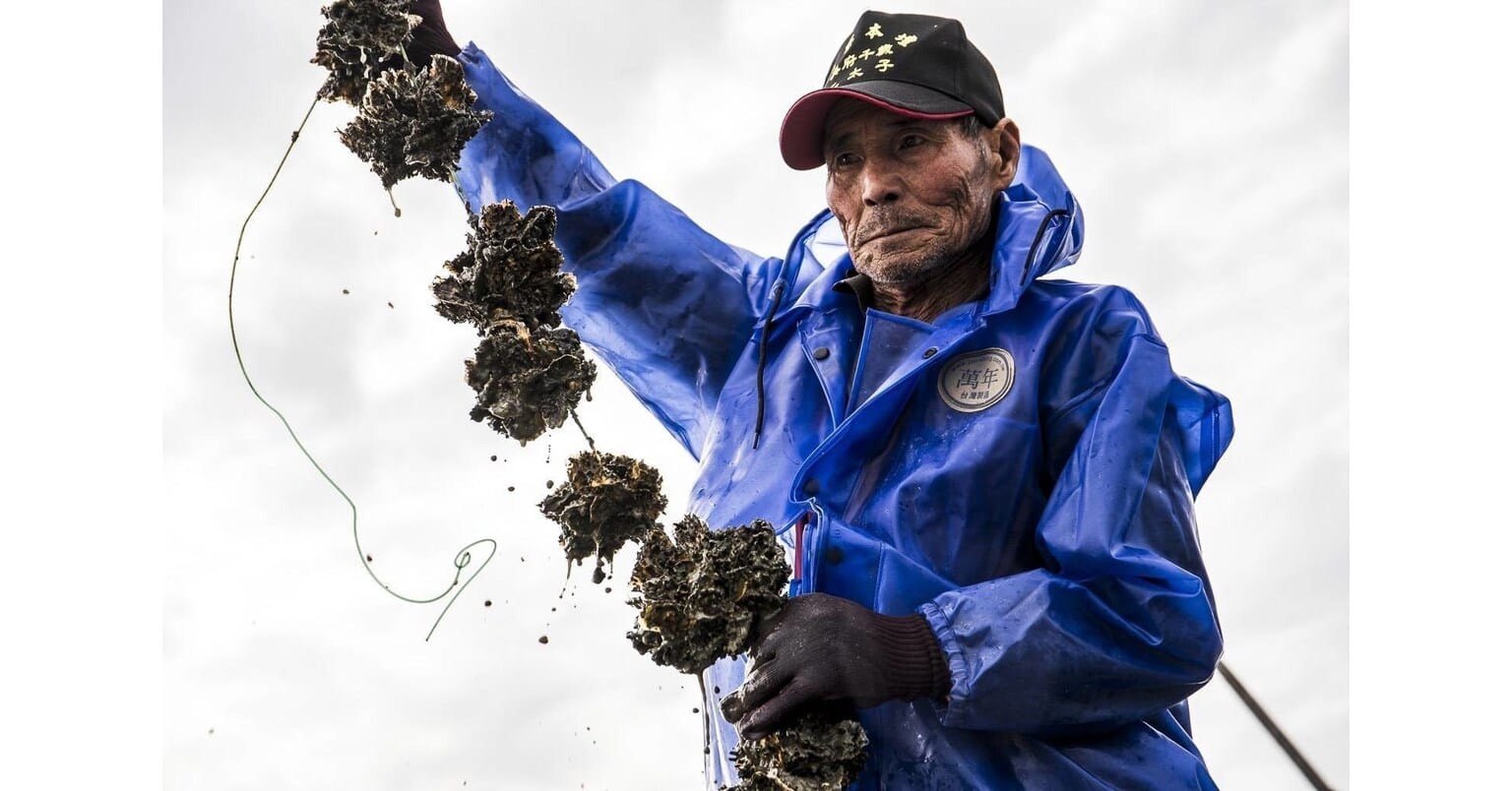
The global textile industry is undergoing a profound transformation, driven by an accelerating imperative for sustainability. Amidst this shift, innovative material science is emerging as a critical investment frontier, offering solutions that address both environmental challenges and consumer demand for eco-conscious products. One such compelling development is Seawool®, a composite fiber born from an ingenious collaboration between advanced textile technology and Taiwan’s robust oyster farming sector. This material, blending discarded oyster shells with recycled polyester, represents more than just a new fabric; it signals a significant growth driver within the sustainable fashion segment, creating a circular economy model with high-performance characteristics that warrant close investor attention.
Seawool®: Engineering Waste into High-Value Textiles
Creative Tech Textile’s pioneering work with Seawool® exemplifies how industrial waste can be re-envisioned as a valuable resource. Taiwan’s oyster farming industry, while generating an impressive annual output value of approximately US$120 million, faces the substantial challenge of managing 120,000 to 190,000 tons of discarded oyster shells each year. Historically, these shells posed a significant environmental burden. Creative Tech Textile has stepped in with a proprietary solution, integrating finely processed oyster shell powder into recycled textile fibers to create Seawool®.
This innovative material is not merely a sustainable alternative; it delivers superior performance attributes. Seawool® boasts low thermal conductivity, offering remarkable insulation and warmth, making it an ideal choice for autumn and winter apparel or comfortable wear in air-conditioned settings. Furthermore, its inherent antibacterial properties have been rigorously tested, demonstrating efficacy against Staphylococcus aureus by over 99.99%. Coupled with a soft, wool-like texture, Seawool® is positioned as a premium, functional, and environmentally responsible option for the global fashion industry. The company’s commitment to securing multiple international patents underscores its strategic vision to protect this innovation and scale its market penetration.
Beyond Fashion: Diversifying Applications and Circular Economy Integration
Creative Tech Textile’s strategic approach extends beyond the fashion industry, showcasing a broader vision for circular economy integration. The company has meticulously established a comprehensive circular supply chain along Taiwan’s western coast. This integrated system encompasses oyster farming, efficient shell collection, thorough washing and drying processes, and primary processing, ensuring that every step adheres to robust circular economy principles. This end-to-end control not only optimizes resource utilization but also provides a stable, traceable supply chain for its core material.
Crucially, the innovation isn’t limited to Seawool®. Creative Tech Textile has also developed Hulk Bio-Ceramic, a nano-powder derived from oyster shells with high-value applications across various industrial sectors. This bio-ceramic material is being utilized in cement coatings, consumer electronics (3C) casings, and ceramic tiles, demonstrating the versatility and economic potential of oyster shell waste. Such diversification reduces reliance on a single market segment and enhances the overall investment appeal by tapping into multiple high-growth industries, showcasing a robust research and development pipeline that translates into tangible, marketable products.
Navigating Macroeconomic Crosscurrents: Investor Sentiment and Commodity Markets
While the long-term trajectory for sustainable materials like Seawool® appears robust, the broader macroeconomic environment and commodity market volatility inevitably influence investor sentiment and operational realities. As of today, Brent Crude trades at $95.49, having seen a modest daily gain of 0.01%, while WTI Crude registers $87.29, down 0.15% within its daily range. However, a glance at the past two weeks reveals a more significant shift, with Brent falling from $118.35 on March 31st to $94.86 yesterday, a substantial decline of $23.49, or nearly 20%.
This recent volatility in crude prices resonates with the concerns we’re seeing from our readers. Queries such as “is WTI going up or down” and “what do you predict the price of oil per barrel will be by end of 2026?” highlight investor anxiety over energy price stability. While Seawool® directly addresses sustainability, its production relies on recycled polyester, whose raw material costs can be indirectly influenced by broader energy markets. Furthermore, consumer discretionary spending, a key driver for the fashion industry, is sensitive to inflationary pressures often exacerbated by fluctuating energy prices. Investors considering innovative companies like Creative Tech Textile must weigh these macro headwinds against the compelling structural tailwinds of ESG adoption and the circular economy.
Strategic Growth and Future Catalysts in a Dynamic Energy Landscape
Looking ahead, Creative Tech Textile’s commitment to advancing sustainable fashion is underpinned by its ongoing global patent applications and efforts to scale production. This strategic focus positions the company to capitalize on the increasing global demand for high-quality, environmentally responsible products. For investors, understanding the future landscape requires not only an appreciation for technological innovation but also an awareness of broader market dynamics.
Upcoming energy events, such as the OPEC+ JMMC Meeting tomorrow, April 21st, and the regular EIA Weekly Petroleum Status Reports on April 22nd and 29th, will provide crucial insights into global supply and demand balances. While these events directly impact crude prices, they indirectly shape the overall economic climate, influencing manufacturing costs, consumer purchasing power, and the broader appetite for investment in growth-oriented sectors. Our reader intent data, with questions like “How well do you think Repsol will end in April 2026,” underscores a keen investor interest in short-term company performance within a volatile market. For Creative Tech Textile, continued market penetration of Seawool® and the expansion of Hulk Bio-Ceramic applications will serve as key performance indicators. The sustained push towards a circular economy and the demonstrable performance benefits of Seawool® offer compelling long-term catalysts, regardless of the short-term gyrations in the energy complex, presenting a unique blend of innovation and resilience for the discerning investor.


