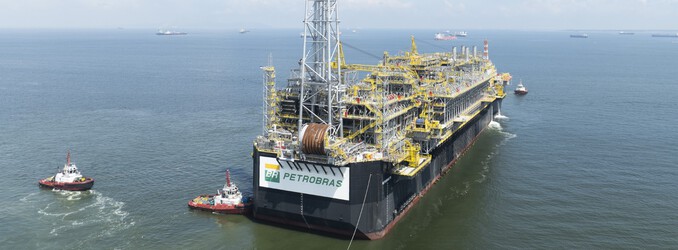
Singapore-based offshore and marine giant Seatrium Limited has announced a pivotal milestone for Brazil’s energy landscape: the imminent delivery of the PETROBRAS 78 (P-78) Floating Production Storage and Offloading (FPSO) vessel. This significant development marks the first in a series of turnkey FPSOs destined for Brazil’s state-controlled oil major, Petrobras, signaling a robust expansion in deepwater capabilities and a boost for global oil production.
The ceremonial sailaway from Seatrium’s Singapore shipyard, which occurred two weeks prior, underscores the project’s timely execution and the intricate coordination required for such a colossal undertaking. Upon its final delivery, the P-78 will be strategically deployed in Brazil’s renowned Buzios field, a name synonymous with colossal deepwater reserves. This field stands as the world’s largest deepwater oil reservoir, making the P-78’s arrival a critical enhancement to its operational capacity.
P-78: A Deepwater Powerhouse for Brazilian Production
The P-78 FPSO is not merely an addition to Petrobras’s fleet; it is a significant upgrade in terms of scale and capability. Engineered for high performance, this vessel boasts an impressive oil processing capacity of 180,000 barrels of oil per day (bopd). Complementing its oil capabilities, it is designed to handle 7.2 million cubic meters (mcbm) of natural gas daily, reflecting a comprehensive approach to hydrocarbon extraction. Furthermore, its substantial storage capacity of 2 million barrels of oil positions it among the largest operating FPSOs globally, offering significant operational flexibility and efficiency in offloading schedules.
For investors monitoring the upstream sector, the deployment of such a high-capacity unit in a tier-one deepwater asset like Buzios is a clear indicator of Petrobras’s commitment to maximizing output from its pre-salt riches. This directly translates into sustained revenue potential and reinforces Brazil’s position as a major global oil producer, influencing broader market dynamics and crude supply forecasts.
Seatrium’s Global Execution Prowess
The successful development and delivery of the P-78 exemplify Seatrium’s sophisticated “One Seatrium Global Delivery Model.” This strategy leverages the company’s expansive international footprint, facilitating seamless collaboration with industry leaders across various geographies. The fabrication of the P-78’s topside modules, weighing an astonishing 54,000 metric tons, was a testament to this global synergy, with work distributed across Seatrium’s advanced shipyards in Singapore, China, and Brazil.
This distributed fabrication model not only optimizes resource allocation but also showcases Seatrium’s capability to manage complex, multi-site projects with precision. Following the comprehensive integration and commissioning phases completed at its Singapore facility, the P-78 will now embark on its transit to the Buzios field. There, Seatrium’s expert teams will undertake the final crucial phase of offshore commissioning, ensuring the vessel’s flawless operational readiness in its deepwater environment.
Strategic Impact on Brazil’s Energy Sector and Local Economy
Beyond its technical specifications, the P-78 FPSO project carries profound strategic and socio-economic implications for Brazil. This initiative is a direct contributor to the nation’s objective of boosting its domestic oil production, aligning with long-term energy security goals and export ambitions. Crucially, the project has been a powerful engine for local job creation, generating thousands of employment opportunities within Brazil’s burgeoning oil and gas sector.
A significant portion of the fabrication and assembly work executed within Brazilian shipyards further underscores a commitment to local content development. This approach fosters a skilled workforce, provides invaluable training, and enhances long-term capabilities within the domestic industry. For investors, this emphasis on local content signals a sustainable development model, mitigating political and social risks often associated with large-scale energy projects and ensuring robust stakeholder buy-in.
A Deep-Rooted Partnership Driving Growth
Seatrium’s relationship with Brazil and Petrobras is built on a strong foundation of successful project deliveries. The company has consistently provided critical infrastructure, including numerous FPSOs, floating production units, Floating Storage Regasification Units (FSRUs), advanced drilling rigs, and specialized accommodation vessels. Each of these projects has played a vital role in strengthening Brazil’s energy infrastructure, facilitating the exploration, production, and processing of its vast hydrocarbon resources.
This established track record of reliability and excellence positions Seatrium as a preferred partner for Petrobras’s ambitious expansion plans. For financial observers, this enduring partnership represents a consistent revenue stream and a testament to Seatrium’s technical prowess and operational reliability in a highly competitive market. As Petrobras continues to unlock the potential of its pre-salt fields, Seatrium stands ready to support these endeavors, promising continued collaboration and further project opportunities in the dynamic Brazilian energy sector.
Investor Outlook: Capitalizing on Deepwater Momentum
The successful deployment of the P-78 FPSO is a clear signal of sustained investment and growth in the deepwater segment of the oil and gas industry. For investors eyeing the offshore services and energy production sectors, this event highlights several key trends. It reinforces the long-term viability of deepwater projects, particularly in prolific basins like Brazil’s pre-salt, which continue to attract significant capital expenditure.
Seatrium’s execution capabilities, demonstrated through this complex project, solidify its position as a leading global player in FPSO construction and integration. This enhances its investment appeal, indicating a company capable of delivering on large, high-value contracts. Furthermore, the increased production capacity brought online by the P-78 will contribute to global oil supply, influencing commodity prices and the profitability of upstream operators. Keeping a close watch on these developments is essential for navigating the evolving landscape of global energy markets and identifying lucrative investment opportunities.