The energy transition is not a smooth, linear path, but rather a complex landscape marked by both innovation and occasional setbacks. The recent insolvency of Northvolt, once hailed as a beacon for European battery production, serves as a stark reminder of the challenges inherent in scaling new energy technologies. However, the subsequent strategic moves by Swedish commercial vehicle giant Scania to rescue Northvolt Labs, its crucial research and development arm, underscore a profound and unwavering commitment to the electrification of transport. For oil and gas investors, this development is more than just an EV industry headline; it represents a critical inflection point in the long-term demand narrative for fossil fuels, demanding a nuanced understanding of how such strategic plays by industrial behemoths will reshape the global energy matrix.
The Strategic Imperative: Securing Europe’s Battery Future
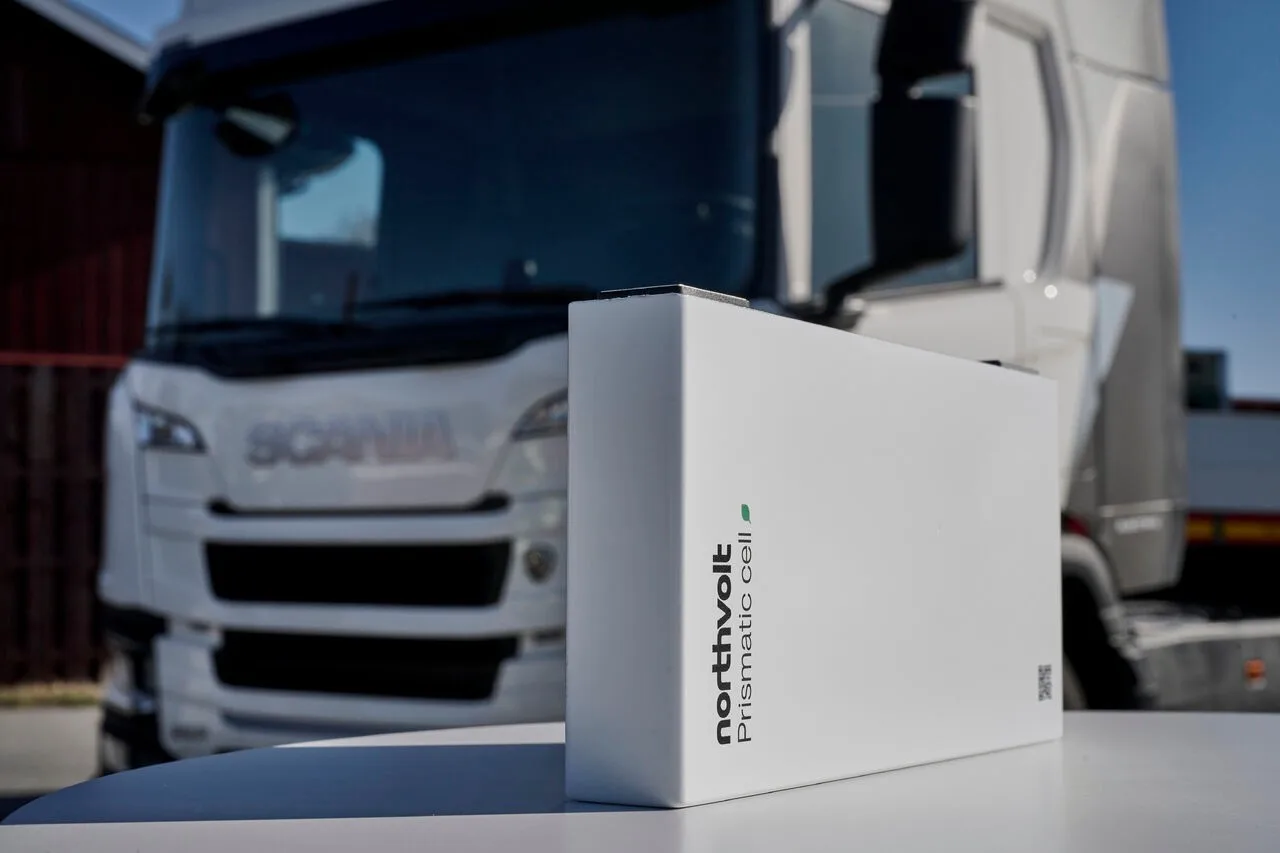
Scania’s aggressive pursuit of Northvolt Labs, following Northvolt’s declaration of creditor protection in the USA in November 2024 and full insolvency in Sweden by March 2025, is a clear signal of the strategic importance of battery technology for European industry. The discontinuation of battery cell production at Northvolt’s main Skellefteå plant by the end of June would have created a significant void. Scania, Northvolt’s primary customer and a key stakeholder through parent company Volkswagen’s 21% stake, has already moved to secure critical assets, taking over the Northvolt Systems Industrial battery systems division, including its research and development center and a team of approximately 260 employees. Now, Scania CEO Christian Levin is spearheading efforts to form a consortium with industrial partners, the Swedish government, and the EU Commission to acquire Northvolt Labs itself. This facility, representing an investment of around $750 million and employing 1,100 highly qualified researchers, is widely regarded as the ‘crown jewel’ of Northvolt’s operations. Scania’s motivation is clear: prevent Asian competitors like CATL and LGES from further expanding their technological dominance and preserve crucial European expertise in innovative battery materials and recycling processes. This strategic defensive maneuver by a major industrial player highlights the geopolitical and economic dimensions of the energy transition, signaling that the race for technological self-sufficiency in green industries is intensifying.
Market Dynamics and the Energy Transition’s Enduring Pull
While the traditional energy markets continue their daily dance of supply and demand, the long-term structural shifts driven by electrification, as exemplified by Scania’s actions, exert an undeniable gravitational pull. As of today, Brent Crude trades at $90.38, marking a significant decline of 9.07% within the day’s range of $86.08 to $98.97. Similarly, WTI Crude stands at $82.59, down 9.41% from a day range of $78.97 to $90.34. This sharp downturn is part of a broader trend, with Brent having shed $20.91, or 18.5%, from $112.78 on March 30th to $91.87 just yesterday. Gasoline prices mirror this sentiment, currently at $2.93, a 5.18% drop within its $2.82 to $3.1 range. While immediate factors like oversupply concerns or geopolitical developments might explain these daily fluctuations, the underlying narrative of the energy transition provides a persistent, albeit slower, pressure on long-term crude demand. Scania’s commitment to battery R&D, even in the face of a major supplier’s collapse, demonstrates that the strategic imperative to electrify transport remains robust. This ongoing investment in EV infrastructure and technology acts as a fundamental cap on the upside potential for oil demand in the coming decades, a factor that savvy oil and gas investors must continually re-evaluate alongside short-term market volatility.
Investor Focus: Navigating Policy and Project Risks in the New Energy Landscape
Our proprietary reader intent data reveals that investors are keenly focused on predicting future oil prices, understanding OPEC+ production quotas, and evaluating the performance of key players like Repsol. These questions underscore the immediate concerns within the traditional energy sector. However, Scania’s multi-stakeholder approach to saving Northvolt Labs — seeking partners from industry, the Swedish government, and the EU Commission — highlights another critical dimension: the increasing intertwining of private capital, public policy, and national strategic interests in the new energy landscape. Investors in oil and gas must recognize that the transition isn’t solely about technological breakthroughs but also about policy-driven mandates, such as the EU’s targets for significantly lower commercial vehicle emissions by 2030. These regulatory drivers create both opportunities and risks. While project failures like Northvolt’s initial struggles are a cautionary tale, the subsequent rescue efforts, backed by significant industrial and governmental support, demonstrate that strategically important assets in the energy transition will not be easily abandoned. For investors, this means diversifying analytical frameworks beyond pure market fundamentals to include political will, regulatory frameworks, and the potential for public-private partnerships that de-risk and accelerate the deployment of new energy solutions. The long-term trajectory of oil demand will be increasingly shaped by such strategic policy and investment decisions in the EV and renewable sectors.
Forward Outlook: Key Events Shaping the Energy Horizon
The coming weeks present a confluence of events that will offer further clarity on both the immediate and long-term trajectory of the energy markets. Investors will be closely watching the upcoming OPEC+ Joint Ministerial Monitoring Committee (JMMC) meeting on April 18th, followed by the full OPEC+ Ministerial Meeting on April 19th. These gatherings are pivotal for understanding global crude supply strategies and potential quota adjustments, which directly influence short-term price stability. Simultaneously, the routine releases of the API Weekly Crude Inventory on April 21st and 28th, alongside the EIA Weekly Petroleum Status Reports on April 22nd and 29th, will provide crucial granular data on U.S. supply, demand, and inventory levels. Further insights into drilling activity will come from the Baker Hughes Rig Count on April 24th and May 1st. While these events offer vital short-term indicators for the oil and gas sector, Scania’s persistent investment in battery R&D, even amid the Northvolt insolvency, represents the broader, inexorable force of the energy transition. The challenge for astute investors is to synthesize these immediate market signals with the accelerating pace of electrification and decarbonization. The strategic decisions made today by commercial vehicle manufacturers and governments regarding battery technology will ultimately shape the long-term demand profile for oil, making it imperative for traditional energy investors to continually re-evaluate their portfolios against this evolving backdrop.