Escalating Tensions: Key Saudi Oil Export Pipeline Hit Amid Regional Instability
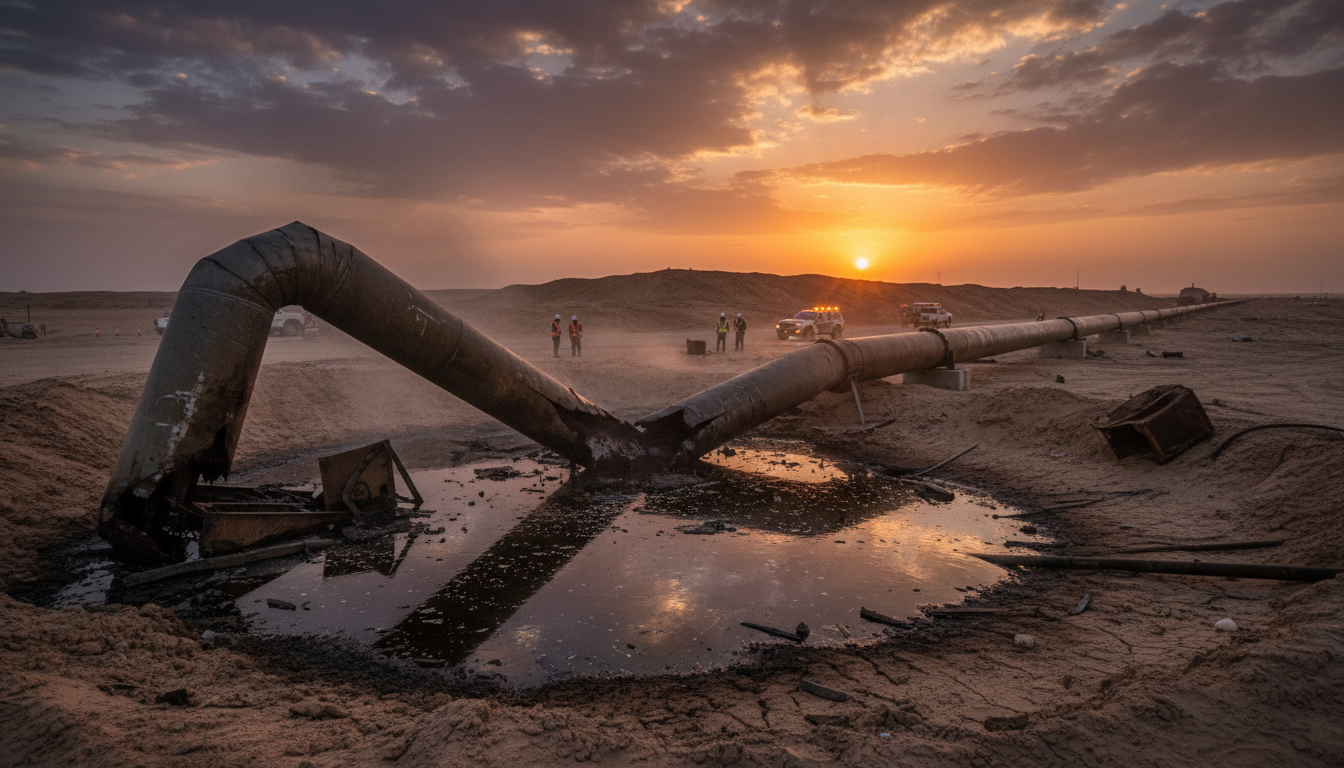
Investors in global energy markets are closely monitoring the unfolding situation in Saudi Arabia, where a critical crude oil artery, the East-West pipeline, has reportedly sustained damage in what industry sources attribute to an Iranian assault. This development, alongside targeted attacks on other facilities within the kingdom, immediately elevates concerns over global oil supply security and market volatility. The affected pipeline serves as the primary conduit for Saudi crude exports, making any disruption a significant event for international energy pricing and supply chains.
The Strategic Significance of the East-West Pipeline
The East-West pipeline is far more than a simple conduit; it represents a strategic lifeline for Saudi Arabia, channeling approximately 7 million barrels per day (bpd) of crude from the kingdom’s prolific eastern oil fields to the Red Sea port of Yanbu. Its operational importance has skyrocketed since regional dynamics led to the effective closure of the Strait of Hormuz, an event that previously ensnared vast quantities of oil and gas, sending global energy commodity prices soaring. With Hormuz access constrained, this pipeline has become the kingdom’s sole alternative route for crude shipments, underscoring its pivotal role in maintaining consistent export volumes to international buyers.
Early assessments indicate that crude flows through this vital infrastructure are expected to experience an impact, though the full extent of the damage remains under evaluation. Market analysts warn that any prolonged disruption could severely exacerbate what many experts already categorize as the world’s most acute energy crisis. The incident demands immediate attention from investors, as it could trigger a new wave of uncertainty in an already fragile market environment.
Yanbu’s Crucial Role and Resilience Under Fire
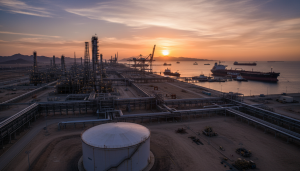
Saudi Aramco, the national oil giant, typically allocates around 2 million bpd of its production for domestic consumption, reserving roughly 5 million bpd for export. The Red Sea port of Yanbu, the western terminus of the East-West pipeline, has been operating at near-full capacity, handling an average of 4.6 million bpd in loadings during the week beginning March 23. This impressive throughput was achieved despite earlier attacks targeting the Yanbu hub on March 19, demonstrating the resilience of Saudi Arabia’s export infrastructure even under duress.
However, the latest strike on the pipeline itself, rather than just the terminal, presents a new dimension of risk. Yanbu’s ability to sustain its high export rates hinges directly on the continuous, unimpeded flow of crude through the East-West pipeline. Investors should therefore closely monitor reports on the pipeline’s repair and operational status, as it will directly influence Saudi Arabia’s export capacity and, by extension, global supply stability.
Geopolitical Attribution and Regional Implications
In a direct claim of responsibility that heightens regional tensions, Iran’s Islamic Revolutionary Guard Corps (IRGC) stated on Wednesday that it had launched missile and drone strikes against multiple targets across the region. Their communiqué explicitly mentioned hitting what they described as “oil facilities of American companies in Yanbu.” While the specific targets and extent of the damage are still being corroborated by independent sources, the IRGC’s assertion unequivocally links the attacks to the escalating geopolitical friction between Tehran and Riyadh, and by extension, Washington.
This calculated aggression signals a concerning phase in Middle East power dynamics, where critical energy infrastructure is increasingly becoming a target. For oil and gas investors, this translates into a higher geopolitical risk premium, potentially leading to sustained upward pressure on crude oil prices and increased volatility in energy sector equities. The market will undoubtedly price in the enhanced risk of supply disruptions stemming from an increasingly confrontational regional landscape.
Navigating the Investor Landscape: Risks and Outlook
The latest attacks underscore the precarious nature of global oil supply, particularly from the Middle East. While Saudi Arabia possesses robust infrastructure and a proven track record of rapidly restoring damaged facilities, the psychological impact on markets is undeniable. Investors must consider the potential for protracted instability, which could manifest in elevated shipping costs, insurance premiums, and, most importantly, sustained upward pressure on crude benchmarks like Brent and WTI.
For those invested in the oil and gas sector, these events highlight the importance of diversified portfolios and careful risk assessment. Companies with resilient supply chains, diversified geographic operations, and strong hedging strategies may be better positioned to weather these geopolitical storms. Conversely, reliance on single points of failure in critical infrastructure now carries an even higher risk profile. As damage assessments continue and geopolitical responses unfold, vigilance remains paramount for investors navigating the complex and volatile landscape of global energy markets.